I'm just sittin' here whatchin' the wheels go round and round

Trigger warning: This blog has nothing to do about food! Ironically, last month I posted a blog about hued grief—reflecting on what has been lost in the past year in the U.S. What I didn’t mention is that I have been grappling with a personal grief of my own: the passing of my mom. As my Rector at that School of Advanced International Studies (SAIS) Europe wisely noted, “I know from experience that such events always find us somehow unprepared, even though we know they are part of life.” Well said. Losing a parent is an utterly heartbreaking experience. Interestingly, it’s a journey that most people undergo, so this feeling is not unique to me.

As one navigates these kinds of losses, it fosters profound reflection on where to go from here, especially when you no longer have that relentless cheerleader in your corner. What I’ve come to realize over the past year resonates deeply with me: embrace every sandwich, live life on your own terms, make bold moves (thank you, Ani DiFranco, for the inspiration), and find a way to kick around in the wreck. It’s essential to be okay with grief, to be okay with anger, and to give yourself permission to heal. LIVE YOUR LIFE ON YOUR TERMS. We all know this, yet it has taken me 54 years to fully grasp what it truly means.

One of my dearest friends and hermano, Mario Herrero, asked me the other day, “What are your plans?” It’s a perfectly reasonable question now that I’ve moved to a new country, city, and job. I had no answer for him; my response was simply, “I don’t know.” And he said, that’s okay.

Last year, one of my goals was to practice the art of NIKSEN. This Dutch term literally means “to do nothing,” but it isn’t the same as boredom or laziness. Niksen invites you to break free from the daily grind of work, family demands, and social pressures. It’s about destressing and simply stopping. It involves intentionally doing nothing without purpose or deadline: gazing out the window, taking in the scenery, and allowing your mind to wander. As John Lennon sang, “I’m just sittin’ here watching the wheels go round and round.” Yup.

Edward Hopper. Morning Sun

I’m not saying I’m checking out of the world. Instead, I intend to engage more thoughtfully. I recently wrote about handing over batons to the next generation (more beef, less bear). I made my mom proud a long time ago, and one of her enduring wishes was simply for me to be happy, a sentiment I hope for all of you, my dear readers. Find joy in the everyday. It can be challenging as the world seems to be unraveling, but remember: there are only a handful of people who want to watch the world burn. The majority of humanity cares deeply about our world, our future, and our collective progress. We face many hurdles, but history teaches us that we can overcome them.

Philosopher Martha Nussbaum, in her book The Monarchy of Fear, argues that fear is a primal, narcissistic emotion currently dominating American political life. It fosters anger, envy, and disgust, all of which threaten democratic values. While fear may be the "first prescribed emotion," it is not our destiny. We have the power to dismantle the "monarchy of fear" by choosing to build a society rooted in shared humanity and justice. Moreover, if you observe the ebbs and flows of the world, you’ll see that it is indeed a better place. We experience setbacks, but progress is being made.

Relish in that thought and remember it. Find what matters to YOU and fight like hell to keep it close to your heart. Because ultimately, it all comes to an end for each of us, and what truly matters is that you lived your best life on YOUR terms—not the terms set out for you by others.

The Journey of Hued Grief

2025 has finally come to a close, and what a year it has been. For many, the last 365 days (well, + the beginnings of 2026…) have felt like an endless hellscape of despair, marked by one shocking and unfathomable doomsday-like event after another. At the heart of this turmoil has been, of course, the current U.S. president, whose actions seem designed to sow chaos, disrupt democracy, and seek no-holds-barred retribution and dominance for his own personal gain. The cuffs and guardrails are nowhere to be found. However, I recognize that not everyone experienced this past year in the same way. Some found themselves thriving in the midst of the cultural upheaval, relishing the debates and discussions that accompanied each new development.

Over the past year, I've held back from discussing the unfolding chaos, but now that I’m leaving the U.S., I feel ready to step back and look at the broader picture. So much has already been said about how we arrived at this moment—the current state of U.S. politics and its “leaders.” The saga continues, marked by the dismantling of long-standing institutions designed to maintain checks and balances. Every day, we witness blatant violations of civil and human rights. The erosion of public health threatens not only our nation but global stability as well, compounded by geopolitical bullying and the silencing of dissenting voices. The cycle of doom seems endless. I suspect the repercussions of this turmoil will extend far beyond the U.S., affecting those who have relied on America as a dependable partner and participant in world order and sustainable development.

Egon Schiele

What’s particularly frightening is how quickly we/they have normalized this chaos. In the initial days, shock and anger were the dominant responses; now, it feels like a constant barrage, leaving many desperate for relief. Some people say, "Let’s wait and see what 2028 brings," while others choose to focus solely on themselves. A few optimistically assert that "progress always finds a way." Personally, I’m skeptical about these coping strategies, partly because we’ve never encountered such unprecedented turmoil before—certainly, the injustices of the Nixon era seem just downright mild by comparison. The outlook for positive change appears, frankly, grim.

For those of us in science and academia, the turmoil has shaken our foundations. What we once considered an untouchable sector has been profoundly affected. The reaction from esteemed institutions, including Columbia University—where I worked up until a few days ago—has been particularly disheartening. When push came to shove, Columbia capitulated to governmental pressure, effectively paying a ransom and making concessions. It was astonishing to witness a private university fold so easily, and honestly, it felt shameful.

Leaving the U.S. and Columbia became less daunting as 2025 marched on. As Aldo Leopold wisely noted in A Sand County Almanac, “One must make a shift with things as they are.” My move to Italy and resignation from Columbia represent my shift. Some might label me a flighter rather than a fighter, and they may be right. Nevertheless, the decision to leave the U.S. was straightforward; the logistics and emotional hurdles were far more challenging. Who walks away from a tenured professorship at an Ivy League university? Ego complicates the choice, but sometimes you have to say, “What the fuck,” as Miles said in Risky Business (the 80s is my jam long before the Duffer Bros).

Despite the changes, I still hold my tenured position as a full professor, now based at Johns Hopkins in Bologna, Italy. I feel incredibly fortunate—an awareness I don’t take lightly. Will I continue to be impacted by the events in the U.S.? Absolutely; no one is immune. Am I concerned that the rise of populism and conservatism is spreading across Europe, South America, and beyond? You bet I am.

We revisited Casablanca the other night—a fitting watch for our move. Most of you know the setup: Humphrey Bogart is a cynical bar owner who has to choose between an old flame and the greater good. It’s a movie about people "waiting" for papers in Casablanca as an outpost to flee war-torn Europe for the American dream. There’s a certain irony in watching it now; as the world comes full circle, we find ourselves being the ones packing our bags for the other side.

Reflecting on the past year, I find it surreal and inexplicably bizarre—much like our collective experiences during the COVID-19 pandemic. It has been challenging to fully grasp the events unfolding around us and their long-lasting implications. To cope and come to grips with the pandemic, my partner and I (also known as the Sound Furies) wrote a song called "Hued Grief" (an ode to Egon Schiele, who died of Spanish influenza). Like with the COVID pandemic and its aftermath, I am grieving. Grieving for the America that we all let slip away a long time ago — 50 years or more in the making. Hued grief represents the complex spectrum of emotions encountered during the grieving process, from dark despair to colorful and light transformative healing when we finally emerge from that darkness. The question is, when will we emerge? Maybe 2026 is the year. Maybe.

As I look ahead to 2026, my primary goal isn’t just to focus inward but to sustain hope. We need to aim higher, together. We need big, bold systemic changes, new leaders, and regulation for those who continue not have the best interests of people, the planet, flora, and fauna in mind. While these may be lofty, wishlist dreams, one can hope. In Rebecca Solnit’s book, Hope in the Dark, she explores the complex nature of hope and the often unseen ways that change occurs. She discusses how victories can be overlooked while failures are usually more prominent in our consciousness. Moreover, she suggests that hope is not simply an optimistic belief that everything will turn out well, but rather an active engagement with the possibilities of change and a recognition of our agency in shaping the future. She emphasizes the importance of our collective history and memories in navigating toward that future.

She notes (and I apologize if I’m not getting it exactly right—my copy of her book is currently in a moving box!): “Hope is not the belief that everything was, is, and will be fine. It is about the possibilities, and the basis for action. It is about navigating toward the future.”

Can’t say it any better than that. The journey continues…

Archive Appetizer: Nutrition-sensitive climate risk across food production systems

In 2025, we published a paper titled "Nutrition-Sensitive Climate Risks Across Food Production Systems" led by Michelle Tigchelaar. It presents an important analysis linking food security, micronutrient deficiency, and climate change. The objective of the paper was to assess nutrition-related climate risks across various food production systems. This is critical as both malnutrition and climate change pose significant threats to public health and food security, particularly in low- and middle-income countries where deficiencies are prevalent. We focused on five key micronutrients: calcium, folate, iron, vitamin A, and vitamin B12, selected for their vital roles in human health and the high rates of deficiencies associated with their lack.

We used data from the Global Nutrient Database. We categorized food items into six groups: aquatic products, fruits and vegetables, legumes and nuts, cereals and tubers, livestock products, and other crops. We then analyzed the availability of these micronutrients. We linked this supply data to various climate hazards using an integrated approach that considers the impacts of climate change on food systems.

The major findings highlight significant regional variations in climate risks associated with nutrient availability, with notable hazards for vitamin B12 and calcium predominantly found in animal-source foods. By 2041–2060, most countries will face medium or high climate risk to at least one critical micronutrient (calcium, folate, iron, vitamin A, B12).

This figure hows how often each nutrient’s domestic production will face extreme climate 2041-2060. For example, vitamin B12 and calcium face high climate risk due to heavy reliance on animal-source foods. Globally, 75% of calcium, 30% of folate, 39% of iron, 68% of vitamin A, 79% of vitamin B12, and 54% of energy production is projected to face climate extremes by the middle of the century.

Moreover, the analysis reveals that regions such as the Mediterranean and Central America are particularly vulnerable to high climate risks across all studied micronutrients, underscoring the urgent need for tailored resilience strategies to combat rising malnutrition amid the ongoing climate crisis. Countries like India, Nigeria, Tanzania, Mozambique, Madagascar, and Guatemala are projected to face high domestic climate risk across multiple micronutrients. Diverse Production Systems at Risk: Not just cereals, but livestock, aquatic systems, fruits & vegetables, and legumes & nuts are all vulnerable—particularly in tropical and low-income regions.

Why is the research important?

  • It goes beyond staples: Most climate-food modeling studies focus on crops like wheat or rice. This one looks at nutrients that actually matter for health — like iron and vitamin A — and includes diverse food groups, including fish and vegetables.

  • It links climate change directly to human nutrition, not just yields or calories.

  • It recognizes that countries differ in their vulnerabilities and offers tools and strategies tailored to different kinds of risk profiles.

  • It provides a new framework for integrating food, nutrition, and climate policy. Countries can use this to prioritize where to invest — whether in farming, aquaculture, trade policy, or nutrition programs.

  • It shows that climate change threatens global nutrition goals, not just in fragile states. Even high-income countries could be affected if their food systems are too narrow or reliant on specific sectors.

What are the major calls for action?

  1. Develop national commitments to nutrition in National FS Pathways, Nationally Determined Contributions and National Adaptation Plans.

  2. Support diversified, climate-resilient food production.

  3. Build food and nutrition security into market systems.

  4. Expand safety nets and food environment policies to protect the most vulnerable.

I presented this work at the Global Alliance for Improved Nutrition back in April 2025. Here is the slide deck. Enjoy!

The Archive Appetizer: Integrating Climate Services for Nutrition Action

Recently, my team published a review exploring the intricate relationship among climate change, food security, and nutrition. Our study is rooted in the understanding that climate change significantly affects nutritional outcomes, particularly among vulnerable populations. We conducted a scoping review to identify and synthesize country-level programs that effectively integrate climate services into health systems and nutrition interventions. By doing so, we aimed to highlight the diverse strategies employed across settings, focusing on both direct and indirect interventions related to health and nutrition, while emphasizing the need for aligned actions across sectors.

Our findings revealed 67 country-level programs that demonstrate innovative approaches to addressing the challenges posed by climate extremes, such as floods and droughts. We categorized these interventions using a framework that considers direct health-care strategies and various other sectoral strategies that affect nutrition.

Climate information and national nutrition planning and response conceptual framework (Carducci et al 2025)

Of these 67 programs, 42 were single-component, while 25 were multi-component, showcasing a variety of approaches to address the interconnectedness of climate change, nutrition, and health. For example, several initiatives specifically targeting women and children were noted, although many programs were more generalized, addressing broader populations affected by climate-related hazards.

Number of programs, by intervention type and component (Carducci et al 2025)

Among the specific programs mentioned, strategies varied widely across regions. In Bangladesh, for instance, multi-hazard climate information services were implemented to prepare for floods and droughts, while in Uganda, the Global Flood Awareness System was used to prevent disease, particularly diarrhea and malaria. Notably, Burundi's programs focused on anticipatory actions for flood management, incorporating both national and regional climate prediction efforts. Meanwhile, Zambia's initiatives used climate information to enhance malaria control efforts, underscoring the importance of integrating local and international resources to address public health challenges.

Interestingly, many initiatives were found to be more indirect, operating outside of traditional health interventions. This underscores the critical need for collaboration across sectors to prepare for and respond to climate-related challenges while improving nutritional outcomes for affected communities.

In conclusion, we advocate for strong partnerships between climate information service providers and stakeholders in the health and nutrition sectors. Our synthesis emphasizes that integrating climate services into nutrition policy and programming is not only beneficial but also necessary for developing resilient strategies to protect public health from the impacts of climate change. Through effective cooperation, knowledge sharing, and a focus on data-driven approaches, we can enhance our preparedness and response to the intertwined challenges of climate change and nutrition.

Navigating Climate and Nutrition Challenges

In the ongoing discourse surrounding climate change, the world needs a deeper examination of the multifaceted effects climate change and extreme weather events exert on global nutrition and food security. Climate change will likely intensify food insecurity, malnutrition, and the prevalence of noncommunicable diseases worldwide, as shifting climatic conditions disrupt agricultural production and water availability. It is also recognized that enduring effects can be expected as warming converges multiple climate stressors, thereby aggravating pre-existing vulnerabilities in food systems, particularly in low-income and resource-challenged regions.

We published a paper in the Annual Reviews of Nutrition this past year that highlights the intricate connections between extreme climate events and nutrition outcomes. Overall, as the review suggests, current studies on the impacts of climate change on nutrition remain limited, particularly regarding overlapping crises such as conflict and economic instability, which compound the effects of climate stressors.

One of the critical findings of the review is that extreme weather events, particularly droughts and floods, are strongly associated with various forms of malnutrition. For example, a systematic review and meta-analysis indicated that climate-related precipitation events, such as excessive rainfall and drought, are positively correlated with malnutrition. However, the nature of these effects varies by location, age, gender, and timing. The analysis suggested that drought conditions are significantly associated with increased rates of childhood wasting—a condition in which children are acutely malnourished and exhibit a low weight-for-height ratio.

An analysis involving 580,000 observations of children across 53 countries further supports this assertion. By using a derived Standardized Precipitation Evapotranspiration Index (SPEI), researchers investigated how precipitation anomalies may be associated with increased malnutrition among children. This study emphasizes the critical impact of climate variability on the nutritional status of vulnerable populations, particularly children under 5 years of age. However, the findings regarding underweight prevalence were less conclusive, primarily because various factors influence underweight and do not capture the full spectrum of malnutrition as comprehensively as stunting or wasting.

The review also emphasizes the need to explore the compounding risks posed by extreme weather events in a more nuanced manner. Extreme weather and climate events often occur in complex combinations—referred to as compounded events—that can exacerbate consequences not just for food security but also for population health. However, research remains limited in understanding the temporal and spatial nature of these compounding events and their specific impacts on nutrition outcomes.

Consequently, we assert that there is a pressing need for more sophisticated research methodologies, including longitudinal studies, to understand better the causal relationships and dynamic interactions between climate variability and nutrition. We should pay special attention to the need to employ advanced data analysis to assess the intricate patterns within these phenomena, thereby equipping policymakers with better insights for effective responses.

In summary, our understanding of how extreme climate events influence nutrition outcomes reveals both the severity of the challenges we face and the gaps in existing research. We must address the urgency of obtaining comprehensive data, refining analytical methods, and fostering interdisciplinary partnerships to understand better and respond to the dynamic relationship between climate variability and nutritional outcomes. Only through these concerted efforts can our global community hope to develop effective policies to build resilience against the inevitable shifts that climate change will bring to food systems and human health.

Holiday Eye Candy

As the holiday season approaches, cities around the world come alive with dazzling lights and festive decorations.

One of my personal favorites is the iconic Bergdorf Goodman windows in New York City. The talented visual team of artisans creates breathtaking, narrative-driven displays that not only showcase high art but also embody a cherished NYC tradition that celebrates fashion, fantasy, and the vibrant spirit of the city.

I’m captivated by how the reflections of the city’s buildings and bustling life intertwine with the window displays, creating a stunning juxtaposition of grit and whimsy.

Here are some photos I've taken over the years while living in Gotham, capturing the magic of this festive spectacle.

From Roman Ruins to Bolognese Bliss

We’ve spent most of late October and November in Italy, preparing for our permanent move to Bologna. Being away from the United States has been refreshing — I catch up on the news less often and with far less emotion. From afar, everything seems a bit bonkers. For anyone feeling overwhelmed by it all, and who has the chance to travel outside the U.S., I highly recommend it. It offers a powerful perspective.

The CFS plenaries largely empty.

Our journey began in Rome with a meeting at the Food and Agriculture Organization, whose building now feels almost impenetrable. I attended the Committee on Food Security (CFS), which was eerily quiet. The current Director General of FAO seems to have shifted focus away from the CFS, scheduling World Food Day a week earlier—a move that, frankly, deflates the committee’s momentum. The sessions were muted, with scant government presence. Even the plenaries were only a quarter full.

Perhaps multilateral cooperation and globalism are truly fading, as Richard Horton recently suggested here and here. We’ll see how the world responds at COP30 in Brazil, tackling the urgent challenge of climate change. Sadly, I agree with a recent New York Times article arguing that governments—not just the U.S.—are turning their backs on climate commitments. There are isolated successes, but the overall climate data is grim. The UN’s annual emissions gap report, “Off Target,” warns that countries are unlikely to keep global warming below 1.5 degrees Celsius, the Paris Agreement’s main goal. Experts predict warming could reach between 2.3 and 2.5 degrees Celsius, or even higher if current pledges aren’t met.

Long lines at Da Enzo

Back to Bella Italia. My partner and I have spent nearly five cumulative years living in Rome. When we first arrived in 2010, those felt like golden years. Tourism was present but manageable, with many hidden gems for eating, drinking, and soaking in the vast cityscape. Today, forget it. Rome has turned into a theme park resembling a mockable Roman empire, swarming with tourists. Even secret spots are overrun by huge lines of people eager to replicate the Instagrammable moments. Our favorite place, Da Enzo, now has block-long lines. We used to pop in spontaneously for carbonara and puntarella. It’s sad—Rome and much of Italy have sold themselves cheaply, like a dollar store bonanza.

After Rome’s disappointment, we went to Napoli to visit friends. The city, too, is suffocating under endless tourists—around 5,000 daily from massive cruise ships—who come to eat pizza, drink spritzes (a drink actually invented in Veneto, northern Italy), and walk the “elephant walk” through Spaccanapoli buying cornicelli charms (little horn-shaped amulets for good luck), all because social media told them to. They don’t really experience the city or stay overnight, retreating to their ships for dinner and sleep. Locals believe tourism boosts the economy, and it probably does—but at what cultural cost? Is this growth sustainable? Naples, too, has given itself away. The New York Times article, “The Spritzes and Carbonaras That Ate Italy,” argues tourism has blanketed the country in a uniform food culture. Maybe not everywhere, but it’s heading that way. Nothing can take away the beauty of these places, but god damn, it is getting hard to see it.

Naples wasn’t all bad, once you are off the beaten path. Walks along and swims in the bay of Naples, insanely delicious pizza and vongole, and a lecture at the University of Naples Federico II Agriculture College were highlights. The College is in a beautiful old royal palace in another part of Naples, called Portici. The palace was built as a summer house for the Spanish viceroys on the slopes of Mount Vesuvius. The college curates a beautiful botanical garden on its grounds. The students and faculty were truly wonderful — they energized me to start teaching this spring in Bologna.

Typical aperitivo for two - and costing less than 8 euros…

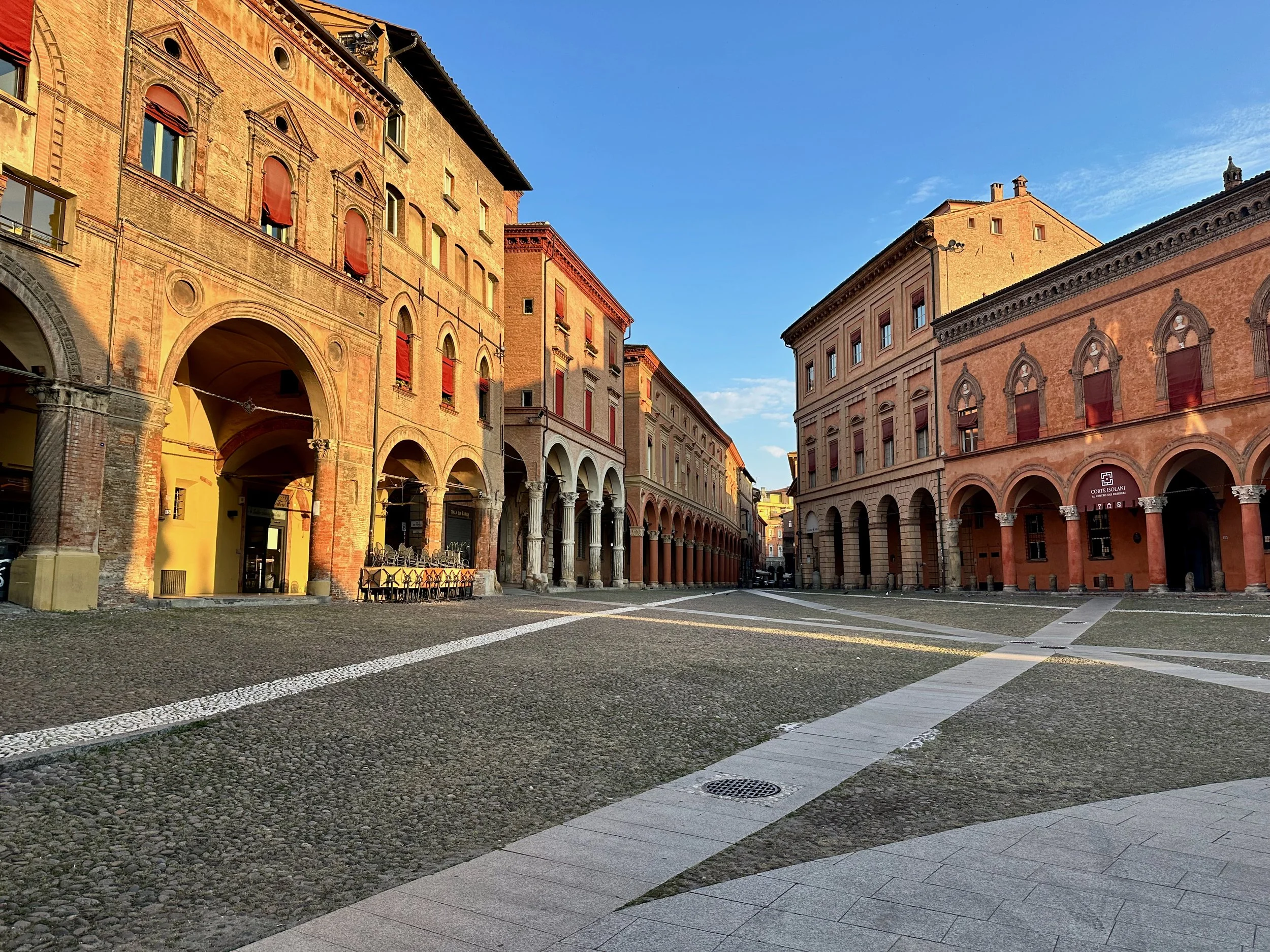
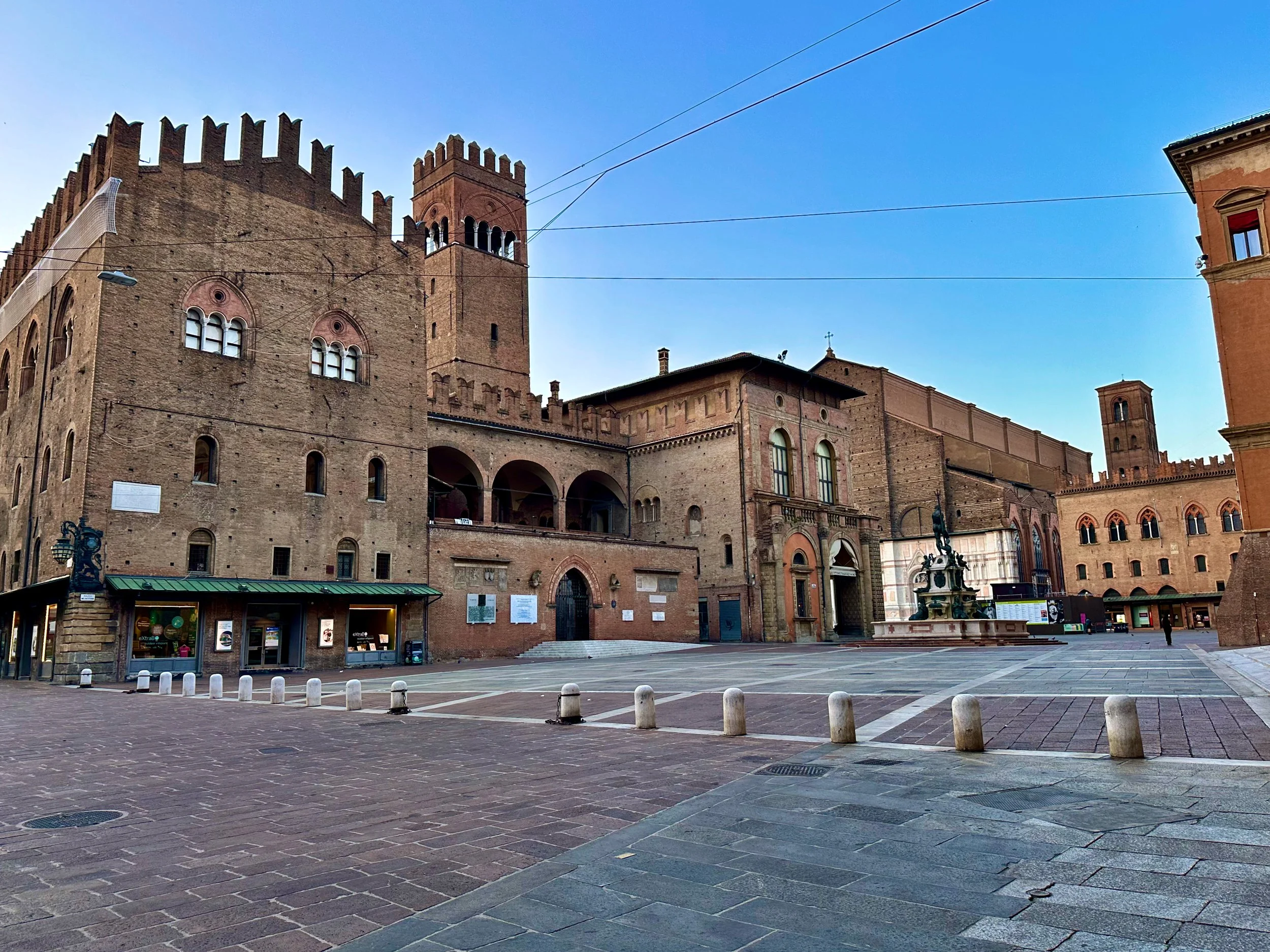
From Naples, we took the train north to Bologna, and suddenly it felt dramatically calmer—fewer tourists, more progressive energy. The “Quadrilatero” district, a historic medieval market full of gourmet shops near the main piazza, was surprisingly uncrowded. Bologna is a beautiful city bathed in warm orange and yellow hues, with miles of elegant porticos offering sheltered promenades. The city pulses with the energy of its students—the University of Bologna is Europe’s oldest university. Street art decorates many corners, and the local “aperitivo” culture thrives. Bolognese gather around 6 p.m. for wine, cocktails, and small free snacks (why do potato chips taste so good with sparkling white wine - drats!), with weekends seeing aperitivo start even earlier.

There are downsides. The weather is more like NY, and the air quality ain’t good. But it feels like a progressive, productive city that has a certain gothy, young vibe. Will we be able to sit out on our terrace 365 days a year, ala Rome? No. But would I take this over the tourism hellscape? Hells yah.

Bolognese cuisine is delicious but hearty and meat-heavy. Classics like tortellini, lasagna, and ragù are all rich with meat. The pasta contains eggs—a nod to the north’s wealthier past where eggs were added to flour and water—resulting in specialties like tortellini, ravioli, and tagliatelle. The region is famous for its Parmesan cheese, Sangiovese red wine, and balsamic vinegar. Pork is beloved. There’s a dish called Cotoletta (or Petroniana), essentially veal fried in butter, topped with prosciutto, smothered in Parmesan and meat broth—a literal heart-stopper. Hopefully, we’ll find ways to stay more plant-based here, but dining out in typical Bolognese trattorias might make that a challenge. Mamma mia…

These pasta dishes were delicious but probably did not “meat” the criteria of the EAT-Lancet Commission (Mio Dio!).

When we arrived, Bologna was hosting the “Villaggio contadino Coldiretti,” a fair spread across the city’s piazzas. Farmers from across Italy gathered to celebrate “the centrality of the agricultural world, sustainability, and the value of Italian food.” Coldiretti represents over 1.6 million Italian farmers and agricultural entrepreneurs, advocating fiercely for “Made in Italy” products. They lobby against lab-grown meat, expose agromafia issues, and protest unfair trade price speculation. Some argue these “village” events misuse public spaces and they have ties to the conservative right in the country. I suspect their views on the EAT-Lancet Commission wouldn’t be glowing either…


The Archive Appetizer: Integrating nutrient dynamics into crop models

This blog post is cross-posted on the AgMIP site and written by Natalie Kozlowski.

More than 2 billion people worldwide face the risk of micronutrient deficiencies due to the limited availability or affordability of nutritious foods. A new paper in Nature Climate Change presents a novel framework for integrating nutrient dynamics into crop models, such as the Decision Support System for Agrotechnology Transfer (DSSAT), while also highlighting the urgent need for experimental datasets to support this nutritional modeling. This integration will offer key insights into how to strengthen nutrition interventions in a changing climate.

Climate change is expected to intensify challenges related to food security and dietary diversity through shifts in crop productivity, greater yield and price volatility, market disruptions, food safety concerns, and reductions in the nutritional quality of the global food supply. These challenges may be further exacerbated by the potential dilution of key nutrient concentrations in staple crops due to rising atmospheric carbon dioxide levels.

Figure 1. Inputs, processes, and outputs to assess nutrient dynamics in crop models.

  • Nutrient uptake in roots throughout their lifecycle based on the initial pool of nutrients available in the soil

  • Nutrient accumulation in relation to daily plant mass growth and harvestable product

  • Soil factors affecting the solubility and movement of available nutrients in the soil

  • Impact of temperature, water stress, or other atmospheric factors on nutrient uptake per phenological stage

The paper marks an important advance in bringing nutrient dynamics into crop modeling and underscores the limited availability of comprehensive datasets beyond staple crops. The authors also call for urgent, collaborative research among climate scientists, farmers, crop modelers, plant biologists, and public health nutrition practitioners to safeguard nutrition under climate uncertainty. By integrating nutrient dynamics into crop models, we also improve our understanding of how climate-driven changes will affect and influence the ability for global populations to receive essential nutrients from the food they consume.

Carducci & Guarin et al. is now available to read in Nature Climate Change here.

The Archive Appetizer: Making Farming Extension Work for Nutrition

There appears to be a resurgence in efforts to ensure that nutrition is integrated into farming practices. A decade ago, we undertook a global study to synthesize experiences on integrating nutrition into Extension and Advisory Services (EAS) — the networks of agents who work directly with farmers worldwide. I think the study remains relevant and sheds light on how to improve EAS for nutrition-sensitive agriculture. In the study we find:

  • Nutrition integration is mostly limited to food availability interventions.
    The most common way nutrition enters EAS is through efforts like home gardening, crop diversification, biofortification (e.g., orange-fleshed sweet potatoes), and reducing post-harvest losses. These focus on increasing the supply of nutritious food, but less attention is given to food access and utilization dimensions of nutrition.

  • Nutrition training for extension agents is inadequate.
    Extension agents typically lack sufficient technical nutrition knowledge and the “soft skills” (communication, gender sensitivity, facilitation) needed to deliver nutrition messages effectively. Training is often short, inconsistent, and without refresher courses or mentorship. Weak career incentives further discourage agents from prioritizing nutrition.

  • Significant challenges hinder integration.
    Barriers include poor or ineffective nutrition training, unclear organizational mandates that overload agents, lack of female representation in the workforce, reduced mobility due to poor resources, and systemic disconnects between agriculture and nutrition sectors (different “languages,” weak coordination, and inadequate resources). These create major constraints on scaling up nutrition-sensitive agriculture.

  • Opportunities exist but remain underutilized.
    Despite challenges, EAS hold promise because they already have reach, trust, and cultural familiarity with rural communities. Key opportunities lie in engaging communities through participatory approaches, creating demand for nutrition (so that households value and request nutrition services), and using innovative communications technologies (ICT, radio, mobile platforms) to reinforce nutrition messages.

This word cloud above is enlightening. It shows the most frequently mentioned keywords by respondents to an online survey question, “What would be considered the greatest challenges in integrating nutrition into EAS?” The font size of the words placed in the word cloud represents their frequency and usefulness. The more prominent (larger text size) the word is in the word cloud, the more frequently it appeared in the online provided. Transportation, task overload, funding, and quality training were considered the most frequent challenges listed in the survey responses.

The takeaway? EAS could be a powerful vehicle for “nutrition-sensitive agriculture,” but only with sustained investment, multisectoral collaboration, and attention to equity.

🔗 A must-read, 10 years standing, for anyone working at the intersection of food, farming, and nutrition! Check out the paper here.

The EAT-Lancet 2.0 Commission: A Roadmap for Healthy, Sustainable, and Just Food Systems

This blog is also cross-posted on Columbia University’s Climate School State of the Planet Blog.

By Jessica Fanzo and Bianca Carducci

The much-anticipated second EAT-Lancet Commission on Healthy, Sustainable, and Just Food Systems has been released, building on the landmark 2019 report that first defined the “Planetary Health Diet.” I served as a Commissioner, while my postdoctoral fellow, Bianca Carducci, contributed as an author—helping shape one of the most significant scientific updates in global food systems research.

This new report, EAT-Lancet 2.0, arrives at a moment of heightened urgency. Since 2019, the world has endured pandemic disruptions, rising food prices, intensifying conflicts, accelerating climate impacts, and widening inequities in access to healthy food. The Commission offers an updated framework that integrates health, sustainability, and justice—arguing that food systems must be transformed by 2050 to nourish a projected 9.6 billion people within planetary boundaries.

From EAT-Lancet 1.0 to 2.0: What’s New?

The 2019 Commission was groundbreaking in articulating a recommended global dietary pattern—the Planetary Health Diet (PHD)—that promoted both human health and environmental sustainability. That report, cited over 10,000 times, influenced national policies, UN processes, and city-level actions.

Status of food system pressures across all nine planetary boundaries (indicated by the black dotted pattern) and the food system boundaries (red line)

The 2025 update strengthens the evidence base and significantly broadens the scope. While the first report only gestured toward equity, the second iteration places justice at the center—examining multiple dimensions of justice including distributive fairness, the recognition of marginalized communities, and their representation in governance. The Commission also introduces stronger modeling capacity, using a multi-model ensemble of ten leading agro-economic and environmental models to assess dietary shifts, productivity gains, and reductions in food loss and waste. For the first time, it proposes explicit food system boundaries for climate, biodiversity, land, water, and nutrient cycles, directly linking diets to the Earth’s safe operating space.

The Planetary Health Diet Reaffirmed

At the heart of the Commission is the reaffirmation of the Planetary Health Diet: a largely plant-based diet rich in whole grains, fruits, vegetables, legumes, nuts, and seeds; complemented by modest amounts of fish, poultry, dairy, and eggs; and low in red meat (one serving a week), added sugars, and saturated fats. Overall, the Diet allows two servings of animal-source foods per day—drawn from fish, yogurt, milk, cheese, or meat.

Updated evidence shows adherence to this diet reduces all-cause mortality by 28 percent in large cohort studies—equivalent to 15 million deaths averted annually—while lowering incidence of type 2 diabetes, heart disease, obesity, and several cancers. It also appears to protect against cognitive decline and unhealthy aging.

Importantly, the PHD is not a universal prescription but a flexible framework adaptable to cultural traditions and local foodways. Many Indigenous, Asian, and Mediterranean diets already align closely, underscoring the importance of protecting traditional diets alongside innovating new ones. Safeguarding food heritage, the report argues, is as vital as advancing nutrition science.

Food Systems and Planetary Boundaries

The Commission confirms that food systems are the leading driver of planetary boundary transgression. Agriculture and food produce 16–17.7 gigatons of greenhouse gases annually—about 30 percent of the global total. Unsustainable land conversion, mainly deforestation, is the primary driver of biodiversity loss, while fertilizer overuse and poor nutrient management account for nearly all nitrogen and phosphorus boundary overshoots. Irrigation and soil degradation further stress freshwater systems.

To reverse these trends, the report calls for halting conversion of intact ecosystems, restoring tropical and temperate forests, and adopting ecological intensification that regenerates soils, sequesters carbon, and reduces reliance on chemical inputs. Modeling shows that widespread adoption of the Planetary Health Diet, coupled with ambitious climate policies, could slash greenhouse gases, land use, and water footprints—even while feeding a larger global population.

Justice as the Third Pillar

The global status of social foundations in food systems

The most distinctive advance of EAT-Lancet 2.0 is its centering of justice—largely absent in the first report. Food systems are not just failing the planet; they are failing billions of people. Nearly half the world cannot afford a healthy diet. Food system workers often face low wages, unsafe conditions, and little representation, while marginalized groups—women, children, Indigenous peoples, and low-income communities—bear disproportionate burdens.

The Commission defines a just food system as one that ensures: equitable access to affordable, healthy diets; supportive food environments; the right to a clean environment and stable climate; decent work with fair wages and safe conditions; and genuine representation in decision-making. Healthy diets, it concludes, are both a human right and a shared responsibility.

Eight Pathways for Change

The report outlines priority solutions to transform food systems by 2050. These include reshaping food environments so healthy diets are affordable and accessible, while protecting traditional diets that already support planetary health. On the production side, scaling up sustainable agriculture and aquaculture practices, halting deforestation, and restoring degraded ecosystems are essential. Equally critical is halving food loss and waste from farm to household.

The Commission also underscores the importance of social protection schemes: living wages and decent work for food system laborers, inclusive governance, and targeted support to marginalized groups. Together, these actions represent a roadmap for healthier diets, fairer societies, and a safer planet.

The Economics of Action vs. Inaction

Transforming food systems requires investment, but the cost of inaction is far greater. Food systems generate about $15 trillion annually, yet impose $12 trillion in hidden health and environmental costs. Redirecting subsidies from harmful practices—such as fertilizer overuse or overproduction of unhealthy foods—towards regenerative agriculture and nutritious diets could rapidly shift the balance toward net benefits. The Commission emphasizes that realigning financial incentives, backed by international cooperation, is essential to accelerate change.

Why This Report Matters

EAT-Lancet 2.0 is more than another scientific assessment—it is a blueprint for survival. It sets quantitative guardrails for diets and production, integrates justice into sustainability, and demonstrates that systemic transformation is both necessary and achievable. Humanity already produces enough calories to feed everyone, yet billions go hungry while others overconsume in ways that destabilize the planet. The Commission underscores that food is both a major driver of today’s crises and one of the most powerful levers for hope.

Conclusion: A Shared Responsibility

The Commission makes clear that healthy diets are a fundamental right and collective duty. Achieving them will require systemic transformation in how we produce, consume, govern, and value food. By mid-century, that means halting deforestation, halving food waste, scaling sustainable agriculture and aquaculture practices, and ensuring just labor systems.

The evidence shows this shift is possible and that the benefits—healthier lives, more resilient ecosystems, and fairer societies—will far outweigh the costs. The choice is stark: continue on the path of ecological overshoot, inequity, and ill health, or build food systems that nourish both people and planet. The EAT-Lancet 2.0 provides not just the science, but the moral imperative, to make bold changes.