The Archive Appetizer: Integrating Climate Services for Nutrition Action

Recently, my team published a review exploring the intricate relationship among climate change, food security, and nutrition. Our study is rooted in the understanding that climate change significantly affects nutritional outcomes, particularly among vulnerable populations. We conducted a scoping review to identify and synthesize country-level programs that effectively integrate climate services into health systems and nutrition interventions. By doing so, we aimed to highlight the diverse strategies employed across settings, focusing on both direct and indirect interventions related to health and nutrition, while emphasizing the need for aligned actions across sectors.

Our findings revealed 67 country-level programs that demonstrate innovative approaches to addressing the challenges posed by climate extremes, such as floods and droughts. We categorized these interventions using a framework that considers direct health-care strategies and various other sectoral strategies that affect nutrition.
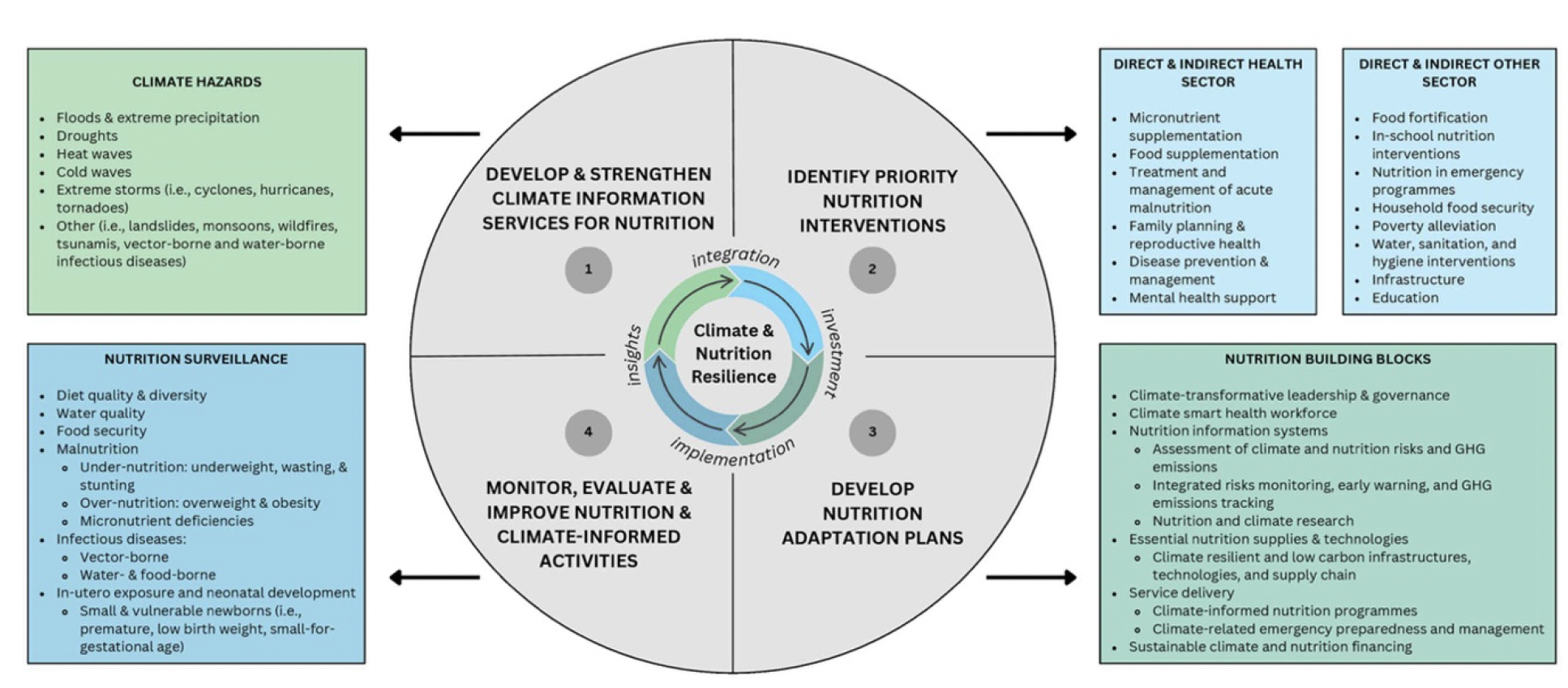
Climate information and national nutrition planning and response conceptual framework (Carducci et al 2025)

Of these 67 programs, 42 were single-component, while 25 were multi-component, showcasing a variety of approaches to address the interconnectedness of climate change, nutrition, and health. For example, several initiatives specifically targeting women and children were noted, although many programs were more generalized, addressing broader populations affected by climate-related hazards.
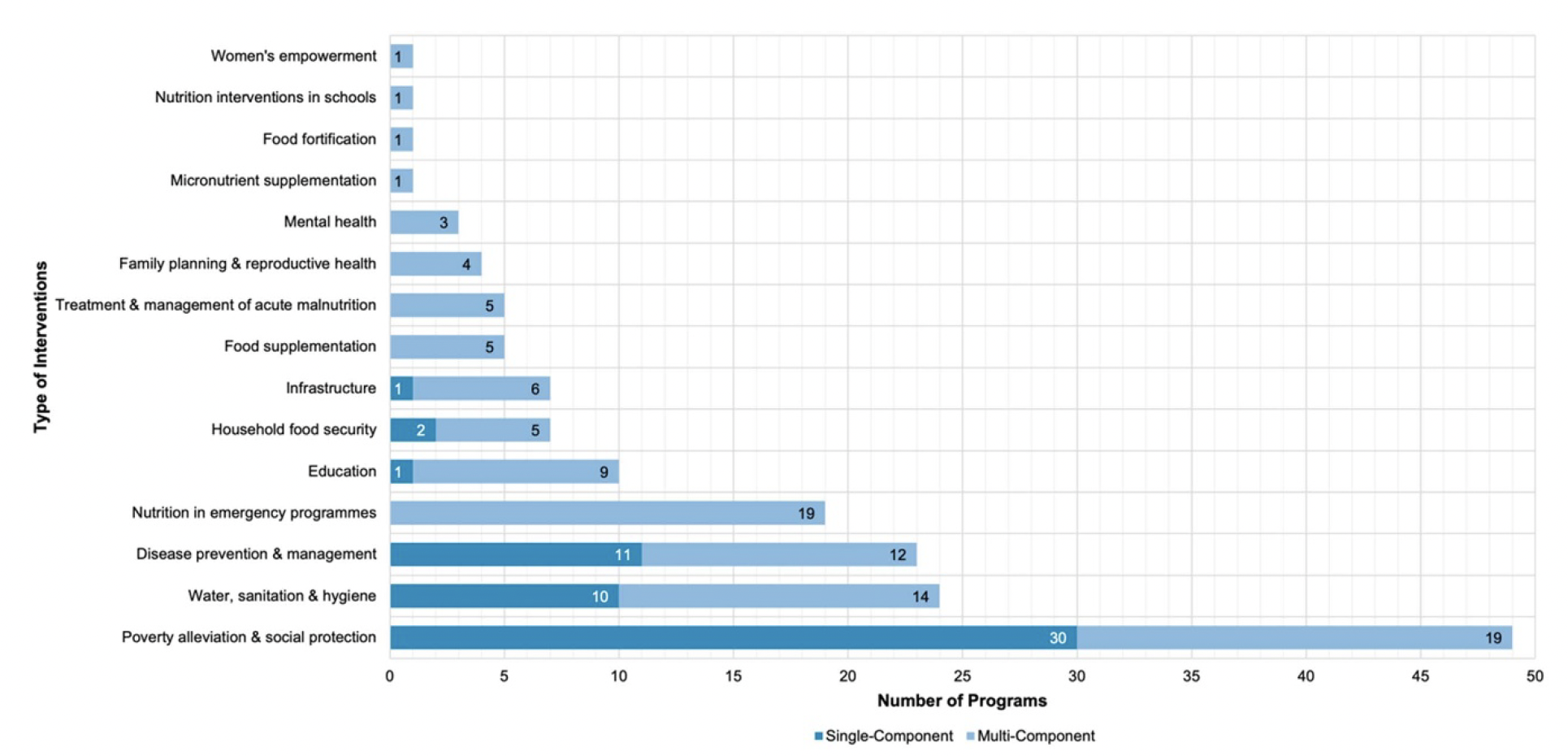
Number of programs, by intervention type and component (Carducci et al 2025)

Among the specific programs mentioned, strategies varied widely across regions. In Bangladesh, for instance, multi-hazard climate information services were implemented to prepare for floods and droughts, while in Uganda, the Global Flood Awareness System was used to prevent disease, particularly diarrhea and malaria. Notably, Burundi's programs focused on anticipatory actions for flood management, incorporating both national and regional climate prediction efforts. Meanwhile, Zambia's initiatives used climate information to enhance malaria control efforts, underscoring the importance of integrating local and international resources to address public health challenges.

Interestingly, many initiatives were found to be more indirect, operating outside of traditional health interventions. This underscores the critical need for collaboration across sectors to prepare for and respond to climate-related challenges while improving nutritional outcomes for affected communities.

In conclusion, we advocate for strong partnerships between climate information service providers and stakeholders in the health and nutrition sectors. Our synthesis emphasizes that integrating climate services into nutrition policy and programming is not only beneficial but also necessary for developing resilient strategies to protect public health from the impacts of climate change. Through effective cooperation, knowledge sharing, and a focus on data-driven approaches, we can enhance our preparedness and response to the intertwined challenges of climate change and nutrition.

Climate-resilient communities are nutrition-resilient communities

This piece was originally published as a commentary in Nature Climate Change.

Climate change and nutrition are closely interconnected. Climate variability, which includes year-on-year variations in climate and longer-term climate trends, can disrupt both health and food systems, leading to increased food insecurity, reduced access to quality diets, and worsened burdens of malnutrition, particularly for vulnerable populations, including women and children.

While the 2021 UN Food Systems Summit made some advancements in integrating climate change actions into food system transformations, nutrition, more specifically, is still not mainstreamed into the larger climate change agenda or global commitments made at the annual global COP meetings. At the same time, the field of nutrition has yet to fully consider climate-responsive adaptation strategies in its core policy and programming.

One first step towards more engagement between climate and nutrition communities is for climate scientists to provide climate information (such as weather and climate variability forecasts and projections) to health practitioners delivering nutrition interventions through the public health sector. By providing them with information that is easy to understand and use, practitioners will be better equipped to tackle the complex health challenges that come with climate disruptions for the populations they serve.

It is unclear how local nutrition practitioners use climate information in their day-to-day decision-making. Understanding this uncertainty is critical, as these practitioners are responsible for targeting health–nutrition program interventions where and when they are most needed, including reaching the most vulnerable populations in resource-constrained settings. Such climate information includes

(1) risk assessments for better targeting of actions,

(2) early warnings of extreme events, and

(3) long-term planning and preparedness to improve the design of short- and long-term adaptation strategies that target timely nutrition interventions throughout the health system.

Some examples of cost-effective interventions that aid the public health sector in adapting to climate variability and change include stockpiling supplements and therapeutic foods to treat acute malnutrition and prioritizing the management of infectious disease treatments that ultimately impact nutrition outcomes (that is, deworming medicines, materials, and oral rehydration salts). In addition, ministries of health can leverage climate information for planning and preparedness, such as strengthening capacity, resources, and infrastructure to assist communities in adapting better to near- and long-term events. Last, timely digital technology of early warning systems (that is, climate forecasting information) should be scaled up and reach communities disproportionately impacted by climate change. These technologies should complement the outreach of community health workers to ensure that households have fundamental services such as access to an environment that enables breastfeeding, clean drinking water, and safe, sufficient, and diverse foods.

Equipping public health nutrition practitioners with knowledge, confidence, and motivation to incorporate climate information into their daily work has multiple benefits. First, the climate science community can better respond to health system needs by co-generating and co-translating climate information that is understandable and actionable and ultimately supports climate adaptation and resilience. Second, better use of this climate information will ensure that health practitioners have the skills and abilities to construct public health nutrition programs that are more climate resilient. Last, with more targeted programs, nutritional needs can be better prioritized and served among communities coping with and adapting to a changing climate.