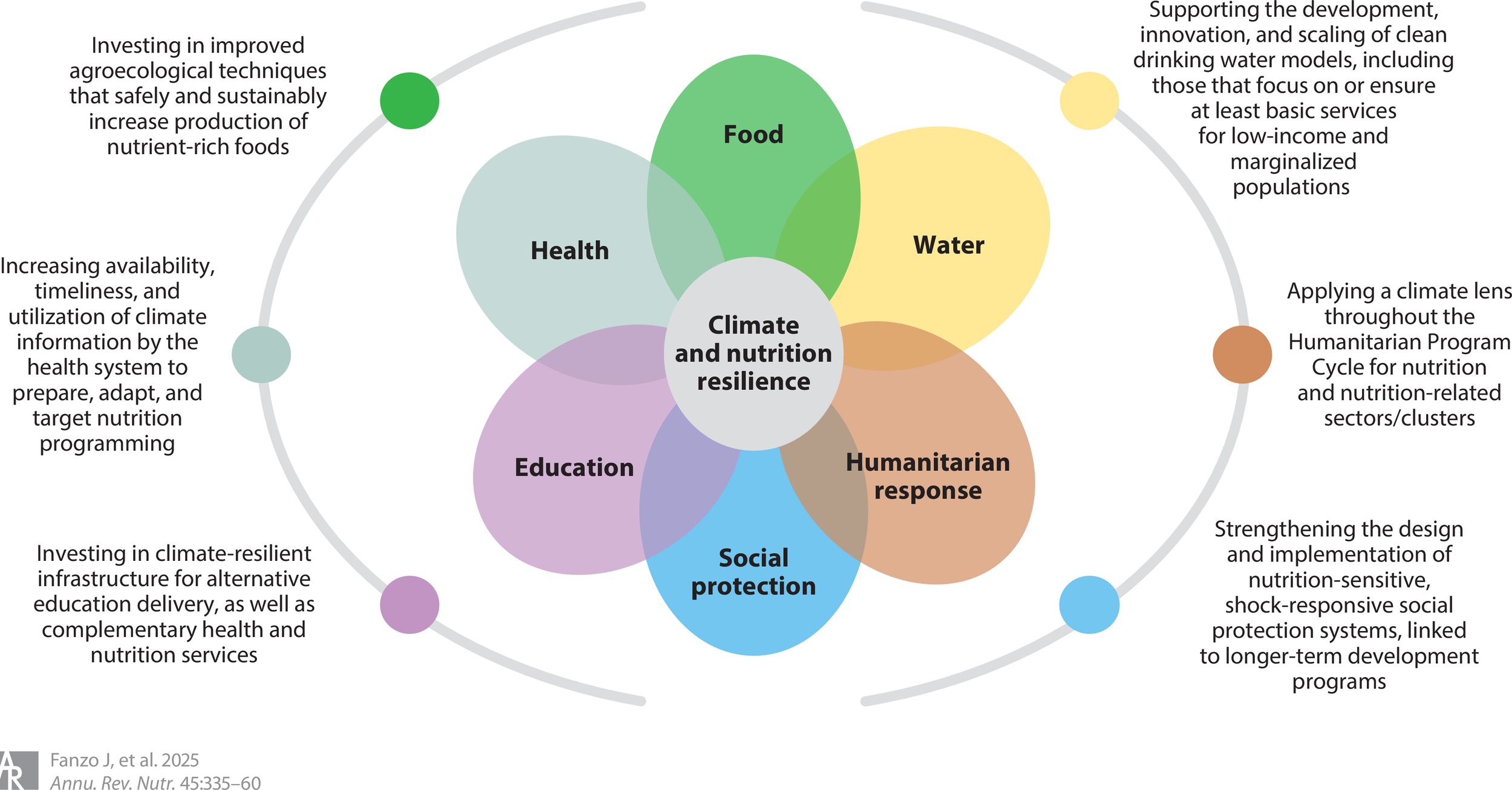
Has Nutrition Been Lost in the Shift to Food Systems?

I was having a lovely catch-up with my good friend and colleague Stineke Oenema, the former Executive Secretary of UN Nutrition, and we were discussing the current “positioning” of nutrition. Nutrition has always been important. The problem is that it rarely stays at the center of global development attention for long.

For decades, the international agenda has moved in waves. In the mid-20th century, the priority was food security: preventing famine, increasing yields, and making sure countries had enough to eat. Later, nutrition emerged more explicitly as a development goal in its own right. The first 1,000 days framework helped focus attention on a critical period in child development. The Scaling Up Nutrition (SUN) Movement created a political platform (RIP David Nabarro). Nutrition-sensitive agriculture pushed the idea that farming should do more than produce calories — it should improve diets.

Now the dominant frame is food systems. That shift has brought real value. It has helped connect production, trade, diets, health, climate, and resilience. It has broadened the conversation in useful ways that take on the holistic nature of food as an interconnected system that should not be dealt with as isolated activities without consequences. But it also raises an uncomfortable question: when nutrition is absorbed into a bigger agenda, does it gain strength — or lose visibility?

That question matters because nutrition has never been a narrow technical issue. It is multi-causal and deeply political. It depends on food, yes, but also on health services, clean water, sanitation, education, income, social protection, and care. No single ministry or institution can fix it alone. That complexity makes nutrition harder to govern than many other development priorities. It is everyone’s concern, which too often means it becomes no one’s responsibility.

And yet the case for nutrition has never been stronger. Every country in the world faces some form of malnutrition. In some places the challenge is undernutrition and stunting. In others it is micronutrient deficiencies. Elsewhere it is overweight, obesity, and diet-related disease. Often, all of these coexist. Malnutrition is not just a problem of the past—it is a defining feature of the present.

It is not all terrible. In the just-released State of Food Insecurity Report, also known as “the SOFI,” produced annually by FAO et al, they show that global progress on reducing stunting, wasting, and overweight among children under five years of age is improving, but “marginally.” Yet, the data suggests that child stunting has declined substantially in Africa. The region is also on track to achieve the child overweight and wasting targets, with projections indicating that both targets will be surpassed by 2030. Asia is on track to meet the 2030 goal for stunting (which is a 40 percent reduction in the number of children under five years of age who are stunted). That is incredible!

However, not all is quiet on the western front either. Progress on reducing undernutrition is mixed when looking at regions, countries, and within pockets of countries, and meeting the 2030 targets shows there is still a lot of work to do (look at all that red in the SOFI graphic below). Some countries are really struggling. Anemia among women is getting much worse. We worked on a Lancet Hematology Commission this past year to draw more attention to anemia, which has devastating consequences for women. Obesity among adults continues to increase, but perhaps the GLP-1 drugs may halt some of this rise, eventually (that is, if they become widely available, cheap, and don’t cause known/unknown harms).
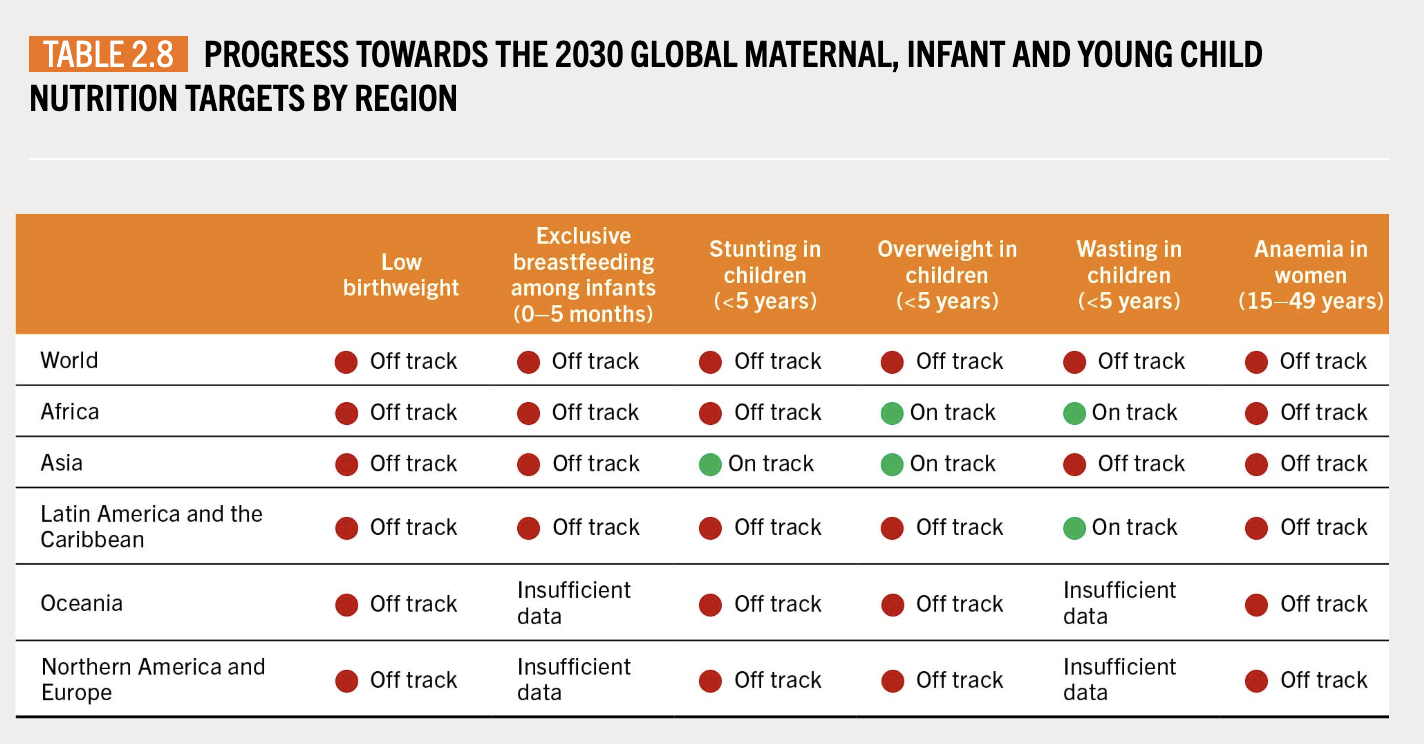
Analysis from SOFI 2026 report (FAO)

The stakes are rising. Conflict, climate change, inflation, tariffs, and geopolitical shocks all affect food prices and food access. When prices rise, households do not simply buy less food — they often buy less nutritious food. Diet diversity declines. Women and children are often hit first and hardest. In other words, shocks to food systems, and many other systems, are also shocks to nutrition. This is why nutrition cannot be treated as a sub-theme within broader debates on food, climate, or geopolitics. It sits at the intersection of all three.

The danger today is not that nutrition has disappeared from the agenda. It is that it is being folded into other priorities without enough explicit attention of its own. Food systems are important, but food systems do not automatically produce healthy diets. A system can be efficient, resilient, and climate-smart and still fail to improve nutrition. Unless nutrition is named, measured, financed, and held accountable, it can easily be assumed rather than delivered.

That is the lesson from nutrition’s history. The issue gains ground when it is attached to a larger political narrative — but it only stays visible when it remains a distinct objective. The 1000 days agenda worked because it was specific. SUN worked because it created a coalition and a sense of urgency. While SUN has brought countries together around nutrition, participation has not become universal and countries committing to SUN appears to have slowed. Nutrition-sensitive agriculture mattered because it tried to make nutrition everyone’s business. But each time the field broadened, the risk of dilution grew too.

Maybe we nutritionists aren’t needed anymore – undernutrition is slowly coming down, and now, GLP-1s are the “saviors” of the obesity pandemic…I think you all know I am being a bit sarcastic here, but truly, what is next? Will another report or a global meeting that focuses solely on nutrition help? Likely not. Even more so, is international development dead? I really hope not…but it ain’t lookin’ so good for 2030 if things stay as they are.

So, what comes next? Right now, with the current world order, I have no clue, my friends. Perhaps it is One Health. Perhaps it is climate-nutrition links. Perhaps it is a stronger focus on resilient diets, commercial determinants of health, or the health consequences of food environments. Maybe it’s everything, everywhere, all at once. Whatever the next frame is, it should not replace nutrition. It should protect it.

Because nutrition is not a luxury issue to be revisited when the world has time. It is foundational to human development, resilience, and equity. If the world is serious (which is questionable at the moment) about reducing poverty, improving health, strengthening food security, and building climate resilience, then nutrition must remain visible — not just as part of the conversation, but as a priority in its own right.

The next global agenda post 2030 should not have to rediscover nutrition all over again. It should learn how to keep it there. 

Food Bytes: June 2026 Edition

Here we are. Smack dab in the middle of Europe’s second heat wave here in Bologna. My years of living in Tucson with a swamp cooler and in NY without any AC have trained my body well, but as the years go on, tolerating the heat gets a wee bit harder. According to Rothko, we are Orange, Red, Orange, 1961. I’ll take that and fester in it for a while. But in all seriousness, the world keeps signaling to us that something is off. This “Omega heat dome,” where Europe remains ill-prepared, is the latest example. The Po is drying up, which is bad for agriculture. A high-pressure system has trapped hot air over South Asia, creating a prolonged heatwave. Wildfires are poppin in America’s west and Europe’s east. Already, the heat is putting pressure on food supplies (good article on Bloomberg) along with Trump’s unnecessary war with Iran.

And now, we see the World Meteorological Organization has confirmed the rapid development of a new El Niño cycle in the Pacific Ocean. Meteorologists note it is already beginning to shift global moisture and temperature baselines, setting the stage for a highly volatile summer. The Grist has a timely article on the potential impacts the world is likely to see. Data suggest that in South Asia, and India in particular, El Niño weakens the seasonal monsoons, and because India is the world's largest rice exporter, a failed or weak monsoon could severely diminish rice yields and trigger global export restrictions or bans. In Southern Africa, the pattern typically brings hotter, much drier conditions, threatening staple crops like maize and risking a spike in regional malnutrition. While parts of South America (like Peru) face heavy rain and flooding that can wipe out infrastructure, the southern United States is projected to face a much wetter-than-normal year, risking crop-destroying floods from California to the East Coast.

As I always ask my students when discussing extreme events, is the world ready?

With all this heat, it does get hard to sit in front of one’s computer, plunk down on the couch, and read, but on the other hand, it is hard to do much else. So herein lies what I have been reading for the last month. Got through about 4 books so far (see picture on the left). My goal is to read 10 books over the summer months. I have provided reviews of these here, here, and here. All are good reads, with only one related to food. I haven’t had a chance to review Rebecca Solnit’s A Field Guide to Getting Lost, but she certainly captures me not only in her writing but also in how she positions herself in the world. Some say she is the modern Joan Didion. I say she is solely Rebecca Solnit.

Bored? Try this FoodGuesser which gives you a dish or food and you have to guess where it is from. Today’s was surf ‘n turf. Uhhhh…..who else would be so decadent to both steak and lobster on one plate…

Beyond books, I found some of these reports and papers worth some time digging into:

First up, the Global Nutrition Report. It was nice to see a full report again after several years of getting lost in goal tracking that didn’t seem to track all that much…The findings of the 2026 Global Nutrition Report land at a critical juncture, providing a necessary, evidence-based framework for navigating the intersection of climate change and malnutrition. It tells us plainly that our celebrated 'win-win' development narratives are often illusions on the ground. As we shift towards integrated, climate-resilient approaches, the report rightly emphasizes that our policy choices can no longer be treated as separate, single-sector decisions. The 2026 Global Nutrition Report lands not as a comfortable endorsement of ongoing efforts, but as an intellectual disruption to our collective “siloed complacency” and the seductive trap of "win-win" developmental narratives. For too long, the multilateral system has acknowledged the intersections of climate, health, and nutrition only implicitly—treating them as adjacent portfolios rather than as a single, co-dependent polycrisis.

The Global Justice Report (lots of “globals” here)…is a really important report led by the World Inequality Lab. The report outlines a roadmap spanning from 2026 to 2100 that aims to reconcile global economic prosperity with planetary boundaries. The report argues that climate survival and deep decarbonization are impossible without a drastic reduction in wealth inequality. It proposes radical systemic changes—such as a massive "Global Justice Fund" financed by heavy taxes on billionaires, a transition to a two-and-a-half-day work week (YES!!!!), and reduced material and red meat consumption—with the goal of capping global warming at 1.8°C while doubling the incomes of 89% of the world's population. Thomas Piketty, the world-renowned French economist and author of Capital in the Twenty-First Century, brings his trademark expertise in wealth and income inequality to the project. It is dreamy and bold, and worth a read of a utopian world that seems very far off at the moment…

On reports, and this one doesn’t have “global” in the title, is the At the Crossroads: Food in an Age of Uncertainty by Systemiq. This is an interesting report that conducts a foresight analysis (see figure below) of how escalating geopolitical fractures, climate volatility, and artificial intelligence are converging to disrupt the global food system. The report is highly effective at diagnosing system vulnerabilities—notably exposing concentrated supply risks, such as the fact that just four crops occupy 50% of global cropland and that a staggering 30% of global fertilizer trade passes through a single chokepoint, the Strait of Hormuz (a very timely notion indeed). Critically, however, the report functions more as an academic exercise in "futures thinking" than a concrete action plan. While it sharply rejects simple "system efficiency" in favor of holistic structural resilience and issues urgent warnings about ultra-processed food addiction, its conclusions call for "honest dialogue" and "step-changes in global coordination" rather than outlining enforceable regulatory mechanisms or specific corporate mandates. Ultimately, it serves as an excellent diagnostic tool for identifying systemic risk, but it soft-pedals the aggressive, legally binding political battles of food policy and systems.

Stylized scenarios and trends, Systemiq

Some other good peer review articles that I came across:

  • The long and winding road of stunting reduction since the 19th century (P.S. that is not the name of the article…). Some good lessons for LMICs still dealing with stubbornly high stunting prevalence, particularly from Japan.

  • Was the Lancet series on ultra-processed foods not sufficient? Well, AJPH has you covered with a whopper of a special issue on UPFs and public health. If you don’t have time to read the 18 articles, you can read Lindsay Smith Tallie and Ashley Gearheardt’s summary on their new Substack, Unjunked, to get the highlights, or this NYT article. If you want to see what to do about it, get involved with Fedup! movement.

  • The WHO has published its estimates on the hazards of foodborne illnesses. The results are scary, and I don’t think the global food system community talks enough about food safety. They show that as of 2021, foodborne transmission of the 42 hazards they studied caused 866 million illnesses and 1.52 million deaths. Of those hazards, inorganic arsenic, lead, and non-typhoidal Salmonella enterica caused the most damage, particularly among young children and in Africa and South-East Asia.

  • A review of countries worldwide shows that 64 have implemented sugar-sweetened beverage taxes, covering 3·. billion people, with Asia leading the way.

  • Love this paper, which links the lack of clean drinking water to food insecurity (and vice versa) and to food safety issues. Good read!

  • A timely paper understanding the impacts of trade on the water-energy-food (WEF) nexus. In the paper, they construct WEF networks to quantify trade-driven changes. High-income countries achieve stronger WEF synergies that promote gains across all three aspects, whereas low-income countries face many trade-offs, with food-centered competition over water and energy driving them. This is why I always argue for the “energy bros” out there to consider food…

  • While not food-related, an important read on how “commitments to stronger international cooperation are being strained by rising authoritarianism, weakening multilateralism, aid cuts, and growing misinformation” when it comes to infectious disease spread (with the recent cases of Hantavirus and Ebola). These same issues will hinder efforts to address food insecurity and malnutrition. 

  • The Johns Hopkins Center for Humanitarian Health–Lancet Commission on health, conflict, and forced displacement: health in a world of crises and impunity outlines a comprehensive strategy to reform the global humanitarian system amid escalating modern crises (see Figure below) by demanding an end to legal impunity, a total inversion of power toward localized decision-making, and a complete restructuring of how emergency health funding is distributed to affected populations. Boom.

Timeline of humanitarian health crises, reforms and milestones, 1863–2025 (Spiegel et al 2026)

Some other tidbits and interesting reads across media:

  • Who knew ranch dressing would be popular?

  • I was just visiting London and Brighton, and yes, I had fish and chips goddammit. But is England ready to move away from cod? Bloody hell!

  • A wonderfully philosophical long read in the Guardian about whether ecosystems can malfunction, in which the author argues that ecosystems only "malfunction" when humans co-opt them for specific goals.

  • Innovation on how to run a restaurant (don’t charge for food) in Minneapolis (we got your back, friends!).

  • The Economist argues that feeding the world will require new technology. Um, Duh! But is AI the game-changer? I remain skeptical.

  • What have we learned about GLP meds? It’s the wild, wild west, ya’ll! But clearly, this may prove to be a game-changer in tackling obesity.

Well, my hands are starting to sweat, making it hard to type. I will leave you an album that came to mind recently and that I had not listened to in a good long time: the self-titled Violent Femmes album that came out in ‘83 in my junior high days. The Violent Femmes are an American folk-punk band from Wisconsin. Such an original sound at the time. We were kind of obsessed with this album for a hot minute, and somehow, it fits with summer, the heat, frustration, etc. A funny side story: the group was busking in Milwaukee on a street corner, and the guitar player for the Pretenders happened to be walking by, heard them, and invited them to open for their show that night. Hot damn!

Archive Appetizer: Nutrition-sensitive climate risk across food production systems

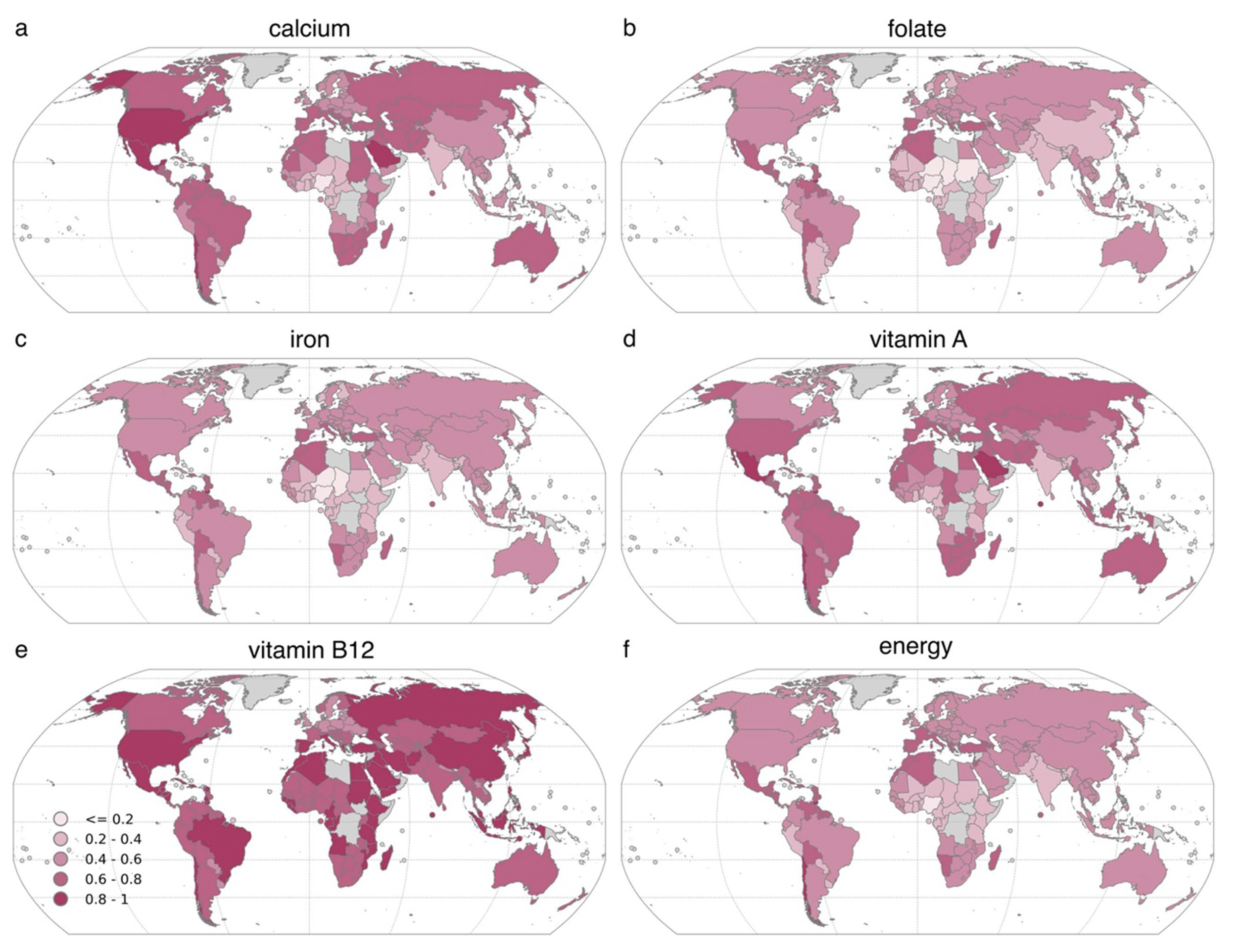
In 2025, we published a paper titled "Nutrition-Sensitive Climate Risks Across Food Production Systems" led by Michelle Tigchelaar. It presents an important analysis linking food security, micronutrient deficiency, and climate change. The objective of the paper was to assess nutrition-related climate risks across various food production systems. This is critical as both malnutrition and climate change pose significant threats to public health and food security, particularly in low- and middle-income countries where deficiencies are prevalent. We focused on five key micronutrients: calcium, folate, iron, vitamin A, and vitamin B12, selected for their vital roles in human health and the high rates of deficiencies associated with their lack.

We used data from the Global Nutrient Database. We categorized food items into six groups: aquatic products, fruits and vegetables, legumes and nuts, cereals and tubers, livestock products, and other crops. We then analyzed the availability of these micronutrients. We linked this supply data to various climate hazards using an integrated approach that considers the impacts of climate change on food systems.

The major findings highlight significant regional variations in climate risks associated with nutrient availability, with notable hazards for vitamin B12 and calcium predominantly found in animal-source foods. By 2041–2060, most countries will face medium or high climate risk to at least one critical micronutrient (calcium, folate, iron, vitamin A, B12).

This figure hows how often each nutrient’s domestic production will face extreme climate 2041-2060. For example, vitamin B12 and calcium face high climate risk due to heavy reliance on animal-source foods. Globally, 75% of calcium, 30% of folate, 39% of iron, 68% of vitamin A, 79% of vitamin B12, and 54% of energy production is projected to face climate extremes by the middle of the century.

Moreover, the analysis reveals that regions such as the Mediterranean and Central America are particularly vulnerable to high climate risks across all studied micronutrients, underscoring the urgent need for tailored resilience strategies to combat rising malnutrition amid the ongoing climate crisis. Countries like India, Nigeria, Tanzania, Mozambique, Madagascar, and Guatemala are projected to face high domestic climate risk across multiple micronutrients. Diverse Production Systems at Risk: Not just cereals, but livestock, aquatic systems, fruits & vegetables, and legumes & nuts are all vulnerable—particularly in tropical and low-income regions.

Why is the research important?

  • It goes beyond staples: Most climate-food modeling studies focus on crops like wheat or rice. This one looks at nutrients that actually matter for health — like iron and vitamin A — and includes diverse food groups, including fish and vegetables.

  • It links climate change directly to human nutrition, not just yields or calories.

  • It recognizes that countries differ in their vulnerabilities and offers tools and strategies tailored to different kinds of risk profiles.

  • It provides a new framework for integrating food, nutrition, and climate policy. Countries can use this to prioritize where to invest — whether in farming, aquaculture, trade policy, or nutrition programs.

  • It shows that climate change threatens global nutrition goals, not just in fragile states. Even high-income countries could be affected if their food systems are too narrow or reliant on specific sectors.

What are the major calls for action?

  1. Develop national commitments to nutrition in National FS Pathways, Nationally Determined Contributions and National Adaptation Plans.

  2. Support diversified, climate-resilient food production.

  3. Build food and nutrition security into market systems.

  4. Expand safety nets and food environment policies to protect the most vulnerable.

I presented this work at the Global Alliance for Improved Nutrition back in April 2025. Here is the slide deck. Enjoy!

The Archive Appetizer: Integrating Climate Services for Nutrition Action

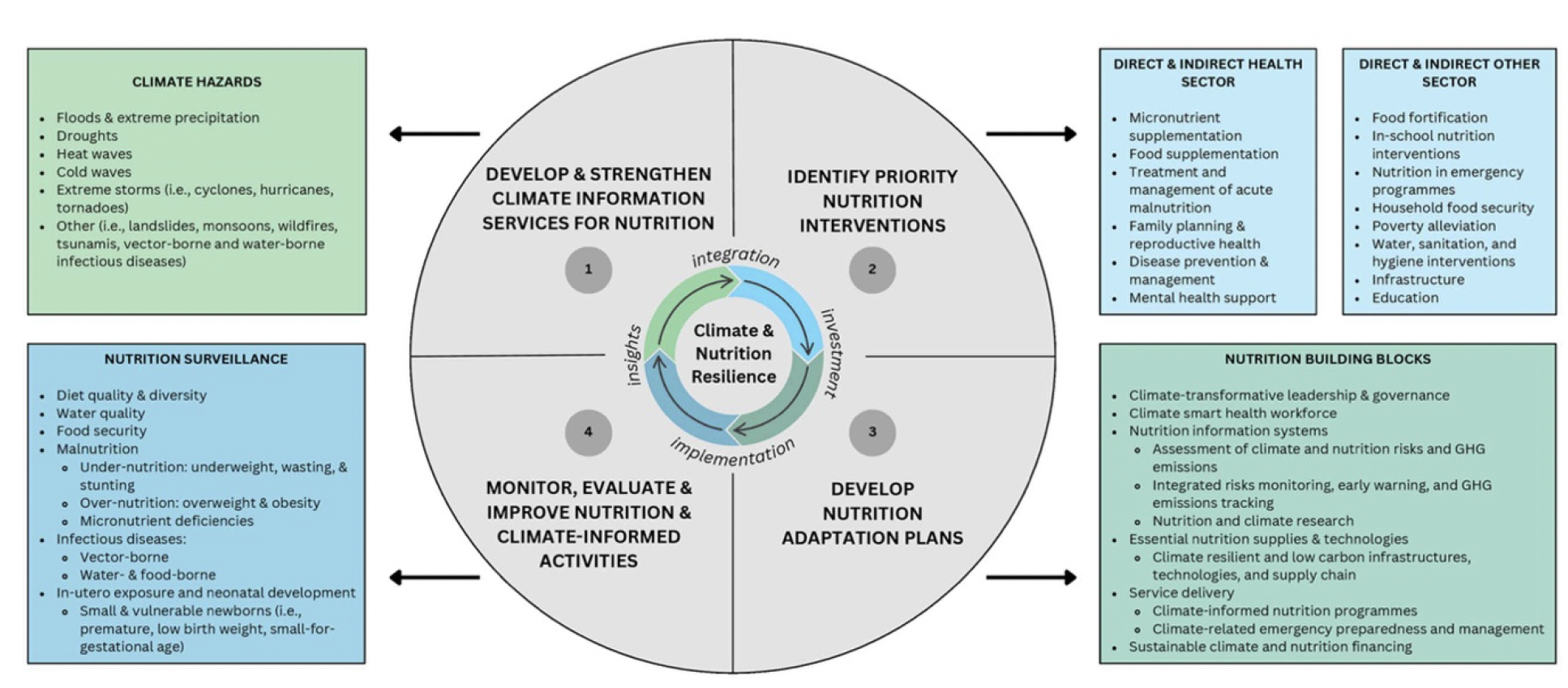
Recently, my team published a review exploring the intricate relationship among climate change, food security, and nutrition. Our study is rooted in the understanding that climate change significantly affects nutritional outcomes, particularly among vulnerable populations. We conducted a scoping review to identify and synthesize country-level programs that effectively integrate climate services into health systems and nutrition interventions. By doing so, we aimed to highlight the diverse strategies employed across settings, focusing on both direct and indirect interventions related to health and nutrition, while emphasizing the need for aligned actions across sectors.

Our findings revealed 67 country-level programs that demonstrate innovative approaches to addressing the challenges posed by climate extremes, such as floods and droughts. We categorized these interventions using a framework that considers direct health-care strategies and various other sectoral strategies that affect nutrition.

Climate information and national nutrition planning and response conceptual framework (Carducci et al 2025)

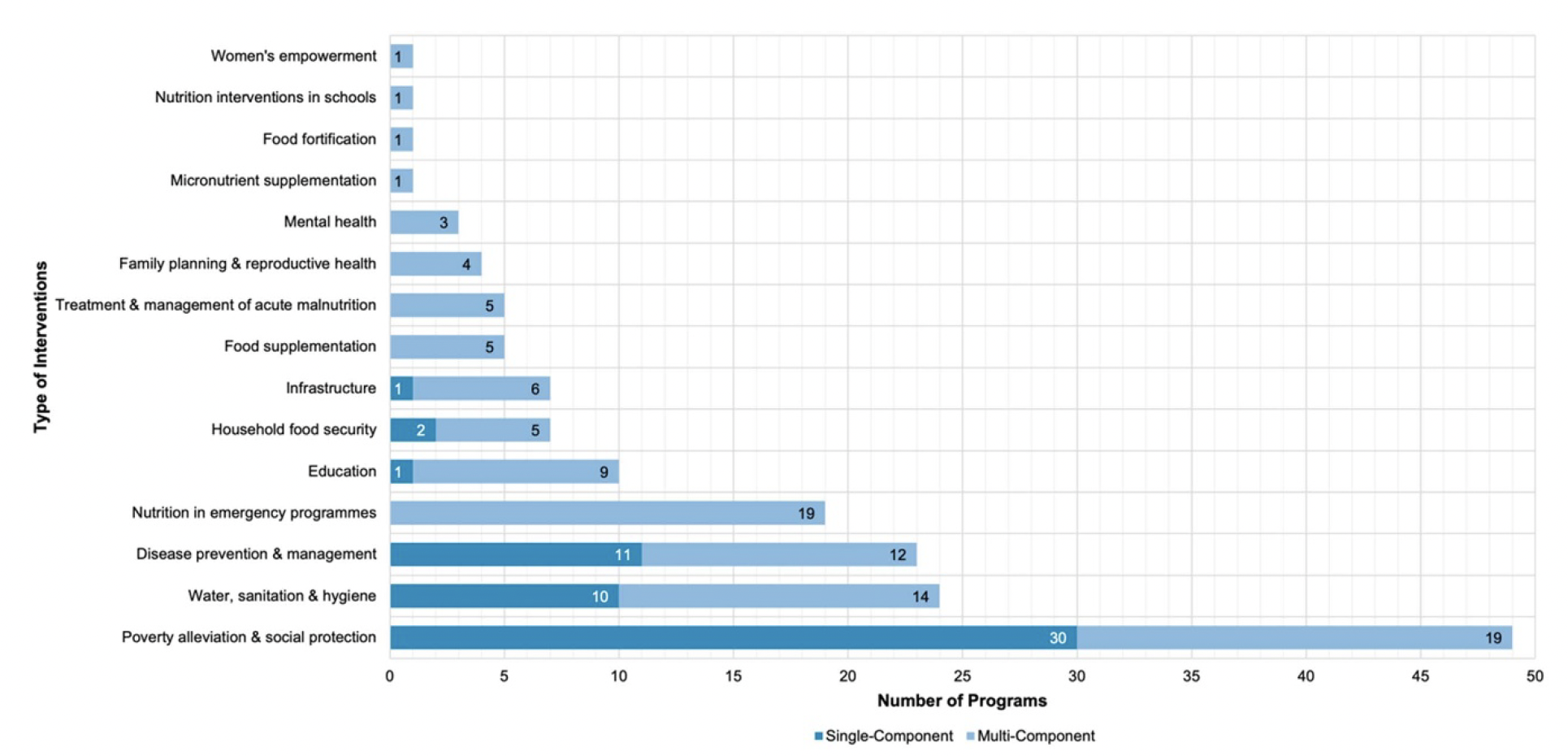
Of these 67 programs, 42 were single-component, while 25 were multi-component, showcasing a variety of approaches to address the interconnectedness of climate change, nutrition, and health. For example, several initiatives specifically targeting women and children were noted, although many programs were more generalized, addressing broader populations affected by climate-related hazards.

Number of programs, by intervention type and component (Carducci et al 2025)

Among the specific programs mentioned, strategies varied widely across regions. In Bangladesh, for instance, multi-hazard climate information services were implemented to prepare for floods and droughts, while in Uganda, the Global Flood Awareness System was used to prevent disease, particularly diarrhea and malaria. Notably, Burundi's programs focused on anticipatory actions for flood management, incorporating both national and regional climate prediction efforts. Meanwhile, Zambia's initiatives used climate information to enhance malaria control efforts, underscoring the importance of integrating local and international resources to address public health challenges.

Interestingly, many initiatives were found to be more indirect, operating outside of traditional health interventions. This underscores the critical need for collaboration across sectors to prepare for and respond to climate-related challenges while improving nutritional outcomes for affected communities.

In conclusion, we advocate for strong partnerships between climate information service providers and stakeholders in the health and nutrition sectors. Our synthesis emphasizes that integrating climate services into nutrition policy and programming is not only beneficial but also necessary for developing resilient strategies to protect public health from the impacts of climate change. Through effective cooperation, knowledge sharing, and a focus on data-driven approaches, we can enhance our preparedness and response to the intertwined challenges of climate change and nutrition.

Navigating Climate and Nutrition Challenges

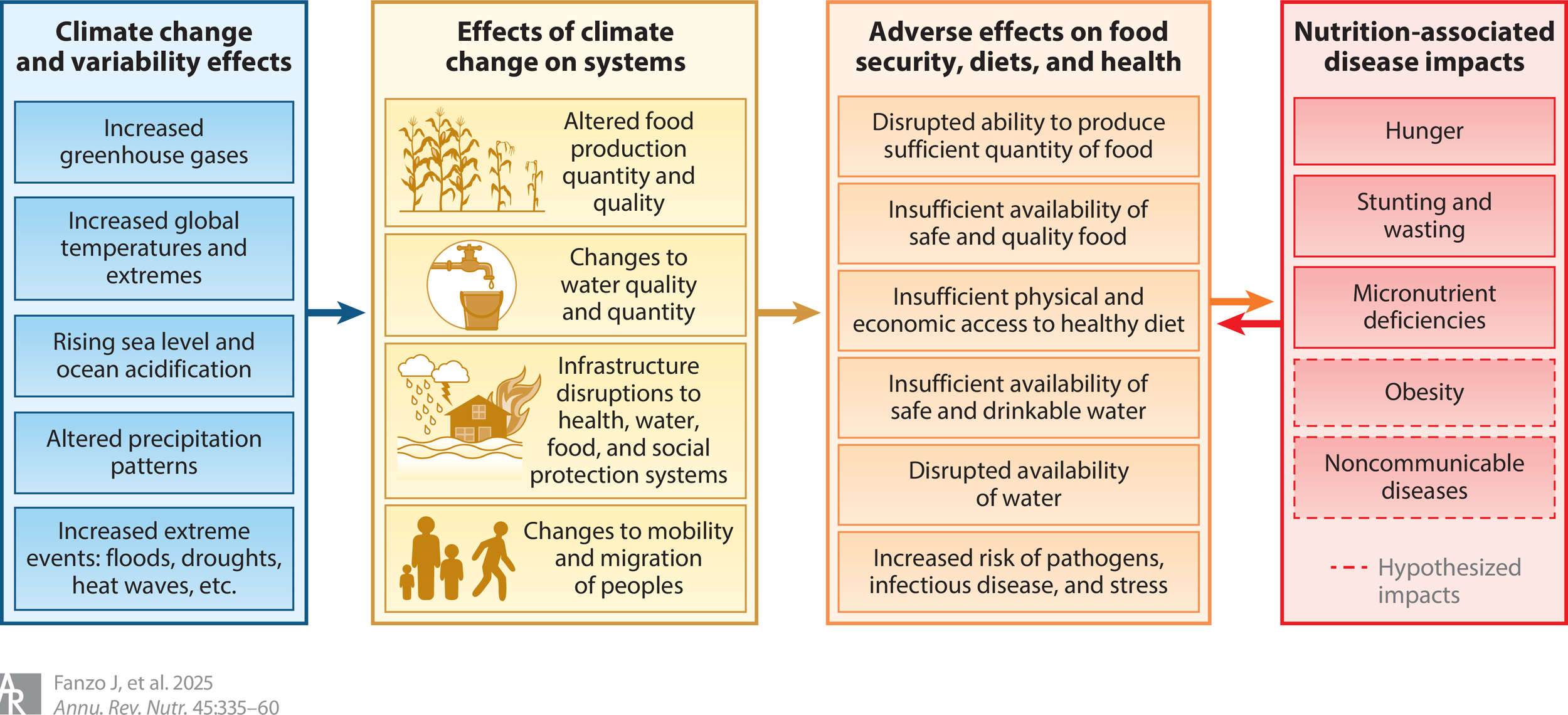
In the ongoing discourse surrounding climate change, the world needs a deeper examination of the multifaceted effects climate change and extreme weather events exert on global nutrition and food security. Climate change will likely intensify food insecurity, malnutrition, and the prevalence of noncommunicable diseases worldwide, as shifting climatic conditions disrupt agricultural production and water availability. It is also recognized that enduring effects can be expected as warming converges multiple climate stressors, thereby aggravating pre-existing vulnerabilities in food systems, particularly in low-income and resource-challenged regions.

We published a paper in the Annual Reviews of Nutrition this past year that highlights the intricate connections between extreme climate events and nutrition outcomes. Overall, as the review suggests, current studies on the impacts of climate change on nutrition remain limited, particularly regarding overlapping crises such as conflict and economic instability, which compound the effects of climate stressors.

One of the critical findings of the review is that extreme weather events, particularly droughts and floods, are strongly associated with various forms of malnutrition. For example, a systematic review and meta-analysis indicated that climate-related precipitation events, such as excessive rainfall and drought, are positively correlated with malnutrition. However, the nature of these effects varies by location, age, gender, and timing. The analysis suggested that drought conditions are significantly associated with increased rates of childhood wasting—a condition in which children are acutely malnourished and exhibit a low weight-for-height ratio.

An analysis involving 580,000 observations of children across 53 countries further supports this assertion. By using a derived Standardized Precipitation Evapotranspiration Index (SPEI), researchers investigated how precipitation anomalies may be associated with increased malnutrition among children. This study emphasizes the critical impact of climate variability on the nutritional status of vulnerable populations, particularly children under 5 years of age. However, the findings regarding underweight prevalence were less conclusive, primarily because various factors influence underweight and do not capture the full spectrum of malnutrition as comprehensively as stunting or wasting.

The review also emphasizes the need to explore the compounding risks posed by extreme weather events in a more nuanced manner. Extreme weather and climate events often occur in complex combinations—referred to as compounded events—that can exacerbate consequences not just for food security but also for population health. However, research remains limited in understanding the temporal and spatial nature of these compounding events and their specific impacts on nutrition outcomes.

Consequently, we assert that there is a pressing need for more sophisticated research methodologies, including longitudinal studies, to understand better the causal relationships and dynamic interactions between climate variability and nutrition. We should pay special attention to the need to employ advanced data analysis to assess the intricate patterns within these phenomena, thereby equipping policymakers with better insights for effective responses.

In summary, our understanding of how extreme climate events influence nutrition outcomes reveals both the severity of the challenges we face and the gaps in existing research. We must address the urgency of obtaining comprehensive data, refining analytical methods, and fostering interdisciplinary partnerships to understand better and respond to the dynamic relationship between climate variability and nutritional outcomes. Only through these concerted efforts can our global community hope to develop effective policies to build resilience against the inevitable shifts that climate change will bring to food systems and human health.

The Archive Appetizer: Integrating nutrient dynamics into crop models

This blog post is cross-posted on the AgMIP site and written by Natalie Kozlowski.

More than 2 billion people worldwide face the risk of micronutrient deficiencies due to the limited availability or affordability of nutritious foods. A new paper in Nature Climate Change presents a novel framework for integrating nutrient dynamics into crop models, such as the Decision Support System for Agrotechnology Transfer (DSSAT), while also highlighting the urgent need for experimental datasets to support this nutritional modeling. This integration will offer key insights into how to strengthen nutrition interventions in a changing climate.

Climate change is expected to intensify challenges related to food security and dietary diversity through shifts in crop productivity, greater yield and price volatility, market disruptions, food safety concerns, and reductions in the nutritional quality of the global food supply. These challenges may be further exacerbated by the potential dilution of key nutrient concentrations in staple crops due to rising atmospheric carbon dioxide levels.

Figure 1. Inputs, processes, and outputs to assess nutrient dynamics in crop models.

  • Nutrient uptake in roots throughout their lifecycle based on the initial pool of nutrients available in the soil

  • Nutrient accumulation in relation to daily plant mass growth and harvestable product

  • Soil factors affecting the solubility and movement of available nutrients in the soil

  • Impact of temperature, water stress, or other atmospheric factors on nutrient uptake per phenological stage

The paper marks an important advance in bringing nutrient dynamics into crop modeling and underscores the limited availability of comprehensive datasets beyond staple crops. The authors also call for urgent, collaborative research among climate scientists, farmers, crop modelers, plant biologists, and public health nutrition practitioners to safeguard nutrition under climate uncertainty. By integrating nutrient dynamics into crop models, we also improve our understanding of how climate-driven changes will affect and influence the ability for global populations to receive essential nutrients from the food they consume.

Carducci & Guarin et al. is now available to read in Nature Climate Change here.

The Archive Appetizer: Making Farming Extension Work for Nutrition

There appears to be a resurgence in efforts to ensure that nutrition is integrated into farming practices. A decade ago, we undertook a global study to synthesize experiences on integrating nutrition into Extension and Advisory Services (EAS) — the networks of agents who work directly with farmers worldwide. I think the study remains relevant and sheds light on how to improve EAS for nutrition-sensitive agriculture. In the study we find:

  • Nutrition integration is mostly limited to food availability interventions.
    The most common way nutrition enters EAS is through efforts like home gardening, crop diversification, biofortification (e.g., orange-fleshed sweet potatoes), and reducing post-harvest losses. These focus on increasing the supply of nutritious food, but less attention is given to food access and utilization dimensions of nutrition.

  • Nutrition training for extension agents is inadequate.
    Extension agents typically lack sufficient technical nutrition knowledge and the “soft skills” (communication, gender sensitivity, facilitation) needed to deliver nutrition messages effectively. Training is often short, inconsistent, and without refresher courses or mentorship. Weak career incentives further discourage agents from prioritizing nutrition.

  • Significant challenges hinder integration.
    Barriers include poor or ineffective nutrition training, unclear organizational mandates that overload agents, lack of female representation in the workforce, reduced mobility due to poor resources, and systemic disconnects between agriculture and nutrition sectors (different “languages,” weak coordination, and inadequate resources). These create major constraints on scaling up nutrition-sensitive agriculture.

  • Opportunities exist but remain underutilized.
    Despite challenges, EAS hold promise because they already have reach, trust, and cultural familiarity with rural communities. Key opportunities lie in engaging communities through participatory approaches, creating demand for nutrition (so that households value and request nutrition services), and using innovative communications technologies (ICT, radio, mobile platforms) to reinforce nutrition messages.

This word cloud above is enlightening. It shows the most frequently mentioned keywords by respondents to an online survey question, “What would be considered the greatest challenges in integrating nutrition into EAS?” The font size of the words placed in the word cloud represents their frequency and usefulness. The more prominent (larger text size) the word is in the word cloud, the more frequently it appeared in the online provided. Transportation, task overload, funding, and quality training were considered the most frequent challenges listed in the survey responses.

The takeaway? EAS could be a powerful vehicle for “nutrition-sensitive agriculture,” but only with sustained investment, multisectoral collaboration, and attention to equity.

🔗 A must-read, 10 years standing, for anyone working at the intersection of food, farming, and nutrition! Check out the paper here.

Food Bytes: September 2025 Edition

FOOD BYTES IS A (ALMOST) MONTHLY BLOG POST OF “NIBBLES” ON ALL THINGS CLIMATE, FOOD, NUTRITION SCIENCE, POLICY, AND CULTURE.

Food Bytes is back after taking August off (already practicing my ferragosta!). I think I say this every month, but it is hard to keep up with all the fantastic science and reports coming out. So let’s get to it.

The “Feeding Profit” report, published by UNICEF, argues that today’s food environments are systematically failing children by flooding markets and everyday spaces with cheap, ultra-processed foods that are aggressively marketed, thereby limiting access to nutritious choices. The data support this. Globally, 5% of children under the age of 5 and 20% of children and adolescents aged 5–19 live with overweight, and for the first time in 2025, obesity among 5–19-year-olds (9.4%) has overtaken underweight (9.2%). In many low- and middle-income countries, the prevalence of overweight individuals has more than doubled since 2000, and these countries now account for 81% of the global overweight burden (compared to 66% in 2000). The report finds that children’s diets are increasingly dominated by ultra-processed foods and sugary drinks, displacing more nutritious options, such as fruits, vegetables, whole grains, pulses, and animal-source foods (see the figure on the right). It highlights that for infants and children aged 6–23 months, only a minority meet minimum acceptable diet standards — e.g., globally, ~61% meet the minimum meal frequency standard, but only ~32% achieve the minimum dietary diversity (i.e., ≥ 5 food groups). It emphasizes that food environments—encompassing pricing, availability, marketing, and convenience—strongly shape diet quality, and that poor diets are not merely individual choices but are structurally driven by unhealthy food systems that food and beverage companies often interfere with and manipulate. Finally, it advocates for reforms such as reallocating agricultural and trade subsidies toward nutritious foods, regulating marketing and labeling, and enhancing social protection to make healthy diets more accessible and affordable.

Speaking of unhealthy foods, the Nature article, “Are ultra-processed foods really so unhealthy? What the science says,” scrutinizes whether the broadly used category of ultra-processed foods is scientifically justified, arguing that the classification may be overly heterogeneous to guide nutrition policy. While numerous observational studies link the consumption of ultra-processed foods to obesity, metabolic disease, and mortality, critics counter that many of these associations stem from confounding factors (e.g., overall diet quality, energy intake) rather than the definition of ultra-processed foods itself. The piece calls for improved definitions, mechanistic studies, and nuance in policy action, suggesting that a one-size-fits-all ban or tax on these foods may misfire without a clearer scientific basis. I think many working in this space disagree….

The study “Benchmarking progress in non-communicable diseases analyzes changes in cause-specific mortality across 185 countries from 2010 to 2019, utilizing age-specific death rates and life-table methods to estimate the probability of dying from non-communicable diseases before the age of 80. During that period, non-communicable disease mortality declined in 82% of countries for females and 79% for males; however, the pace of decline slowed compared to 2001–2010, and in a minority of countries, the probability increased. Circulatory diseases contributed most to mortality reductions, while neuropsychiatric disorders, pancreatic and liver cancers, and diabetes offset gains in many settings.

Moving on to the area of sustainable diets, an interesting report , Meat vs EAT, was released last week, revealing a coordinated online backlash against the EAT Lancet Commission report. The backlash was driven by a network of 100 mis-influencers responsible for nearly 50% of posts and over 90% of engagement during the initial backlash. ​ Key hashtags, such as #Yes2Meat, reached 26 million people, surpassing the 25 million reached by pro-EAT-Lancet posts, with critical messages being shared six times more frequently than supportive ones (see Figure to the left). ​ Industry ties were evident, while mis-influencers monetized their advocacy through books, subscriptions, and events. None of this is shocking. With the second Commission report coming out this week, and the current global political turmoil, it will be interesting to see how they address the Commission's findings and its scientists. Their playbook? Attack the scientists, not the science. Boooo!

Let’s stay on this broad topic. A new study highlights the significant health impacts of anthropogenic climate change, including deaths, illnesses, and disabilities, with a focus on heat-related mortality, extreme weather events, and diseases like malaria and dengue. While most research has concentrated on high-income countries and temperature-related risks, recent studies have expanded to include air pollution, child health, and displacement, revealing substantial economic losses valued in billions annually. ​ The authors emphasize the need for more geographically diverse and equitable research, particularly in the global south, to better understand and address the health consequences of climate change.

Speaking of climate change, this study uses US household food purchase data (2004–2019) linked with meteorological records to quantify the effect of temperature on added sugar consumption. Results show that intake rises sharply between 12 °C and 30 °C (~0.7 g °C⁻¹), driven primarily by sugar-sweetened beverages and frozen desserts, with disproportionately larger effects among lower-income and less-educated groups. Projections under a 5 °C warming scenario suggest average daily added sugar intake will rise by ~3 g per person by 2095, exacerbating nutrition-related health risks and inequalities. Interesting study? Yes, we need to understand how climate extreme events impact dietary quality and nutrition outcomes. But are the findings significant? Probably not…3 grams of sugar ain’t much…

And to pivot a bit, the Lancet published "Getting back on track to meet global anaemia reduction targets: a Lancet Haematology Commission." The Commission assesses why the world is far off track to meet global anaemia reduction targets and provides a roadmap to get efforts back on course. As it stands, anaemia affects nearly 2 billion people worldwide, and most countries are far off track to meet reduction targets. Five takeaways:

  1. Anaemia has multiple drivers, from poverty, food insecurity, and poor WASH to infections, chronic diseases, and inherited blood disorders. Recognising this complexity is key to designing context-specific solutions.

  2. Reliable surveillance is patchy. Nearly half of the countries lack recent national anaemia data for women or children, and almost none collect comprehensive cause-specific information. Better integrated data platforms are urgently needed.

  3. Iron deficiency remains the leading cause, but infections, inflammation, micronutrient deficiencies, blood loss, and environmental stressors (like air pollution and climate change) all play major roles. Interventions must address this whole spectrum.

  4. Reducing anaemia requires strong governance across health, nutrition, and social sectors. Equity and human rights should be central, ensuring programmes reach the most vulnerable while being tailored to local contexts.

  5. The current WHO target of a 50% reduction by 2030 is unattainable with existing tools. A new evidence-based framework suggests a more realistic 12–22% global reduction, with country-specific goals that balance ambition and feasibility.

A companion article, “Anaemia in a time of climate crisis” published by your Food Archiver surveys how climate change — through effects like extreme heat, altered rainfall, and reduced agricultural yields — threatens to exacerbate global anaemia. It argues that vulnerable populations (especially women and children) in already high-burden settings will face worsening micronutrient deficits unless interventions integrate climate resilience into nutrition and health systems.

Gotta love Molly, oh how I miss the 80s!

A few interesting media pieces for your reading pleasure:

  • Sushi has become the grab-and-go, convenient food. Interesting how something raw has become so mainstream. (love the shoutout to Molly Ringwald in Breakfast Club)

  • An article on the beauty and craft of pizza.

  • I recently traveled to Mexico City and had a hard time finding good Mexican food. Why? Damn gringos are all moving there demanding, you guessed it, sushi and pizza.

  • Fantastic piece by Illana Schwartz, a Columbia University climate student, on the climate vulnerability of NY’s food supply, particularly the Hunts Point Cooperative Market, the point of distribution for 35 percent of the meat that enters the five boroughs. That’s more than 1 billion pounds of meat annually.

  • A Guardian article on why meat’s contribution to climate is often ignored by the media.

  • Breaking the trend of consolidation, Kraft Heinz, the makers of Kraft Mac and Cheese, Lunchables, and, you guessed it, Heinz ketchup, is breaking up:

  • Last, an important article on what happens to children when they become increasingly acutely malnourished. Recall that FEWS Net and others have declared that many parts of Gaza are now experiencing famine. Incredibly tragic.

And some final random thoughts. The great Italian actress Claudia Cardinale passed away this week. We were inspired to watch her in Werner Herzog’s Fitzcarraldo. Such an insane movie. Even better is to watch the making of it in the documentary, “Burden of Dreams.” Herzog is at his finest when he discusses nature and the jungle…His words resonate on the fragility of our world and humans in it.

The Archive Appetizer: Nutrients on the Line When Trade Walls Rise

I have been going through old papers and this one from 2018 is a banger, and highly relevant to the current tariff wars. The paper examined how international food trade influences the global distribution of nutrients. Instead of focusing only on food quantity, we assessed whether trade helps countries meet macro- and micronutrient needs, and what happens under a no-trade scenario. Our central question was to determine whether trade improves nutritional equity across countries and what risks protectionist trade policies pose to food security.

Three Key Findings:

1. Global adequacy exists—but is unevenly distributed.

If nutrients were equitably distributed, current global food supply could meet average dietary needs for all major nutrients, with huge surpluses for protein and vitamin B12. However losses due to waste, conversion, and unequal distribution mean that many countries fall short, especially for micronutrients like folate and iron.

2. Trade improves nutrient equity, especially for poorer countries.

International trade reduces inequality in nutrient distribution. Without trade, disparities would be much higher, and between 146–934 million fewer people could be potentially nourished, depending on the nutrient. Low-income countries generally obtain access to nutrients through trade, except for iron and folate. The map below shows the change in the number of people who could be nourished without trade. For each country, the number of people (in millions) who could be nourished under current (average of 2007–2011) scenarios was subtracted from the number of people who could be potentially nourished under a no-trade scenario. Map breaks correspond to minimum, first quantile, medium, third quantile, and maximum for each nutrient.

3. Protectionist policies threaten nutrition security.

While trade is not perfect—since traded foods are often low in micronutrient content and not equally accessible to the poor—it still plays a critical role in helping countries meet nutrient needs. For some critical micronutrients—like iron and folate—trade does not consistently improve availability, and in some cases makes it worse. This highlights both the benefits and vulnerabilities of relying on global markets for nutrition but also, restricting trade would likely worsen global undernutrition and inequality in access to key nutrients.

Check out the paper here.

Food Bytes: June 2025 Edition

FOOD BYTES IS A (ALMOST) MONTHLY BLOG POST OF “NIBBLES” ON ALL THINGS CLIMATE, FOOD, NUTRITION SCIENCE, POLICY, AND CULTURE.

I just returned from an unforgettable trip to Lao PDR, with two stopovers in Bangkok, Thailand. Laos is a country of striking contrasts—on one hand, it moves with an unhurried, almost meditative rhythm; on the other, it carries the weight of a complicated past, still navigating the long shadows cast by war, particularly the enduring legacy of unexploded ordnance.

By Jess Fanzo, Luang Prabang

As many of you are aware, I’m currently working on a book that explores how the counterculture movements of the long 1960s have shaped today’s food systems. Inevitably, that journey includes grappling with the legacy of the Vietnam War, and as an American, traveling through this region stirs deep reflection. It's impossible not to think about the imprint left behind by U.S. military action and the resilience of communities who’ve had to rebuild in its aftermath.

Yet what struck me most was how far this part of the world has come. There’s a quiet strength in Laos, a gentle pride in its culture, and a determination to move forward without forgetting the past. It’s a powerful reminder of the world’s ebbs and flows, and how, even in the face of immense hardship, there’s the possibility of healing. “This too shall pass” kept echoing in my mind—not as a dismissal of pain, but as a recognition of time’s capacity to soften and transform.

Onward to this month’s Food Bytes.

IFPRI put out a bible in this year’s Food Policy Report. Where the rubber meets the road is Section 5, on effective change and the factors that determine how policy change occurs. One of our new papers led by Stephanie Walton (who is doing amazing work at Oxford) suggests that addressing asset stranding proactively, rather than trying to prevent it, could be a powerful lever for change.

Some great data exercises are out that provide useful nuance in how our food systems are performing. First up is the Systems Change Lab, which assessed progress for 32 outcome indicators in the food system. To help spur transformational change, we also highlight 58 critical enablers and barriers. Results of their analysis? NOT GOOD. The second is by the Better Planet Laboratory, which identifies food flows through nearly every major port, road, rail, and shipping lane worldwide and traces goods to where they are ultimately consumed. It’s called the Food Twin Map.

There are also some great people producing worthy pieces to read and follow. First, the great Bill McKibben has a Substack. I encourage you to read one of his latest entries, “So many moving pieces.” Nicholas Kristof is fighting the good fight and producing many excellent pieces on how the US government’s actions are harming global health and nutrition. Check out this, this, and this. Other institutions are getting in on the action. Bloomberg News has launched a new food column, titled "The Business of Food." The UNDP appears to be making a play in the food systems sector, including the launch of a new Conscious Food Systems Alliance. Fascinating!

Some highlights from journalists writing about food:

  • An interesting take on RFK Jr’s Make America Great Again policy: Grocery Update Volume 2, #4: MAHA Or Misdirection. Grocery Nerd argues that the “MAHA” framework may serve more as political window dressing than actual change.

  • DeSmog reported that food giants Nestlé, JBS, PepsiCo, Mars, and Danone are overstating their climate commitments—leaning heavily on unproven carbon removal schemes, neglecting methane reductions, and relying on weak, loophole‑filled deforestation pledges—according to a new report from the NewClimate Institute and Carbon Market Watch. Gee, what a shocker…

  • In this article by Grist, the blending of at least 30% vegetables or plant proteins into meat products—known as “balanced proteins”—can deliver taste and price similar to conventional meat, while significantly reducing greenhouse gas emissions.

  • This fascinating article in The New Yorker, entitled “Schmear campaign: How a Hazelnut Spread Became a Sticking Point in Franco-Algerian Relations,” is about how the European Union has banned Nutella competitor El Mordjene, a move some see as politically and racially motivated.

  • In the New York Times, they have a new series, “What is History.” They kicked off the series with two articles on food: One by Jacques Pepin on culinary pursuits and the other by Carey Fowler on the biodiversity of our food supply.

  • I fully admit to being a fan of Elizabeth Kolbert, and she delivers with her latest article: "Do We Need Another Green Revolution?" Worth your time to read along with all of her work.

  • Michael Grumwald has a new book out, and he wrote a piece, A Food Reckoning Is Coming, as part of his book tour. Another worthwhile and perhaps divisive read.

Some highlights from the science literature

  • This study validates the Healthy Diet Basket—a least-cost dietary model based on food-based dietary guidelines—as a globally consistent benchmark, finding that it delivers adequate macronutrients and micronutrients at about US $3.68/day.

  • Whereas this study argues that dietary species richness (DSR)—a measure of the number of different edible species in a diet—is the most effective global marker for capturing food biodiversity. They also show it correlates strongly with lower mortality in Europe compared to other diversity indices, and tracks micronutrient adequacy in low- and middle-income countries.

  • Speaking of diets, this study uses a linear programming model of over 2,500 U.S. foods to show that individually tailored vegan, vegetarian, and flexitarian diets (with ≤255 g of pork and poultry per week) can meet nutritional needs, align with the Paris Agreement's 1.5 °C climate target, yield up to ~700 healthy-life minutes per week, and reduce climate impacts sevenfold.

  • Fortification remains essential and is considered a cost-effective way to fill nutrient gaps. Check out this modeling paper.

  • On processing…This NEJM perspective argues that mounting evidence linking ultraprocessed food consumption to increased calorie intake, obesity, and chronic disease necessitates regulatory policies—such as front‑of‑package labeling, marketing restrictions, and excise taxes—to curb their public health impact. Not sure there’s anything new here.

  • Numerous modeling papers are being published on the impacts of climate change on food production. This paper models six usual suspect staple crops — maize, soy, rice, wheat, cassava and sorghum — and finds that for every 1 °C increase in temperature, food production will decline from current levels by 120 calories per person per day, but that income growth and adaptation strategies could alleviate 23% of global losses by 2050 and 34% by 2100. Gulp.

  • Should we consider alternatives like insects? According to this article, that may not be the case. The title alone is click-worthy: Beyond the buzz: insect-based foods are unlikely to significantly reduce meat consumption.

  • Maybe it’s time to start building climate-resilient systems - not just food, but across all systems. Check out our new policy paper, which argues in this manner.

For those interested in broader development issues, the Sustainable Development Report 2025 is now available. Another report that feels more like a book on how the world is progressing on those pesky goals that would make the world a better place and leave no one behind. Related to that, we have a new paper on how pastoralists are coping with resource constraints, conflict, and climate extremes. We initiated this work a decade ago in Isiolo County, Kenya, utilizing photo elicitation and semi-structured interviews with Borana and Turkana pastoralists to gain a deeper understanding of the constraints hindering their ability to practice pastoralism and to identify opportunities for better supporting pastoralist communities with climate-resilient strategies. And last but not least, a conversation about The Myth of the Poverty Trap.

And do check out our new Food for Humanity podcast! This limited series is all about alt-proteins.

That’s all, folks. Have a wonderful, safe, and delicious summer!