In the ongoing discourse surrounding climate change, the world needs a deeper examination of the multifaceted effects climate change and extreme weather events exert on global nutrition and food security. Climate change will likely intensify food insecurity, malnutrition, and the prevalence of noncommunicable diseases worldwide, as shifting climatic conditions disrupt agricultural production and water availability. It is also recognized that enduring effects can be expected as warming converges multiple climate stressors, thereby aggravating pre-existing vulnerabilities in food systems, particularly in low-income and resource-challenged regions.
We published a paper in the Annual Reviews of Nutrition this past year that highlights the intricate connections between extreme climate events and nutrition outcomes. Overall, as the review suggests, current studies on the impacts of climate change on nutrition remain limited, particularly regarding overlapping crises such as conflict and economic instability, which compound the effects of climate stressors.
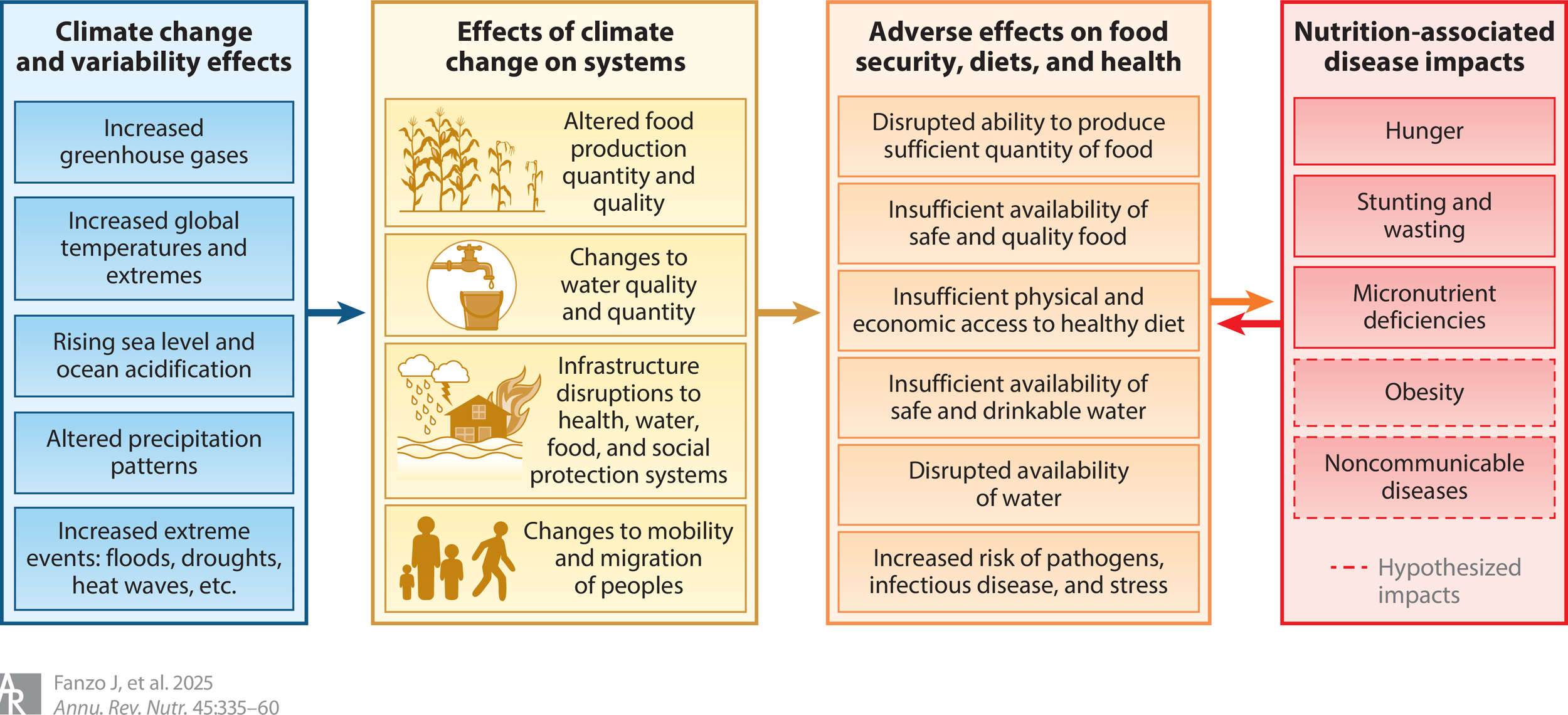
One of the critical findings of the review is that extreme weather events, particularly droughts and floods, are strongly associated with various forms of malnutrition. For example, a systematic review and meta-analysis indicated that climate-related precipitation events, such as excessive rainfall and drought, are positively correlated with malnutrition. However, the nature of these effects varies by location, age, gender, and timing. The analysis suggested that drought conditions are significantly associated with increased rates of childhood wasting—a condition in which children are acutely malnourished and exhibit a low weight-for-height ratio.
An analysis involving 580,000 observations of children across 53 countries further supports this assertion. By using a derived Standardized Precipitation Evapotranspiration Index (SPEI), researchers investigated how precipitation anomalies may be associated with increased malnutrition among children. This study emphasizes the critical impact of climate variability on the nutritional status of vulnerable populations, particularly children under 5 years of age. However, the findings regarding underweight prevalence were less conclusive, primarily because various factors influence underweight and do not capture the full spectrum of malnutrition as comprehensively as stunting or wasting.
The review also emphasizes the need to explore the compounding risks posed by extreme weather events in a more nuanced manner. Extreme weather and climate events often occur in complex combinations—referred to as compounded events—that can exacerbate consequences not just for food security but also for population health. However, research remains limited in understanding the temporal and spatial nature of these compounding events and their specific impacts on nutrition outcomes.
Consequently, we assert that there is a pressing need for more sophisticated research methodologies, including longitudinal studies, to understand better the causal relationships and dynamic interactions between climate variability and nutrition. We should pay special attention to the need to employ advanced data analysis to assess the intricate patterns within these phenomena, thereby equipping policymakers with better insights for effective responses.
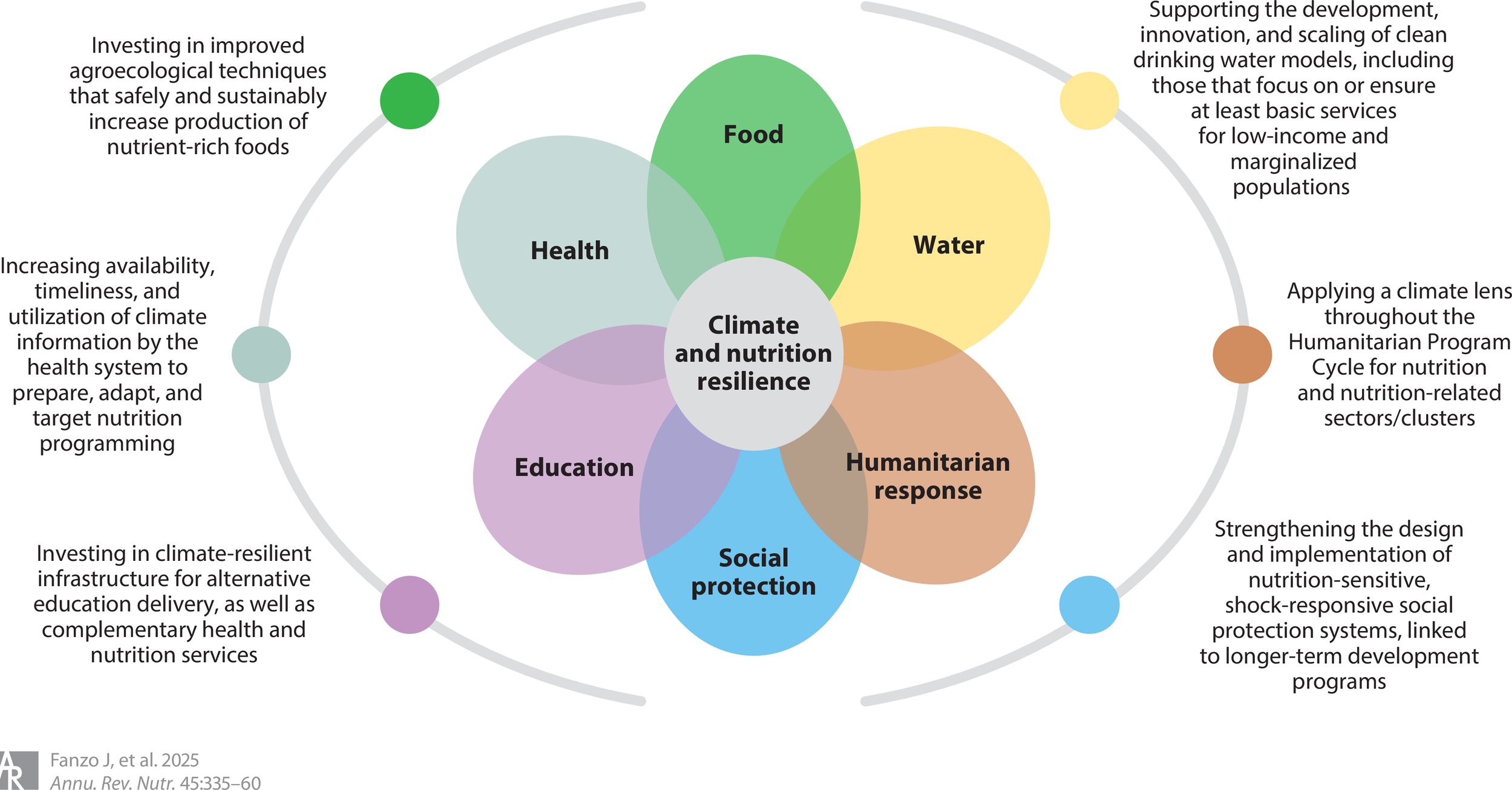
In summary, our understanding of how extreme climate events influence nutrition outcomes reveals both the severity of the challenges we face and the gaps in existing research. We must address the urgency of obtaining comprehensive data, refining analytical methods, and fostering interdisciplinary partnerships to understand better and respond to the dynamic relationship between climate variability and nutritional outcomes. Only through these concerted efforts can our global community hope to develop effective policies to build resilience against the inevitable shifts that climate change will bring to food systems and human health.