Archive Appetizer: Achieving healthy, sustainable, and equitable diets

Several of us published a review paper in Science describing how global food systems, along with rising incomes, urbanization, and the growth of ultra-processed foods, have driven dietary shifts that harm human health, the environment, and equity. There is a common dietary pattern across rich and poor countries: inadequate consumption of vegetables, fruits, legumes, whole grains, and nuts, alongside excessive intake of animal-sourced foods, sugars, refined starches, sodium, and unhealthy fats. These shifts contribute to noncommunicable diseases, greenhouse gas emissions, deforestation, and unequal access to nutritious diets. Dietary behavior is shaped by a complex web of direct influences (taste, price, convenience, culture) and powerful, often hidden, midstream forces and actors — manufacturers, retailers, and restaurants — that determine what foods are available, affordable, and appealing.

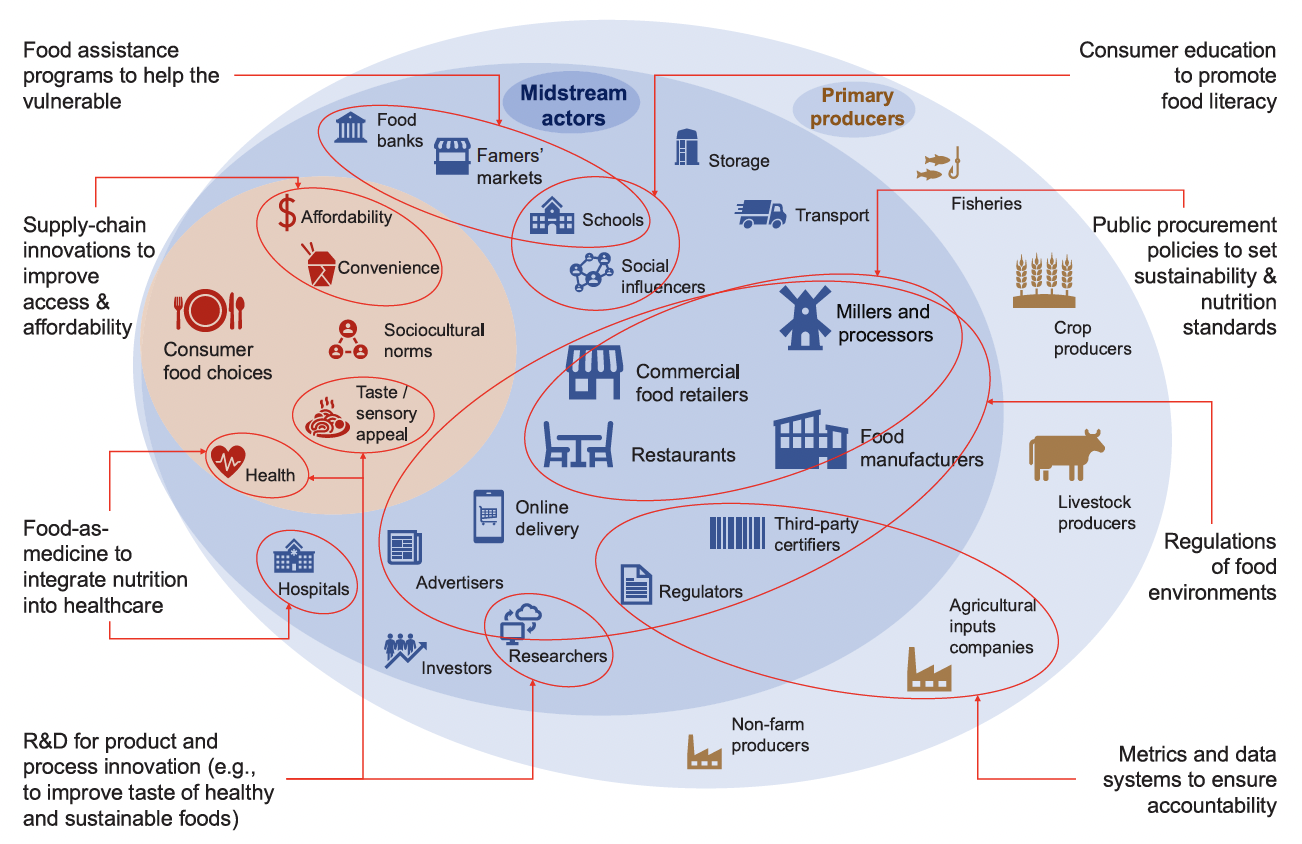
The many midstream actors that shape consumer food choices and producer choices within food systems and key levers to facilitate transitions toward healthier and more sustainable and equitable diets (Yang et al 2026, Science)

Building on that diagnosis, we synthesize evidence across seven intervention domains to steer dietary transitions toward outcomes that are healthier, more sustainable, and more equitable. Key levers are highlighted, including R&D and product innovation to make plant-forward, sustainable foods tastier and cheaper; affordability and access measures, such as redesigned food assistance and supply-chain policies that internalize health and environmental costs; and food-as-medicine programs that embed nutrition into healthcare. There are also regulatory approaches — including reformulation targets, labeling, marketing restrictions, and public procurement standards — that are essential complements to voluntary actions, because nudges aimed only at individuals or producers are often overwhelmed by institutional food-environment influences.

Most importantly, we argue that lasting change requires coordinated, systemic strategies that align incentives across consumers, producers, and especially midstream actors. There is a need for better metrics and data systems to track progress and hold actors accountable, such as the Food Systems Countdown Initiative, as well as efforts to shift social norms and improve food literacy. Overall, combining multiple interventions across R&D, policy, procurement, assistance, regulation, and education to create food environments in which healthy, sustainable, and affordable choices are the easy, appealing default.

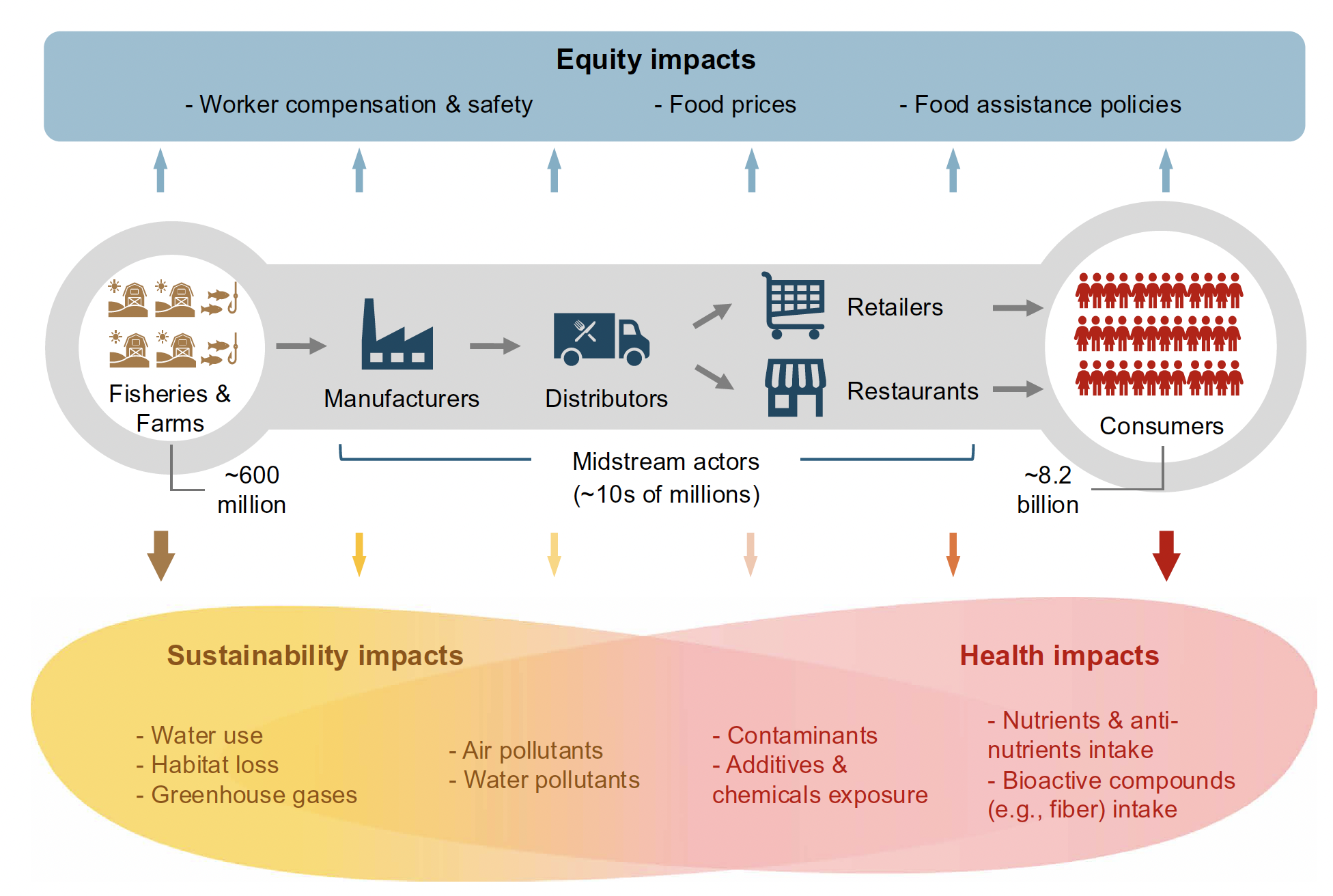
Sustainability impacts arise primarily from agricultural production in, for example, farms and ranches (orange), whereas health impacts result primarily from consumers’ dietary choices (red) but are also affected by agricultural production and food processing methods. Equity impacts (blue) occur throughout the food value chain. The midstream actors in the food value chain, indicated with dark blue icons, exert great influence on the decisions of the world’s primary producers (fisheries and farms) and consumers despite being one to two orders of magnitude smaller in number

Desire paths

Hi, my dear readers — I took a brief sabbatical from the Food Archive, a self-imposed intermission of sorts. I’m back now, fortified and oddly calm.

Recently, I gave a talk at CIMMYT titled “Catalysts of Change,” an attempt to reconcile the two halves of my professional life: career and research. Twenty-five years in, Joan Didion’s line is unnervingly accurate: “It is easier to see the beginnings of things and harder to see the ends.” When I scan the span of my career, three kinds of moments stand out: meaningful, amplifying, and validating.

Let us begin, as all good narratives do, with the meaningful.

  • Being mentored by extraordinary people (one is lucky if you can count your mentors on two hands).

  • Feeling dispirited by less-than-extraordinary ones (a useful education in what not to be).

  • Experiencing Africa for the first time — Uganda in particular — which reconfigured how I thought about place, food, and belonging.

  • Collaborating with mothers and farmers, whose practical brilliance disciplines every grand theory.

  • Teaching and learning from students and watching them choose food as a vocation, which is to me the closest thing to witnessing a small miracle.

Now to the amplifying moments.

  • Early in my career, I had an opportunity to work with Jeff Sachs when he was Director of Columbia’s Earth Institute. Controversial? Yes. Generous with introductions? Also yes. His networks opened doors into international development and nutrition work across continents. I will be forever grateful — it was my entree into sustainable development.

  • I also spent time “in the field” — in rural corners of sub‑Saharan Africa and in parts of East and Southeast Asia — working alongside farmers, women, and mothers. Those experiences did not merely influence me; they remade me and how I interact with the world.

  • Leading the High-Level Panel of Experts on Food Systems and Nutrition report bestowed a certain institutional gravitas. It pulled my food systems work into higher political airspace and amplified its reach — like strapping a megaphone to a research agenda.

And finally, the validating moments.

  • My first Science paper, published in 2008. One can be jaded about journals, particularly those that are impossible to get into, but this felt like a clean victory: no favors, no strings. Small triumph, enormous pat on the back.

  • The Carasso Prize in 2012 for sustainable diets. Technically, it was my first formal prize (discounting my earlier triumph: winning a raffle to see Madonna at the Paramount in Seattle in 1985, an event at which the Beastie Boys opened and were, inexplicably, booed offstage). The Carasso Prize validated long, patient, unpopular work at the time linking biodiversity to nutrition.

  • More recently, my election to the National Academy of Sciences in 2024. I was thrilled, gobsmacked, and acutely aware that the word “banger” is not illegible when describing one’s own good news. It felt very good.

Students have been on my mind a lot lately, as I am teaching two graduate classes here at the School of Advanced International Studies at Johns Hopkins' Bologna campus, and they are graduating. I am fortunate in that my students are whipsmart, inspiring, and unfailingly hopeful in a world reasonably short on hope. I like to share advice that was given to me, particularly in these hard times, with the current job uncertainty and overall world chaos. Here is what I tell them, in no particular order (and this applies across the professional life span, I am still heeding some of this advice myself):

  • Know when to hold ’em and when to fold ’em. For any Kenny Rogers fans out there, this one is for ya’ll. Know when to walk away and definitely know when to run. This song is an analogy to poker, but it applies to life. Know when to throw in the towel. If in doubt, consult a friend whose life choices you respect.

  • Be willing to pivot. Change is a risk that often repays itself. Terrifying? Sometimes. Regrettable? Rarely. Regret is a wasted emotion, and when it comes down to it, you’ve got nothing to lose by pivoting. New doors open.

  • Learn from both good and bad bosses. If you’ve had exceptional mentors, catalog their practices. If you’ve had toxic ones, take notes, and let that guide your future conduct. The worst managers are, inconveniently, instructive.

  • Say no. Repeatedly, if needed. My earlier inability to do so in my career produced an abundance of labor and a paucity of pleasure. Work saturates; quality evaporates.

  • Prioritize quality over quantity. Resist the productivity fetish. It is better to produce one exquisitely and beautifully useful thing than a dozen forgettable ones.

  • Only work with cool people and surround yourself with excellence. Life is too short to work with assholes. For realzzz. If someone doesn’t treat you well, or they are cranky, or just downright unpleasant, don’t shuffle the deck chairs on the Titanic, praying for a miracle. Get on the lifeboat. And when you do have the pleasure of choosing who to work with, choose greatness. That comes in many shapes, varieties, and colors, but you know when someone is good at their discipline or skill. Work with them, especially if they are nice.

  • Treat people with kindness. We live in a moment when it is easier, even encouraged, to be cruel; be the opposite. It will pay dividends you cannot yet imagine.

  • Take the desire paths. I borrowed this from Melissa Kirsch’s recent New York Times piece about finding a way out of snowy sidewalks. A desire path is the trodden shortcut that tells you the official route isn’t serving its purpose. It’s not just the road less traveled; it’s the road that should exist but hasn’t yet been designed. When you add the word “desire” before path, it takes on a new urgency. If the established maps are inadequate, draw your own.

Archive Appetizer: Bridging Science and Food Policy

In our latest paper published in the Advances in Nutrition, we explore the complex challenge of translating scientific evidence into practical policies and practices at the intersection of climate, food, and health.

We present a conceptual framework that underscores the interconnectedness of these domains and propose five core principles essential for effective translation: (1) integration of diverse disciplinary evidence; (2) early and sustained collaboration with policymakers and impacted communities; (3) context-specific application of evidence; (4) systematic identification of tradeoffs and conflicts of interest; and (5) strategic communication to align knowledge with action. These principles serve as a guide for researchers and practitioners aiming to develop resilient, equitable, and sustainable food systems informed by scientific evidence.

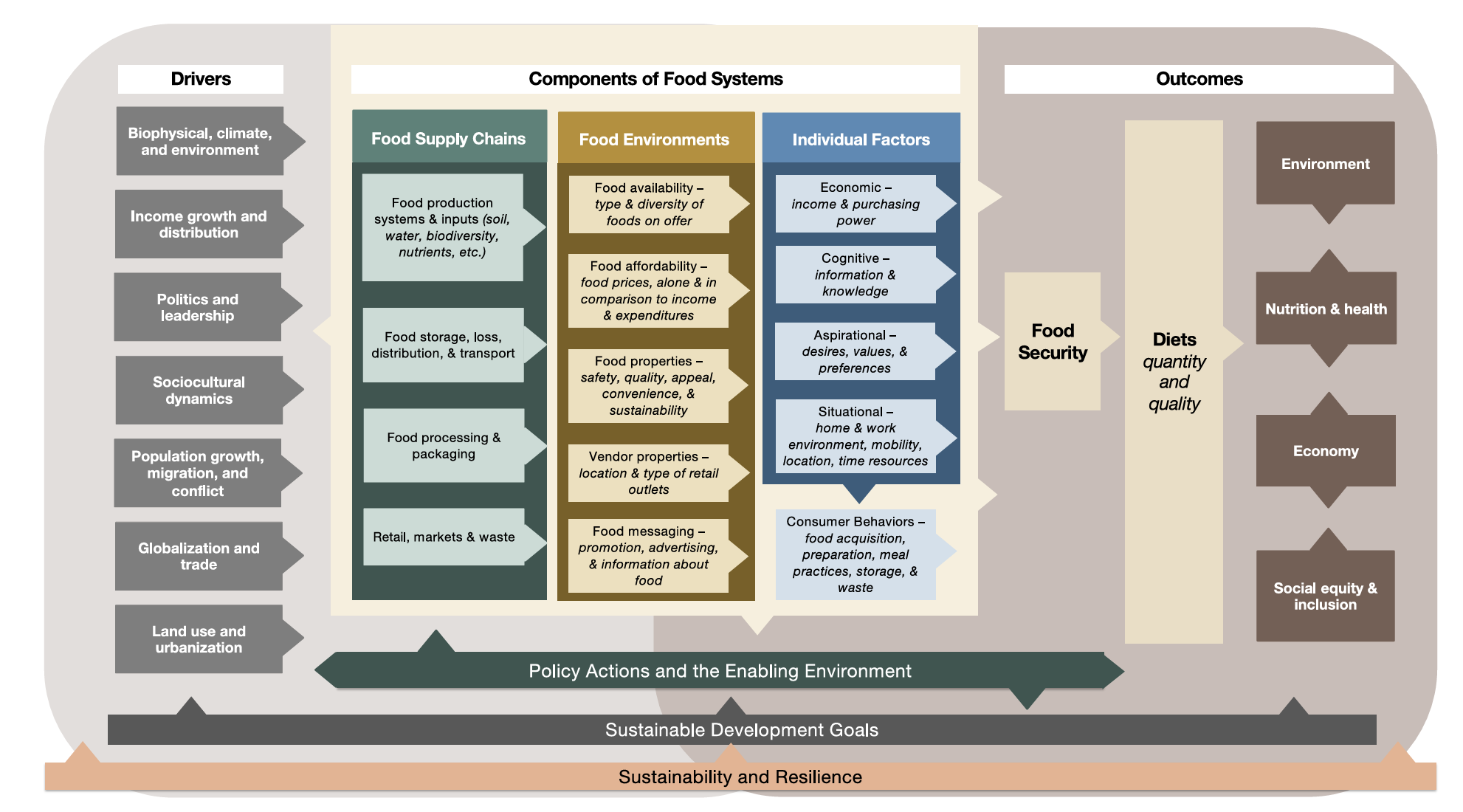
The complex and dynamic food system

To illustrate these principles, we analyze five case studies that demonstrate successful applications within different contexts. We highlight the California school food policy case, which successfully eliminated sugar-sweetened beverages and energy-dense snacks, serving as a national model for addressing food system inequities and environmental impacts. The Voluntary Guidelines on Food Systems and Nutrition represent a global collaborative effort that responds to local and national complexities, showcasing the need for stakeholder alignment in policy formulation. Additionally, we examine the State of Washington's initiative to establish metrics for assessing food system progress, which showcases effective collaboration between academia and government, while the dietary carbon footprint case emphasizes the role of individual dietary choices in influencing policy.

Our analysis also includes a New York City initiative, which integrates environmental sustainability into food procurement standards. This case demonstrates the importance of collaboration across different governmental administrations and public health departments. Together, these examples not only highlight the practical application of our proposed principles but also underline the importance of adaptive governance and innovative approaches in advancing food systems that are responsive to health and environmental challenges.

Overall, we advocate for a shift in how scientific translation is approached, encouraging a transdisciplinary approach to research that emphasizes collaborative effort, adaptability, and the recognition of various contextual factors that impact policy effectiveness at multiple scales.

Food Bytes: June 2025 Edition

FOOD BYTES IS A (ALMOST) MONTHLY BLOG POST OF “NIBBLES” ON ALL THINGS CLIMATE, FOOD, NUTRITION SCIENCE, POLICY, AND CULTURE.

I just returned from an unforgettable trip to Lao PDR, with two stopovers in Bangkok, Thailand. Laos is a country of striking contrasts—on one hand, it moves with an unhurried, almost meditative rhythm; on the other, it carries the weight of a complicated past, still navigating the long shadows cast by war, particularly the enduring legacy of unexploded ordnance.

By Jess Fanzo, Luang Prabang

As many of you are aware, I’m currently working on a book that explores how the counterculture movements of the long 1960s have shaped today’s food systems. Inevitably, that journey includes grappling with the legacy of the Vietnam War, and as an American, traveling through this region stirs deep reflection. It's impossible not to think about the imprint left behind by U.S. military action and the resilience of communities who’ve had to rebuild in its aftermath.

Yet what struck me most was how far this part of the world has come. There’s a quiet strength in Laos, a gentle pride in its culture, and a determination to move forward without forgetting the past. It’s a powerful reminder of the world’s ebbs and flows, and how, even in the face of immense hardship, there’s the possibility of healing. “This too shall pass” kept echoing in my mind—not as a dismissal of pain, but as a recognition of time’s capacity to soften and transform.

Onward to this month’s Food Bytes.

IFPRI put out a bible in this year’s Food Policy Report. Where the rubber meets the road is Section 5, on effective change and the factors that determine how policy change occurs. One of our new papers led by Stephanie Walton (who is doing amazing work at Oxford) suggests that addressing asset stranding proactively, rather than trying to prevent it, could be a powerful lever for change.

Some great data exercises are out that provide useful nuance in how our food systems are performing. First up is the Systems Change Lab, which assessed progress for 32 outcome indicators in the food system. To help spur transformational change, we also highlight 58 critical enablers and barriers. Results of their analysis? NOT GOOD. The second is by the Better Planet Laboratory, which identifies food flows through nearly every major port, road, rail, and shipping lane worldwide and traces goods to where they are ultimately consumed. It’s called the Food Twin Map.

There are also some great people producing worthy pieces to read and follow. First, the great Bill McKibben has a Substack. I encourage you to read one of his latest entries, “So many moving pieces.” Nicholas Kristof is fighting the good fight and producing many excellent pieces on how the US government’s actions are harming global health and nutrition. Check out this, this, and this. Other institutions are getting in on the action. Bloomberg News has launched a new food column, titled "The Business of Food." The UNDP appears to be making a play in the food systems sector, including the launch of a new Conscious Food Systems Alliance. Fascinating!

Some highlights from journalists writing about food:

  • An interesting take on RFK Jr’s Make America Great Again policy: Grocery Update Volume 2, #4: MAHA Or Misdirection. Grocery Nerd argues that the “MAHA” framework may serve more as political window dressing than actual change.

  • DeSmog reported that food giants Nestlé, JBS, PepsiCo, Mars, and Danone are overstating their climate commitments—leaning heavily on unproven carbon removal schemes, neglecting methane reductions, and relying on weak, loophole‑filled deforestation pledges—according to a new report from the NewClimate Institute and Carbon Market Watch. Gee, what a shocker…

  • In this article by Grist, the blending of at least 30% vegetables or plant proteins into meat products—known as “balanced proteins”—can deliver taste and price similar to conventional meat, while significantly reducing greenhouse gas emissions.

  • This fascinating article in The New Yorker, entitled “Schmear campaign: How a Hazelnut Spread Became a Sticking Point in Franco-Algerian Relations,” is about how the European Union has banned Nutella competitor El Mordjene, a move some see as politically and racially motivated.

  • In the New York Times, they have a new series, “What is History.” They kicked off the series with two articles on food: One by Jacques Pepin on culinary pursuits and the other by Carey Fowler on the biodiversity of our food supply.

  • I fully admit to being a fan of Elizabeth Kolbert, and she delivers with her latest article: "Do We Need Another Green Revolution?" Worth your time to read along with all of her work.

  • Michael Grumwald has a new book out, and he wrote a piece, A Food Reckoning Is Coming, as part of his book tour. Another worthwhile and perhaps divisive read.

Some highlights from the science literature

  • This study validates the Healthy Diet Basket—a least-cost dietary model based on food-based dietary guidelines—as a globally consistent benchmark, finding that it delivers adequate macronutrients and micronutrients at about US $3.68/day.

  • Whereas this study argues that dietary species richness (DSR)—a measure of the number of different edible species in a diet—is the most effective global marker for capturing food biodiversity. They also show it correlates strongly with lower mortality in Europe compared to other diversity indices, and tracks micronutrient adequacy in low- and middle-income countries.

  • Speaking of diets, this study uses a linear programming model of over 2,500 U.S. foods to show that individually tailored vegan, vegetarian, and flexitarian diets (with ≤255 g of pork and poultry per week) can meet nutritional needs, align with the Paris Agreement's 1.5 °C climate target, yield up to ~700 healthy-life minutes per week, and reduce climate impacts sevenfold.

  • Fortification remains essential and is considered a cost-effective way to fill nutrient gaps. Check out this modeling paper.

  • On processing…This NEJM perspective argues that mounting evidence linking ultraprocessed food consumption to increased calorie intake, obesity, and chronic disease necessitates regulatory policies—such as front‑of‑package labeling, marketing restrictions, and excise taxes—to curb their public health impact. Not sure there’s anything new here.

  • Numerous modeling papers are being published on the impacts of climate change on food production. This paper models six usual suspect staple crops — maize, soy, rice, wheat, cassava and sorghum — and finds that for every 1 °C increase in temperature, food production will decline from current levels by 120 calories per person per day, but that income growth and adaptation strategies could alleviate 23% of global losses by 2050 and 34% by 2100. Gulp.

  • Should we consider alternatives like insects? According to this article, that may not be the case. The title alone is click-worthy: Beyond the buzz: insect-based foods are unlikely to significantly reduce meat consumption.

  • Maybe it’s time to start building climate-resilient systems - not just food, but across all systems. Check out our new policy paper, which argues in this manner.

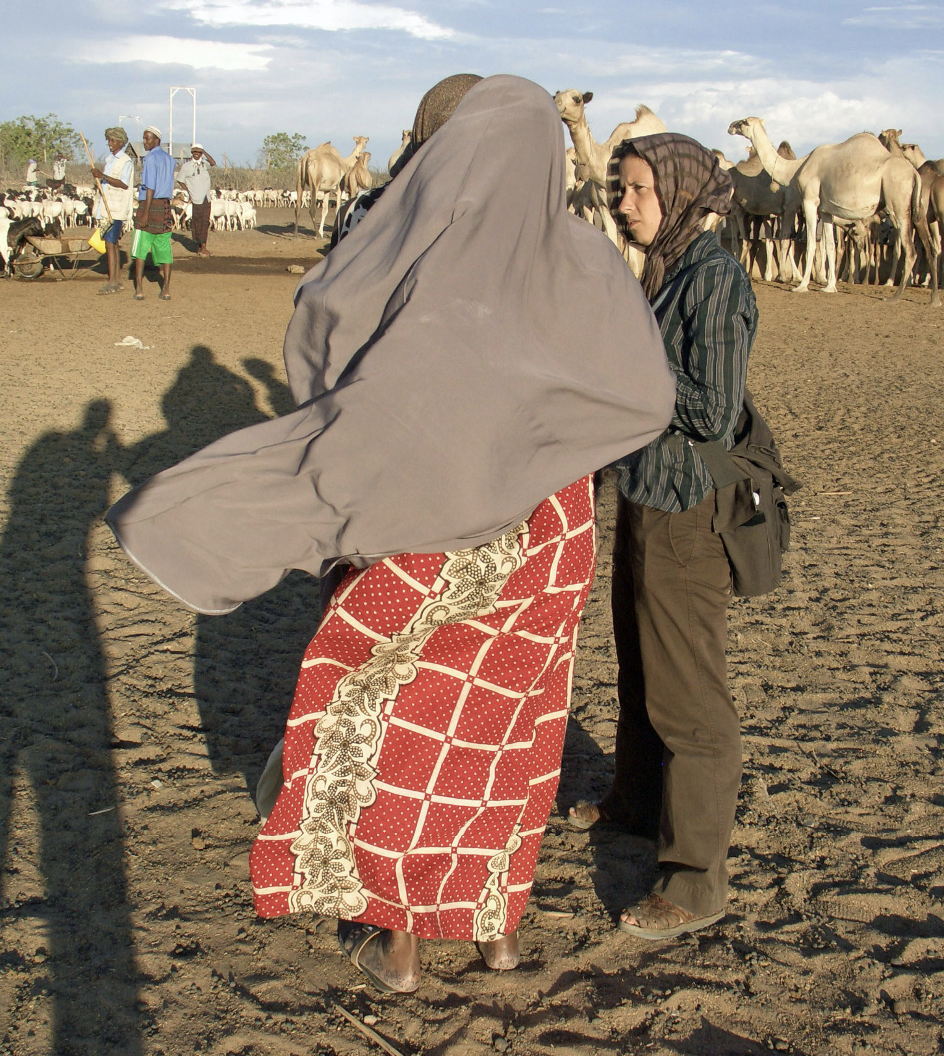
For those interested in broader development issues, the Sustainable Development Report 2025 is now available. Another report that feels more like a book on how the world is progressing on those pesky goals that would make the world a better place and leave no one behind. Related to that, we have a new paper on how pastoralists are coping with resource constraints, conflict, and climate extremes. We initiated this work a decade ago in Isiolo County, Kenya, utilizing photo elicitation and semi-structured interviews with Borana and Turkana pastoralists to gain a deeper understanding of the constraints hindering their ability to practice pastoralism and to identify opportunities for better supporting pastoralist communities with climate-resilient strategies. And last but not least, a conversation about The Myth of the Poverty Trap.

And do check out our new Food for Humanity podcast! This limited series is all about alt-proteins.

That’s all, folks. Have a wonderful, safe, and delicious summer!

The Archive Appetizer: What's in a name?

There is a lot of confusion about how to define food systems, let alone what to call them. People refer to them in many different ways. Is it singular or plural? Are they local or global? Should there be an “a” or a “the” in front of it/them? I appreciate this delineation of names and definitions by Kelly Parsons and Corinna Hawkes:

  • The Food System: the interconnected system of everything and everybody that influences, and is influenced by, the activities involved in bringing food from farm to fork and beyond. 

  • A Food System: the food system in a specific locality or context. 

  • Food Systems: The totality of different types of food systems in different localities and contexts (i.e. multiple forms of “a food system”). This idea of multiple food systems acknowledges the huge diversity of food systems at different scales with differing characteristics. For example, industrial systems at a global scale and alternative systems at a local scale.

Then there is the referring to food systems as “our food systems.” Hmm. This possessive stance is problematic because, in reality, we, the eaters (which, by the way, is everyone in the world), don’t own these systems. That is very clear with the plethora of research showing that if anyone owns them, it is the large, trans-national companies also known as big food or big ag, that control a good portion of inputs, land, crops, and the processing, distribution and retail of foods and beverages sold around the world. So maybe we need to stop using the term “our food system”, or contrary, let’s start a movement and take back food systems and ensure they are doing what we want them to do — be good for both eaters and the planet.,

Global and local perspectives on food security and food systems

This piece was originally published as a commentary in Communications Earth & Environment.

Policymakers worldwide are paying more attention to the whole food system—production, processing, distribution, consumption, and the link to food security and farmers’ livelihoods. For example, in 2021, the United Nations Food Systems Summit opened the dialog between stakeholders from multiple fields and encouraged national actions to transform the food system. Most recently, the 28th Climate Conference of Parties resulted in a Declaration on sustainable agriculture, resilient food systems, and climate action. While these political commitments are essential foundations of change, research is needed to provide a scientific basis to support policy decisions and help design solutions that fit community needs.

Recent shocks, including the COVID-19 pandemic, conflict in Europe, and the impact of climate change, are pushing global food systems to breaking point. Around 42% of the world’s population cannot afford a healthy diet that meets nutritional needs. We are witnessing political attention on food systems, with the United Nations hosting the Food Systems Summit in 2021, which brought together more than 100 countries and represented an opportunity to strengthen food system resilience. Yet, we must address challenges that inhibit progress.

The first challenge is to provide equitable, physical, economic, and social access to healthy, safe, and diverse diets. Solutions across food supply and demand have been proposed and implemented to address access constraints across local contexts. Some examples of solutions include homestead gardening, biofortification, reformulation of food products to remove unhealthy ingredients, taxes on sodas and highly processed foods, front-of-the-pack labeling to signal the healthfulness of food products to consumers, national food-based dietary guidelines, and food-related safety nets. However, many of these solutions have not been scaled sufficiently to have multiplier and positive impacts.

The second challenge is to address the power asymmetries in food policy and politics. Private companies involved at every stage of food supply chains are increasingly concentrated and wield significant economic and political power. Some companies continue to generate massive profits at the expense of public health and environmental sustainability, leading to a lack of trust from the other stakeholders. The disaccord jeopardizes an inclusive momentum to galvanize the transformation of the global food system.

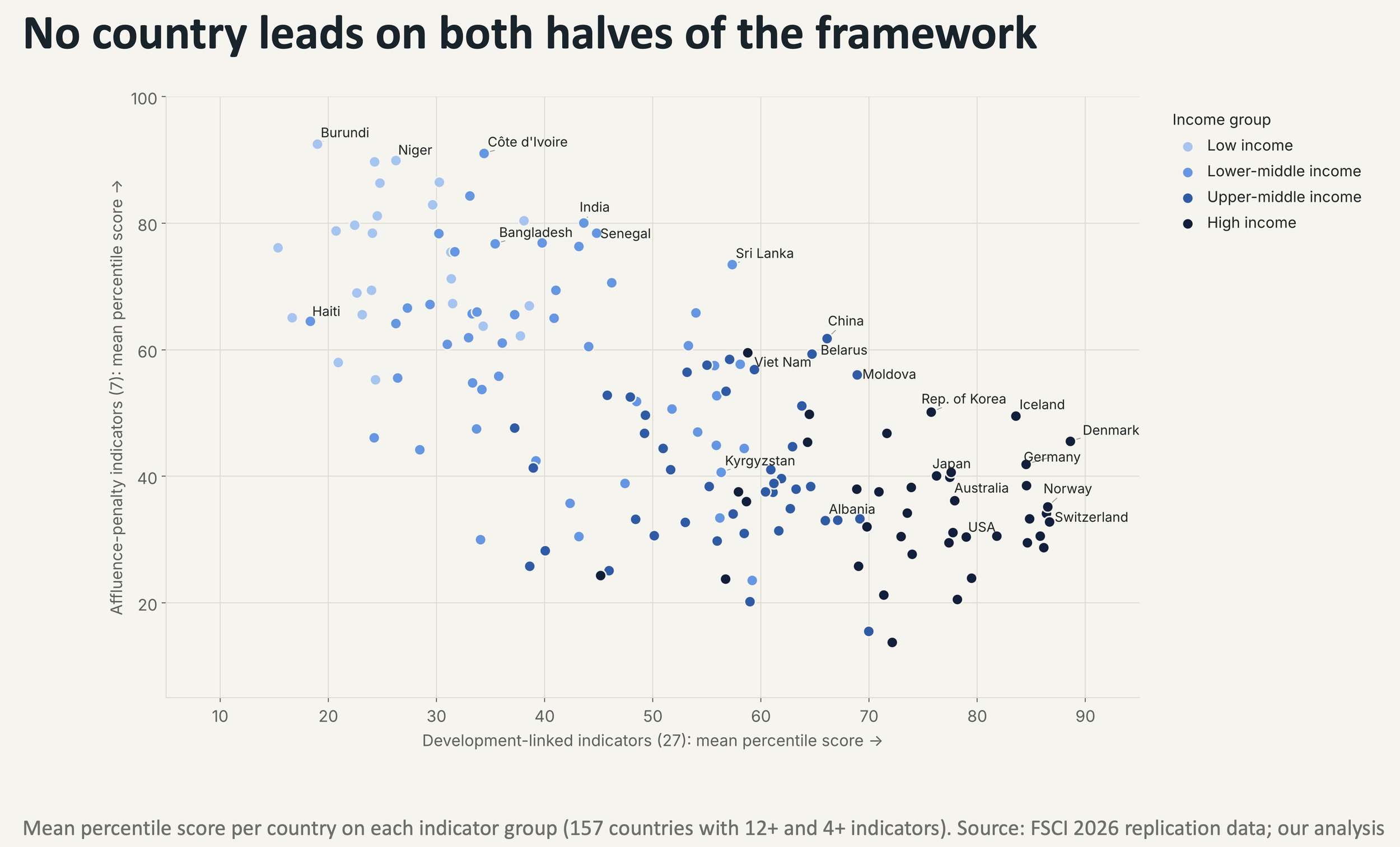
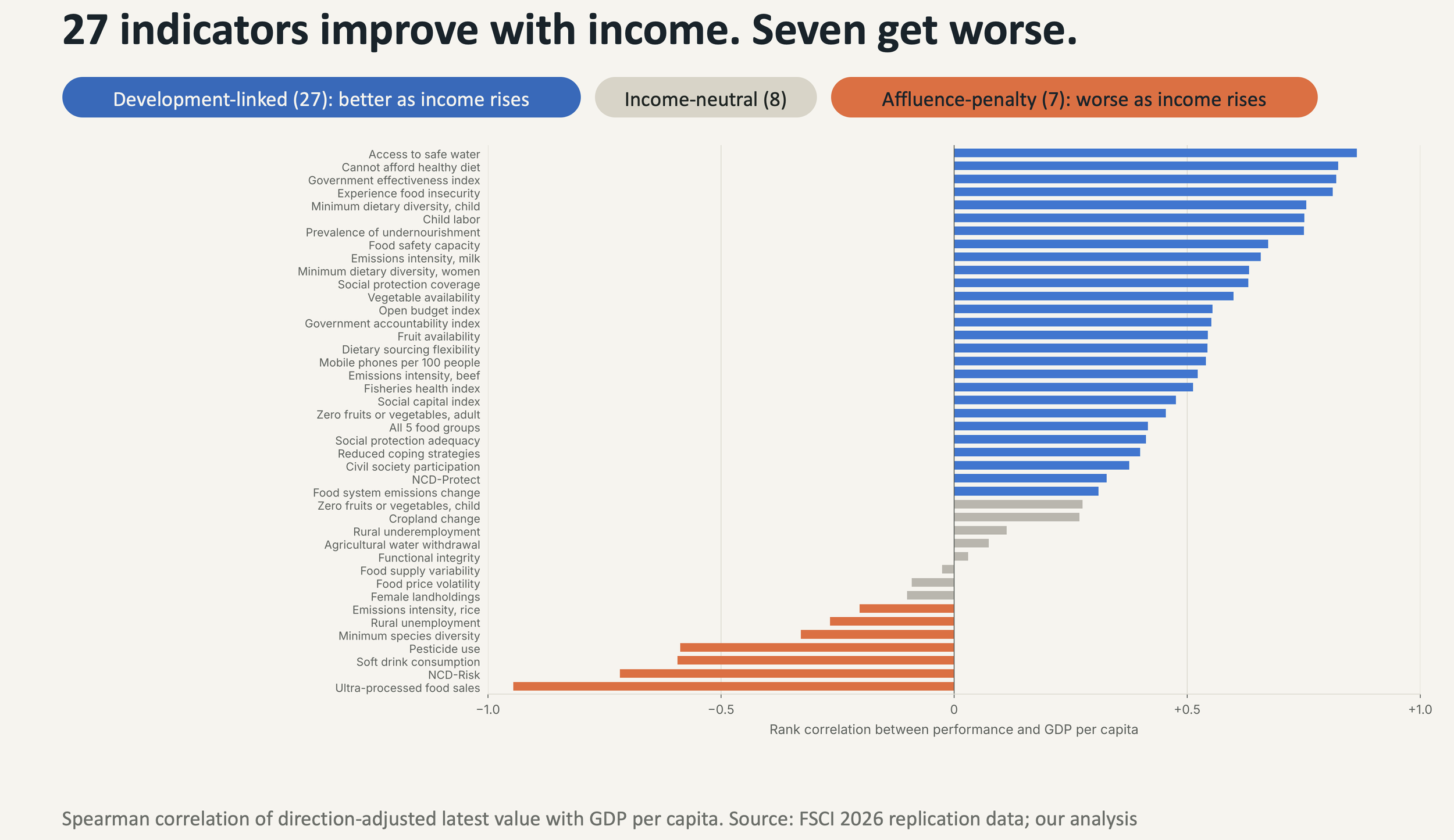
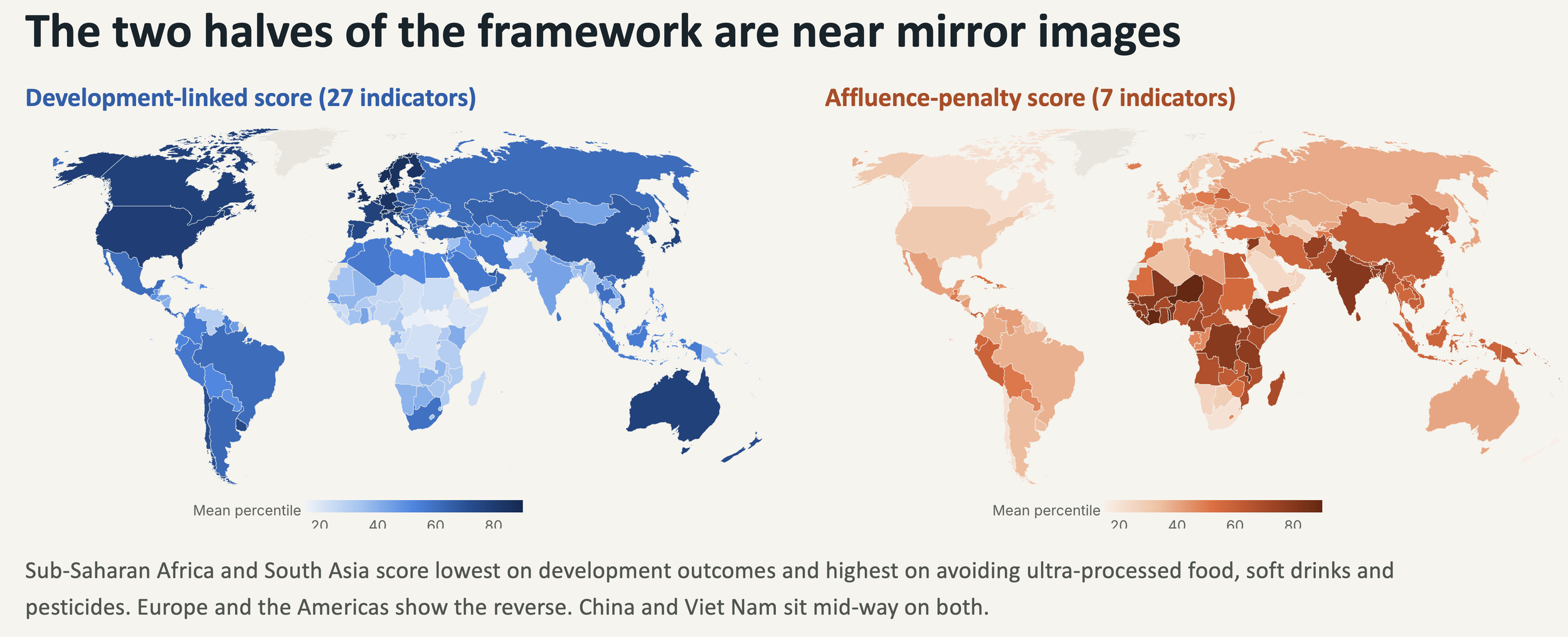
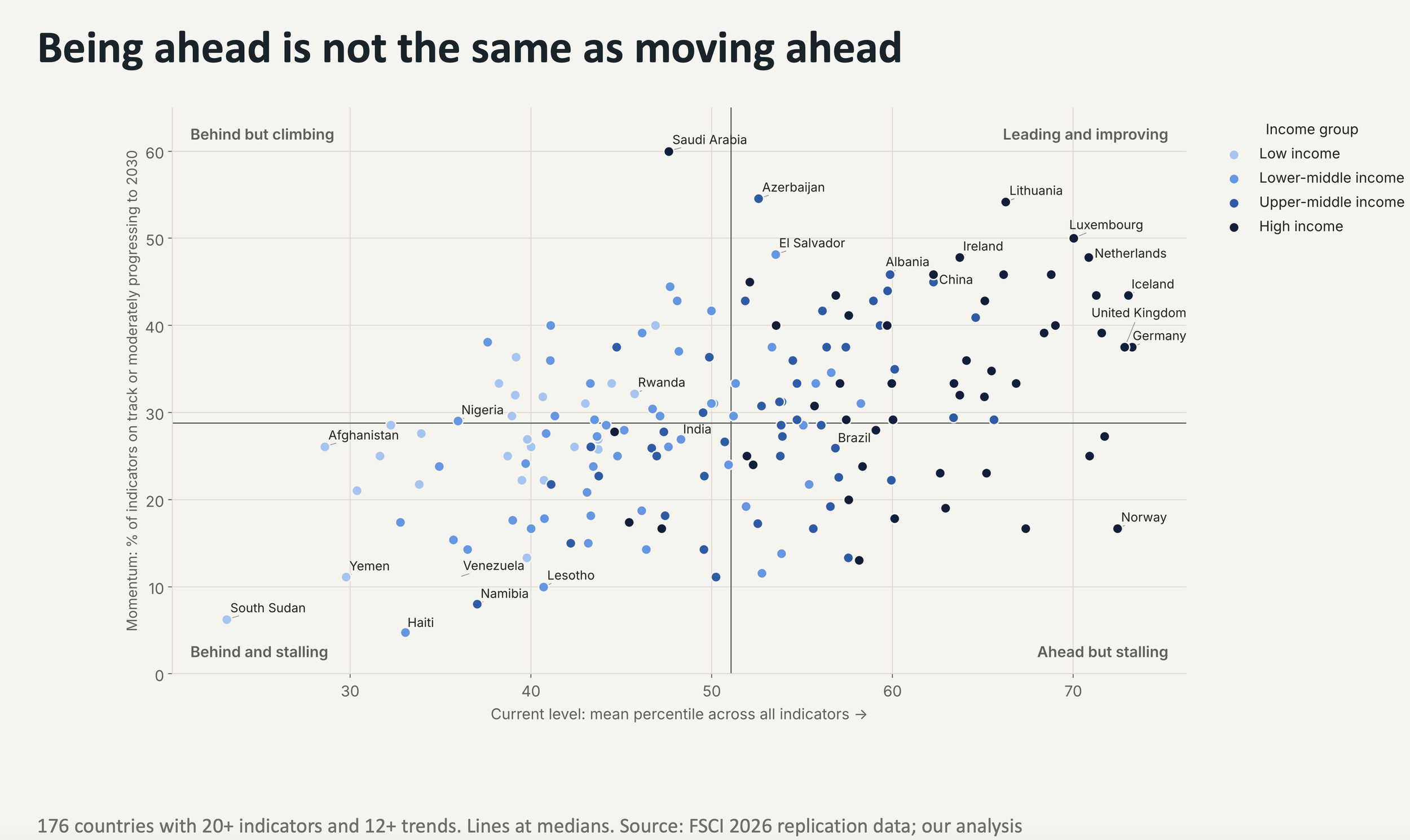
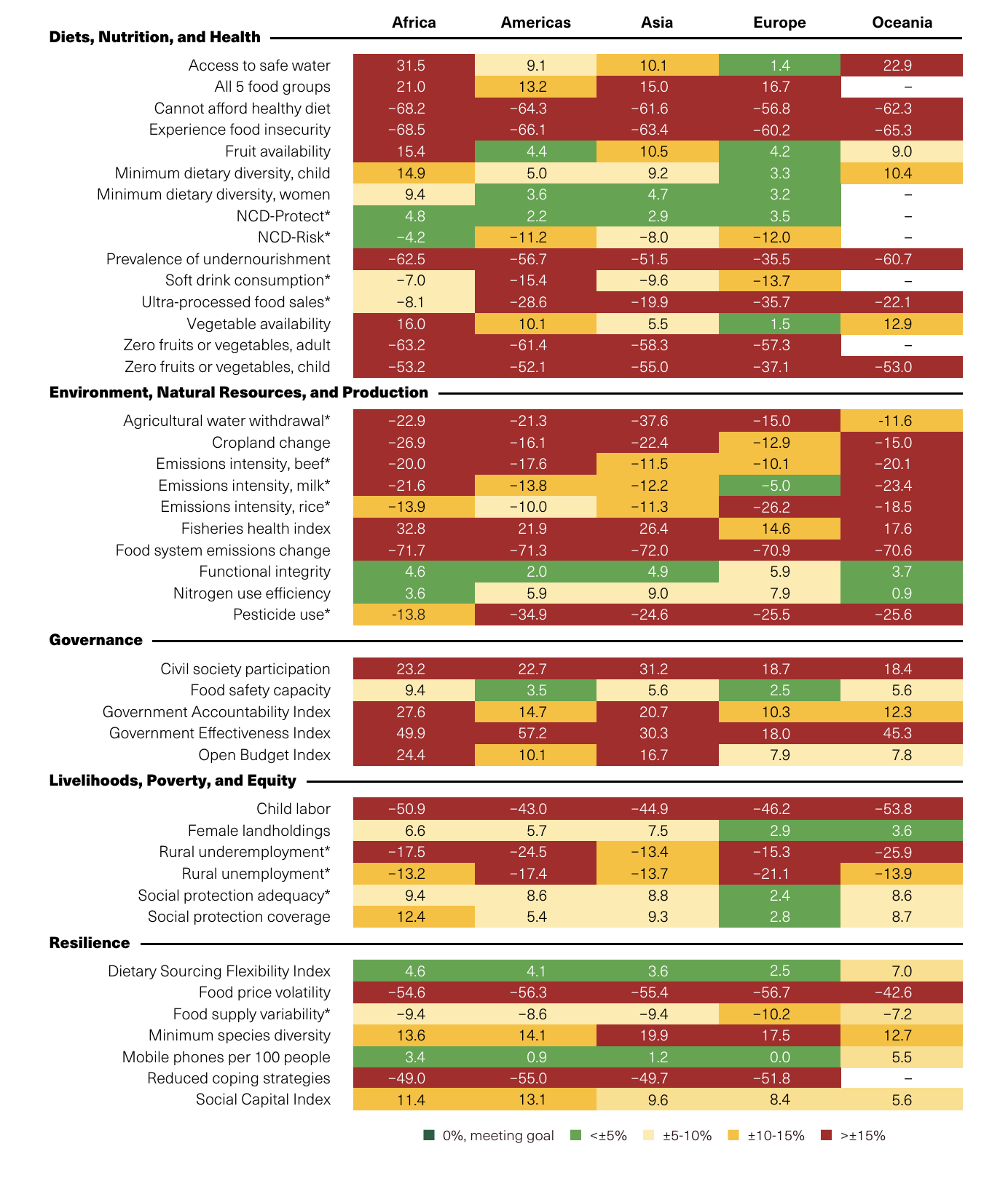
Data are needed to assess the performance of food systems, determine where and how to intervene, and assess unintended consequences or trade-offs of tried solutions, which constitutes the third challenge. Sixty food system experts have developed the Food Systems Countdown to 2030 Initiative to guide and hold public and private sector decisions to account. The Countdown monitors 50 indicators across food systems related to diets and nutrition, climate and environment, livelihoods and equity, governance, and resilience. The indicators can track the holistic nature of food systems, align decision-makers around crucial priorities, incentivize action, sustain commitment, and enable course corrections. The Countdown shows that no single region has a monopoly on food system success.

Every region and country have room for improvement, and countries can learn from each other. Governments must step up and restore the power balance and play a more active role in shepherding food systems in positive directions. Investment in place-based solutions is critical to understanding what works, where, in what context, and for whom.

Barriers to a just, sustainable dietary transition

As world leaders meet to discuss grand global challenges, like climate change, over champagne cocktails this week here in NY, my friend and colleague, Chris Barrett and company asked to write about what I think are the main barriers or challenges to a just, sustainable dietary transition. Hmmmm. Where to even start?

The overarching major challenge is the inequities in the ability of many people to access (physically, economically, and socially) what is considered healthy, safe, and sustainable diets. Ironically, many of these same people are the food producers for the world. Accessing these diets and adapting will only get more complex if we stay on a business-as-usual course in the context of climate mitigation and adapting to climate-related extreme weather events.

There are many reasons for this lack of access that could cut across inefficiencies across food supply and environments and demands for specific kinds of food that put the world on a dangerous course. However, there are a few barriers that I would like to highlight. This summary focuses on food systems. However, many systems and sectors are responsible for meeting this goal, such as health, economics, education, and urban/rural development.

The first challenge is unrealistic goal and recommendation setting. Goals such as the Sustainable Development Goals provide a universal road map for how we want the world to be in seven years. Still, not every goal is relevant, meaningful, or a priority for every country. Recommendations for food system transformation are often made as generalities, not articulating who is responsible, for what, and by when. They also do not indicate how these recommendations can be translated into action ‘on the ground’ in the context of established interests and constrained budgets.

The second challenge is data gaps. High-quality analytical methods and tools to collate, curate, and analyze data across food systems; integration of data sets across disciplines; and new empirical research to solve the grand challenge of sustainable development (Fanzo et al., 2020). These data gaps bring about difficulties in navigating unintended consequences or trade-offs. While there are many gaps across food systems science, I focus on diets here.

We remain unclear on what people consume, why, and their barriers to accessing healthy, sustainable diets. Global dietary intake data that are nationally and subnationally representative remain sparse. Most countries do not consistently and systematically collect individual dietary intake data, and the existing data are often based on models relying on household expenditure and consumption survey data, food balance sheet data, or data from subpopulation nutrition surveys. Although these modeled estimates may give us a sense of dietary intake and patterns of consumption, they are an uncertain substitute for robust, representative individual dietary intake data reflecting recent consumption patterns at a national level, particularly in low- and middle-income contexts. Collecting robust longitudinal dietary data would allow researchers and policymakers to understand better how diets change over time and why.

The third challenge is the politics across food systems governance. As one example, the United Nations Food Systems Summit (UNFSS) and its stock take in July 2023 is not without uncertainties and controversies, with rumblings of it all being grandiose political wonk talk. With summits, there are always questions about impact. Will all stakeholders be included? Will the needs of the vulnerable and marginalized be prioritized? Will there be a sense of urgency to scale up investment? Will there be any accountability mechanism to track commitments and hold those to account who fall behind? If this is the mechanism for food systems change and for governments to engage, these questions are critical to understand and act on.

While addressing effective governance is a sticky issue, more and more, we as researchers must engage in this space if we are to see evidence come to bear in policy- and decision-making.

The Future of Food

Growing, producing, and shipping food are big contributors to climate change. According to the UN Food and Agriculture Organization, about one-third of the global greenhouse gas emissions come from the world's food systems. Food is "an instigator of climate change and it's a victim of climate change," said Jessica Fanzo, director of the Johns Hopkins Global Food Ethics and Policy Program and author of Can Fixing Dinner Fix the Planet?, in an interview with Mike Walter of CGTN.

One of the solutions is changing individuals' diets, what Fanzo and fellow food researchers from the EAT-Lancet Commission call a "planetary health diet." The diet is high in fruits and vegetables, as well as beans, legumes, nuts, and seeds, while food from animal sources, including meat, fish, and dairy, are low. Not only is this sustainable for the planet, "it's a very plant-based diet that meets nutritional needs, decreases your risk for non-communicable diseases like cardiovascular disease and diabetes and stroke, all these long-term, chronic, quite costly diseases," Fanzo said.

Time To Invest in Food Systems Science

President Biden’s first budget request when he came into office called for significant investment to science with increased budgets to the National Institutes of Health (NIH), the National Science Foundation, NASA and the National Oceanic and Atmospheric Administration, and the NIH office funding research on climate change and human health. The U.S. Department of Agriculture’s budget alone would increase from $647 million to $4 billion to be spent on research, education, and outreach. This is a signal that science will no longer be swept under the rug.

On February 23, 2021, the World Food Prize Foundation released a statement penned by 24 of its Laureates—considered some of the world’s experts on food security—urging the Biden Administration to focus on alleviating hunger, poverty, and malnutrition around the globe. The Laureates called for investments to improve food systems—which feed us—but also are responsible for 30% of greenhouse gas emissions and the generation of diets that are linked to 6 of the top 10 risk factors of the global burden of disease. They urged the U.S. to strengthen and leverage alliances, play a leadership role in the upcoming United Nations Food Systems Summit this September, and refresh evidence-based policymaking. Others have called for the U.S. to transform the food systems as well including the Rockefeller Foundation and renewed engagement marking the 50th anniversary of the 1969 White House Conference on Food, Nutrition, and Health. Some, including academics and former U.S. senators and the Secretary of Agriculture, has gone further to aim for a “moonshot” federal funding for nutrition research.

Can we now please stop using the word “moonshot”?

Food-System.jpeg

One way to do that is for the U.S. to invest more in food systems science and research. As several of us wrote in a recent Global Food Security Journal piece, research has a vital role in charting a positive and sustainable direction for global food security, nutrition, and health. At a time when facts, science, and evidence are under ever greater scrutiny, and even openly disregarded as suspect by some political and business leaders (we won’t mention any of the very obvious names), the rigors of research have never been more critical. Research can and does bring about wholesale changes in attitudes, political thought, and action.

Those of us who do research must see their role in terms of knowledge generation and the translation of this knowledge into a form that is relevant to decision-makers in government, business, and civil society.

Those who design, shape, and enact policies need to access the research they need in a digestible and accessible way. Failure to achieve this brings a very considerable risk of being ignored. Researchers must learn to sit at policy dialogue tables not set for them, but the table for the users of their research – that is, the policymakers. It is a table that many researchers are not accustomed to sitting at.

Food systems encapsulate the choices we make about which foods to consume and grow and how we transport, store, process, and market them. These choices profoundly affect outcomes we care about.  To date, the choices all stakeholders make, whether governments, foundations, businesses, civil society, or individual consumers, have relied on fragmented information on food systems, of variable quality, which is difficult to access or use. 

The Food Systems Dashboard is an open-access data platform to address these issues. Created by Johns Hopkins University, the Global Alliance for Improved Nutrition, the UN Food and Agriculture Organization, and many other collaborators, it launched in June 2020, to attempt to boost the evidence-based decision-making on food systems. The Dashboard is designed to inform decisions that have positive effects on multiple social and environmental challenges simultaneously. Different food choices have different impacts on health, the environment, and livelihoods. There are trade-offs and synergies which need to be surfaced, navigated, and mitigated. For example, different foods have different nutrition values, greenhouse emissions, and different natural resource use implications. In short, the Dashboard is the beginnings of an ambitious “Google Map” for food systems. Let’s hope we make it as navigable and useful over the next decade.

Food systems must adapt and transform to deliver sustainable, healthier diets, and durable livelihoods without decimating the planet. Yes, that is a lot to ask! To do that, we need investment in science, evidence generation, and decision-making tools, like the Food Systems Dashboard, that enable data-driven decision-making in food systems. The Biden Administration has taken a bold step forward to invigorate the various fields of science in the U.S. In turn, the research community should rise to this challenge, and we provide a platform to challenge the status quo and take food system transformation in a direction we may have imagined but are far from realizing.

Can Fixing Dinner Fix the Planet?

Two years ago, I embarked on the writing of my very first book. Coming from a field of expertise that values peer-reviewed scientific publications more than books, I did not think it was in the cards to consider authoring a book about my discipline and my experience working in that discipline. But here we are, and tomorrow, my JHU Press Wavelength series trade book, Can Fixing Dinner Fix the Planet? will be released. The pandemic helped, unfortunately. It nudged me to sit still and put pen to paper.

The book investigates the interactions among food systems, diets, human health, and the climate crisis. It draws on my experiences (along with my team and many colleagues) working and living in Africa, Asia, Europe, and the Americas. It describes how food systems must change to slow and reverse the stark trends we see with increased hunger and obesity, catastrophic climate change, and inequities. The book draws attention to the idea that the very nature of food and food systems can play a significant role in fixing these vexing challenges and bring communities together.

Food books abound—cookbooks by celebrity chefs (thanks Anthony Bourdain!), history of food and cuisines, and self-help diet books. My book does not delve into these areas much. Instead, it delves deep into politics and shows that if we take a “business as usual” path of how food systems have, are, and will operate, there will be significant negative consequences on human and planetary health. It provides examples of what can be done by the various actors like government and food and agriculture industries to promote healthy, sustainable, and equitable diets, sustain the earth’s biodiversity, and protect the environment and all species living on the planet. And last, it raises readers’ food and environmental literacy and empowers readers to take immediate and long-term changes by helping them make informed decisions when they walk into restaurants, grocery stores, farmers' markets, and their kitchens.

The book changed the way I communicate my work. It is not easy to write about a complex topic like food systems and ensure that it inspires eaters, global experts in governments, and those working in and shaping food systems to make better decisions. I tried my best to bring to life some of my experiences working in different countries—from very poor to prosperous—and the experiences of those I have worked with and shared time with in deeply rural and urban pockets of the planet. It provides a nuanced story that takes you away from computer and desk research to farmer’s fields, families’ kitchens, and United Nations’ working forums.

I hope the book shows readers how our everyday diets are the products of massive, interconnected, and highly complex food systems that extend from the seedlings in a farmer’s field to the global distribution and marketing networks that deliver food to our plates. These systems have direct and substantial impacts on poverty, the planet’s natural resources, the nutrition of individuals and populations, the composition of the atmosphere, and social equity. They also are incredibly vulnerable to the climatic changes that we have already seen and that will accelerate in the future.