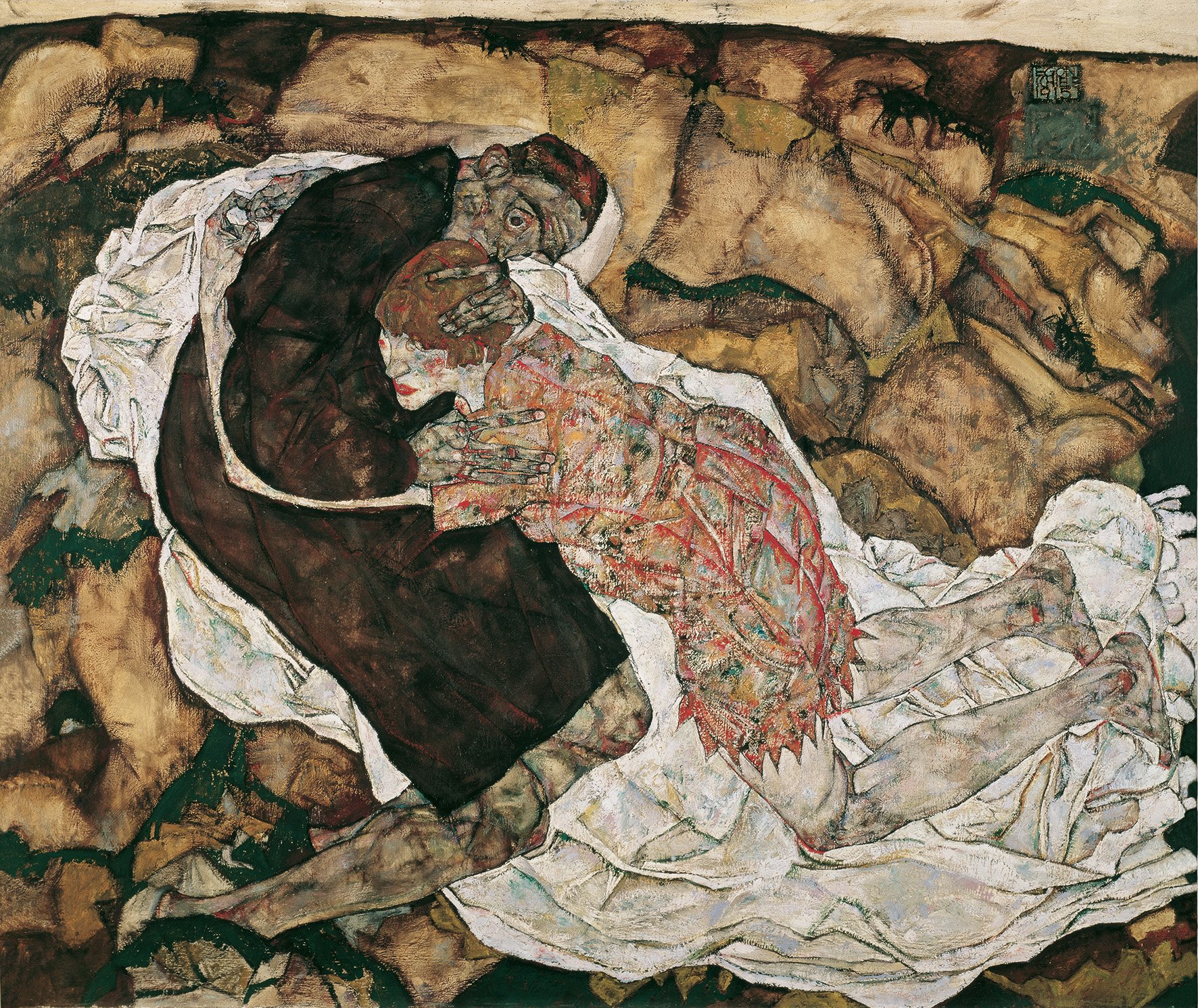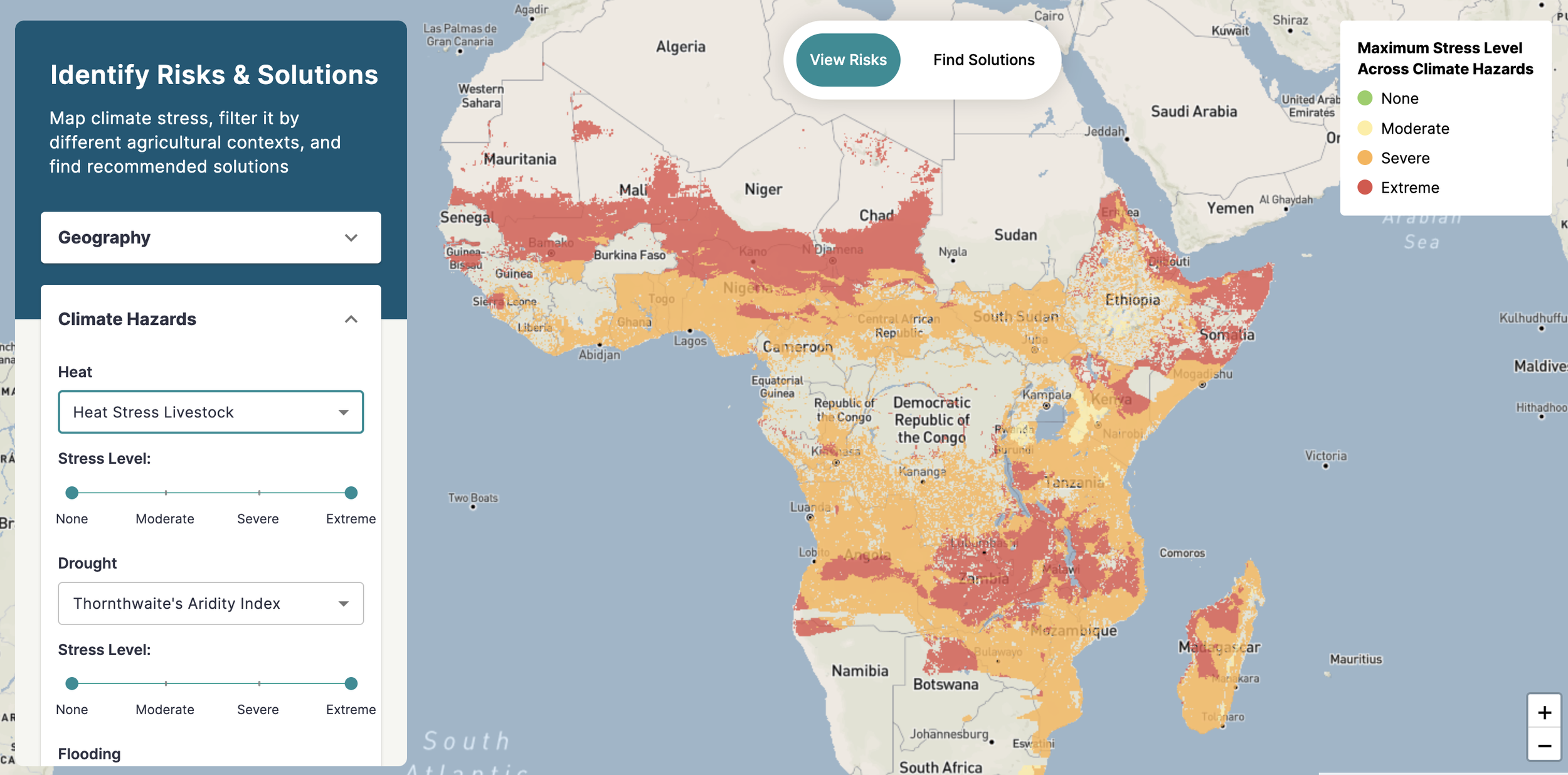
Here we are. Smack dab in the middle of Europe’s second heat wave here in Bologna. My years of living in Tucson with a swamp cooler and in NY without any AC have trained my body well, but as the years go on, tolerating the heat gets a wee bit harder. According to Rothko, we are Orange, Red, Orange, 1961. I’ll take that and fester in it for a while. But in all seriousness, the world keeps signaling to us that something is off. This “Omega heat dome,” where Europe remains ill-prepared, is the latest example. The Po is drying up, which is bad for agriculture. A high-pressure system has trapped hot air over South Asia, creating a prolonged heatwave. Wildfires are poppin in America’s west and Europe’s east. Already, the heat is putting pressure on food supplies (good article on Bloomberg) along with Trump’s unnecessary war with Iran.
And now, we see the World Meteorological Organization has confirmed the rapid development of a new El Niño cycle in the Pacific Ocean. Meteorologists note it is already beginning to shift global moisture and temperature baselines, setting the stage for a highly volatile summer. The Grist has a timely article on the potential impacts the world is likely to see. Data suggest that in South Asia, and India in particular, El Niño weakens the seasonal monsoons, and because India is the world's largest rice exporter, a failed or weak monsoon could severely diminish rice yields and trigger global export restrictions or bans. In Southern Africa, the pattern typically brings hotter, much drier conditions, threatening staple crops like maize and risking a spike in regional malnutrition. While parts of South America (like Peru) face heavy rain and flooding that can wipe out infrastructure, the southern United States is projected to face a much wetter-than-normal year, risking crop-destroying floods from California to the East Coast.
As I always ask my students when discussing extreme events, is the world ready?
With all this heat, it does get hard to sit in front of one’s computer, plunk down on the couch, and read, but on the other hand, it is hard to do much else. So herein lies what I have been reading for the last month. Got through about 4 books so far (see picture on the left). My goal is to read 10 books over the summer months. I have provided reviews of these here, here, and here. All are good reads, with only one related to food. I haven’t had a chance to review Rebecca Solnit’s A Field Guide to Getting Lost, but she certainly captures me not only in her writing but also in how she positions herself in the world. Some say she is the modern Joan Didion. I say she is solely Rebecca Solnit.
Bored? Try this FoodGuesser which gives you a dish or food and you have to guess where it is from. Today’s was surf ‘n turf. Uhhhh…..who else would be so decadent to both steak and lobster on one plate…
Beyond books, I found some of these reports and papers worth some time digging into:
First up, the Global Nutrition Report. It was nice to see a full report again after several years of getting lost in goal tracking that didn’t seem to track all that much…The findings of the 2026 Global Nutrition Report land at a critical juncture, providing a necessary, evidence-based framework for navigating the intersection of climate change and malnutrition. It tells us plainly that our celebrated 'win-win' development narratives are often illusions on the ground. As we shift towards integrated, climate-resilient approaches, the report rightly emphasizes that our policy choices can no longer be treated as separate, single-sector decisions. The 2026 Global Nutrition Report lands not as a comfortable endorsement of ongoing efforts, but as an intellectual disruption to our collective “siloed complacency” and the seductive trap of "win-win" developmental narratives. For too long, the multilateral system has acknowledged the intersections of climate, health, and nutrition only implicitly—treating them as adjacent portfolios rather than as a single, co-dependent polycrisis.
The Global Justice Report (lots of “globals” here)…is a really important report led by the World Inequality Lab. The report outlines a roadmap spanning from 2026 to 2100 that aims to reconcile global economic prosperity with planetary boundaries. The report argues that climate survival and deep decarbonization are impossible without a drastic reduction in wealth inequality. It proposes radical systemic changes—such as a massive "Global Justice Fund" financed by heavy taxes on billionaires, a transition to a two-and-a-half-day work week (YES!!!!), and reduced material and red meat consumption—with the goal of capping global warming at 1.8°C while doubling the incomes of 89% of the world's population. Thomas Piketty, the world-renowned French economist and author of Capital in the Twenty-First Century, brings his trademark expertise in wealth and income inequality to the project. It is dreamy and bold, and worth a read of a utopian world that seems very far off at the moment…
On reports, and this one doesn’t have “global” in the title, is the At the Crossroads: Food in an Age of Uncertainty by Systemiq. This is an interesting report that conducts a foresight analysis (see figure below) of how escalating geopolitical fractures, climate volatility, and artificial intelligence are converging to disrupt the global food system. The report is highly effective at diagnosing system vulnerabilities—notably exposing concentrated supply risks, such as the fact that just four crops occupy 50% of global cropland and that a staggering 30% of global fertilizer trade passes through a single chokepoint, the Strait of Hormuz (a very timely notion indeed). Critically, however, the report functions more as an academic exercise in "futures thinking" than a concrete action plan. While it sharply rejects simple "system efficiency" in favor of holistic structural resilience and issues urgent warnings about ultra-processed food addiction, its conclusions call for "honest dialogue" and "step-changes in global coordination" rather than outlining enforceable regulatory mechanisms or specific corporate mandates. Ultimately, it serves as an excellent diagnostic tool for identifying systemic risk, but it soft-pedals the aggressive, legally binding political battles of food policy and systems.
Stylized scenarios and trends, Systemiq
Some other good peer review articles that I came across:
The long and winding road of stunting reduction since the 19th century (P.S. that is not the name of the article…). Some good lessons for LMICs still dealing with stubbornly high stunting prevalence, particularly from Japan.
Was the Lancet series on ultra-processed foods not sufficient? Well, AJPH has you covered with a whopper of a special issue on UPFs and public health. If you don’t have time to read the 18 articles, you can read Lindsay Smith Tallie and Ashley Gearheardt’s summary on their new Substack, Unjunked, to get the highlights, or this NYT article. If you want to see what to do about it, get involved with Fedup! movement.
The WHO has published its estimates on the hazards of foodborne illnesses. The results are scary, and I don’t think the global food system community talks enough about food safety. They show that as of 2021, foodborne transmission of the 42 hazards they studied caused 866 million illnesses and 1.52 million deaths. Of those hazards, inorganic arsenic, lead, and non-typhoidal Salmonella enterica caused the most damage, particularly among young children and in Africa and South-East Asia.
A review of countries worldwide shows that 64 have implemented sugar-sweetened beverage taxes, covering 3·. billion people, with Asia leading the way.
Love this paper, which links the lack of clean drinking water to food insecurity (and vice versa) and to food safety issues. Good read!
A timely paper understanding the impacts of trade on the water-energy-food (WEF) nexus. In the paper, they construct WEF networks to quantify trade-driven changes. High-income countries achieve stronger WEF synergies that promote gains across all three aspects, whereas low-income countries face many trade-offs, with food-centered competition over water and energy driving them. This is why I always argue for the “energy bros” out there to consider food…
While not food-related, an important read on how “commitments to stronger international cooperation are being strained by rising authoritarianism, weakening multilateralism, aid cuts, and growing misinformation” when it comes to infectious disease spread (with the recent cases of Hantavirus and Ebola). These same issues will hinder efforts to address food insecurity and malnutrition.
The Johns Hopkins Center for Humanitarian Health–Lancet Commission on health, conflict, and forced displacement: health in a world of crises and impunity outlines a comprehensive strategy to reform the global humanitarian system amid escalating modern crises (see Figure below) by demanding an end to legal impunity, a total inversion of power toward localized decision-making, and a complete restructuring of how emergency health funding is distributed to affected populations. Boom.
Timeline of humanitarian health crises, reforms and milestones, 1863–2025 (Spiegel et al 2026)
Some other tidbits and interesting reads across media:
Who knew ranch dressing would be popular?
I was just visiting London and Brighton, and yes, I had fish and chips goddammit. But is England ready to move away from cod? Bloody hell!
A wonderfully philosophical long read in the Guardian about whether ecosystems can malfunction, in which the author argues that ecosystems only "malfunction" when humans co-opt them for specific goals.
Innovation on how to run a restaurant (don’t charge for food) in Minneapolis (we got your back, friends!).
The Economist argues that feeding the world will require new technology. Um, Duh! But is AI the game-changer? I remain skeptical.
What have we learned about GLP meds? It’s the wild, wild west, ya’ll! But clearly, this may prove to be a game-changer in tackling obesity.
Well, my hands are starting to sweat, making it hard to type. I will leave you an album that came to mind recently and that I had not listened to in a good long time: the self-titled Violent Femmes album that came out in ‘83 in my junior high days. The Violent Femmes are an American folk-punk band from Wisconsin. Such an original sound at the time. We were kind of obsessed with this album for a hot minute, and somehow, it fits with summer, the heat, frustration, etc. A funny side story: the group was busking in Milwaukee on a street corner, and the guitar player for the Pretenders happened to be walking by, heard them, and invited them to open for their show that night. Hot damn!