2025 has finally come to a close, and what a year it has been. For many, the last 365 days (well, + the beginnings of 2026…) have felt like an endless hellscape of despair, marked by one shocking and unfathomable doomsday-like event after another. At the heart of this turmoil has been, of course, the current U.S. president, whose actions seem designed to sow chaos, disrupt democracy, and seek no-holds-barred retribution and dominance for his own personal gain. The cuffs and guardrails are nowhere to be found. However, I recognize that not everyone experienced this past year in the same way. Some found themselves thriving in the midst of the cultural upheaval, relishing the debates and discussions that accompanied each new development.
Over the past year, I've held back from discussing the unfolding chaos, but now that I’m leaving the U.S., I feel ready to step back and look at the broader picture. So much has already been said about how we arrived at this moment—the current state of U.S. politics and its “leaders.” The saga continues, marked by the dismantling of long-standing institutions designed to maintain checks and balances. Every day, we witness blatant violations of civil and human rights. The erosion of public health threatens not only our nation but global stability as well, compounded by geopolitical bullying and the silencing of dissenting voices. The cycle of doom seems endless. I suspect the repercussions of this turmoil will extend far beyond the U.S., affecting those who have relied on America as a dependable partner and participant in world order and sustainable development.
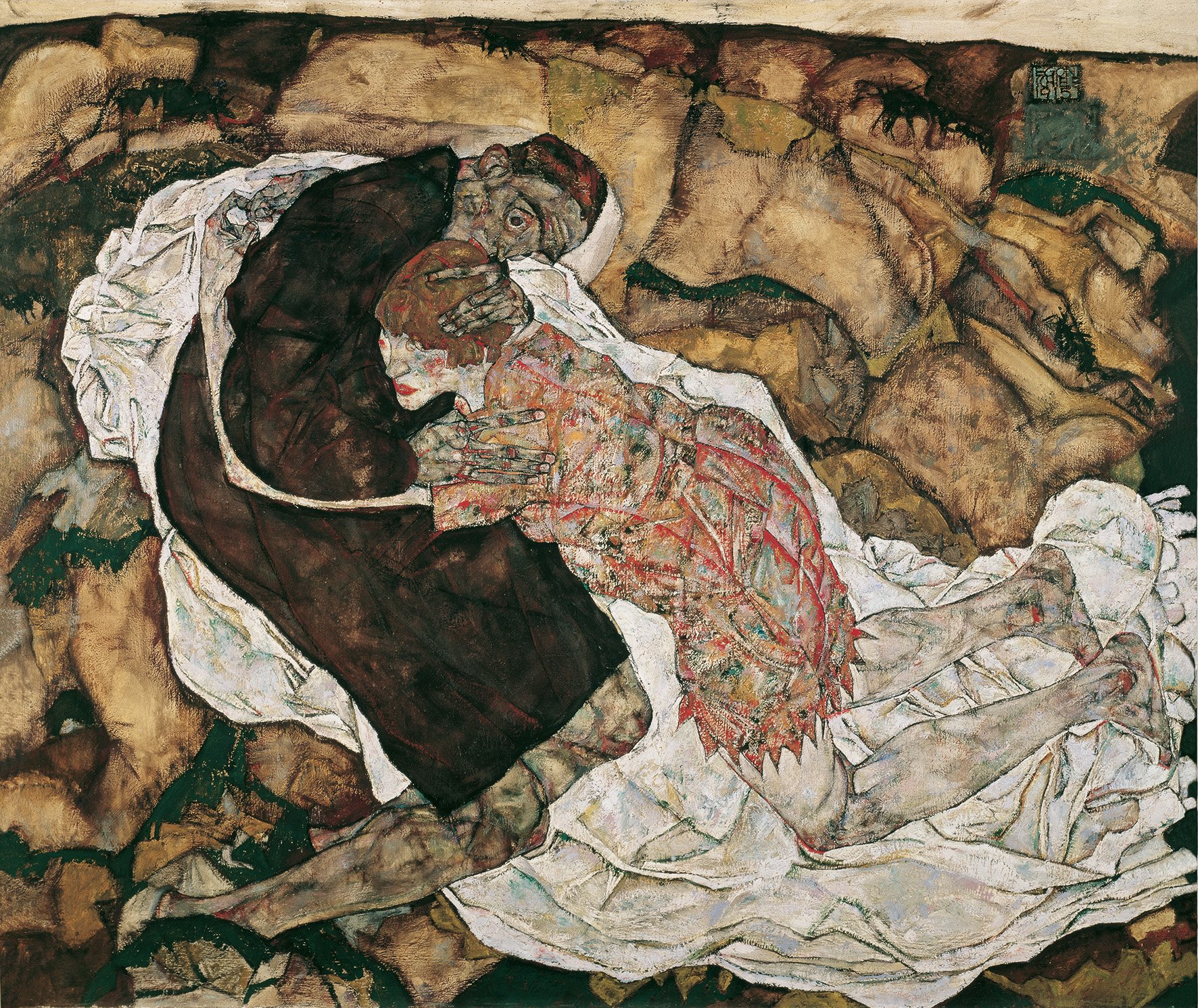
Egon Schiele
What’s particularly frightening is how quickly we/they have normalized this chaos. In the initial days, shock and anger were the dominant responses; now, it feels like a constant barrage, leaving many desperate for relief. Some people say, "Let’s wait and see what 2028 brings," while others choose to focus solely on themselves. A few optimistically assert that "progress always finds a way." Personally, I’m skeptical about these coping strategies, partly because we’ve never encountered such unprecedented turmoil before—certainly, the injustices of the Nixon era seem just downright mild by comparison. The outlook for positive change appears, frankly, grim.
For those of us in science and academia, the turmoil has shaken our foundations. What we once considered an untouchable sector has been profoundly affected. The reaction from esteemed institutions, including Columbia University—where I worked up until a few days ago—has been particularly disheartening. When push came to shove, Columbia capitulated to governmental pressure, effectively paying a ransom and making concessions. It was astonishing to witness a private university fold so easily, and honestly, it felt shameful.
Leaving the U.S. and Columbia became less daunting as 2025 marched on. As Aldo Leopold wisely noted in A Sand County Almanac, “One must make a shift with things as they are.” My move to Italy and resignation from Columbia represent my shift. Some might label me a flighter rather than a fighter, and they may be right. Nevertheless, the decision to leave the U.S. was straightforward; the logistics and emotional hurdles were far more challenging. Who walks away from a tenured professorship at an Ivy League university? Ego complicates the choice, but sometimes you have to say, “What the fuck,” as Miles said in Risky Business (the 80s is my jam long before the Duffer Bros).
Despite the changes, I still hold my tenured position as a full professor, now based at Johns Hopkins in Bologna, Italy. I feel incredibly fortunate—an awareness I don’t take lightly. Will I continue to be impacted by the events in the U.S.? Absolutely; no one is immune. Am I concerned that the rise of populism and conservatism is spreading across Europe, South America, and beyond? You bet I am.
We revisited Casablanca the other night—a fitting watch for our move. Most of you know the setup: Humphrey Bogart is a cynical bar owner who has to choose between an old flame and the greater good. It’s a movie about people "waiting" for papers in Casablanca as an outpost to flee war-torn Europe for the American dream. There’s a certain irony in watching it now; as the world comes full circle, we find ourselves being the ones packing our bags for the other side.
Reflecting on the past year, I find it surreal and inexplicably bizarre—much like our collective experiences during the COVID-19 pandemic. It has been challenging to fully grasp the events unfolding around us and their long-lasting implications. To cope and come to grips with the pandemic, my partner and I (also known as the Sound Furies) wrote a song called "Hued Grief" (an ode to Egon Schiele, who died of Spanish influenza). Like with the COVID pandemic and its aftermath, I am grieving. Grieving for the America that we all let slip away a long time ago — 50 years or more in the making. Hued grief represents the complex spectrum of emotions encountered during the grieving process, from dark despair to colorful and light transformative healing when we finally emerge from that darkness. The question is, when will we emerge? Maybe 2026 is the year. Maybe.
As I look ahead to 2026, my primary goal isn’t just to focus inward but to sustain hope. We need to aim higher, together. We need big, bold systemic changes, new leaders, and regulation for those who continue not have the best interests of people, the planet, flora, and fauna in mind. While these may be lofty, wishlist dreams, one can hope. In Rebecca Solnit’s book, Hope in the Dark, she explores the complex nature of hope and the often unseen ways that change occurs. She discusses how victories can be overlooked while failures are usually more prominent in our consciousness. Moreover, she suggests that hope is not simply an optimistic belief that everything will turn out well, but rather an active engagement with the possibilities of change and a recognition of our agency in shaping the future. She emphasizes the importance of our collective history and memories in navigating toward that future.
She notes (and I apologize if I’m not getting it exactly right—my copy of her book is currently in a moving box!): “Hope is not the belief that everything was, is, and will be fine. It is about the possibilities, and the basis for action. It is about navigating toward the future.”
Can’t say it any better than that. The journey continues…