Ferragosto arrives like a held breath. In Italy, it settles over the country in early to mid-August, when the heat is thick (thanks to this fifth heat dome, because apparently Mother Earth is done being subtle) and the light and its photons feel almost physical. The cities loosen their grip. People disappear to the sea, the mountains, village homes, distant places, and long lunches that stretch well into evening. Ferragosto is not just a holiday here. It is a cultural instruction to stop. That instruction has old roots.
The name comes from the Latin Feriae Augusti, the “rest of Augustus,” created by Emperor Augustus in 18 BC as a month of respite after the labor of the harvest. In ancient Rome, this was a season of recovery as much as celebration. Horse racing was a big thing (still celebrated in Siena in the Palio on August 16th). The social order paused, if only briefly, so the body and the land could recover from abundance. I love that Ferragosto began with the recognition that rest belongs to the agricultural calendar. It was not seen as an interruption of productivity but instead, a part of it. A field or parcel of land cannot be endlessly demanded of, and neither can a person.
As the centuries turned, the holiday changed shape, as holidays do when cultures, empires, and religions pass through them. The Catholic Church eventually aligned Ferragosto with the Feast of the Assumption of Mary, celebrated on August 15th. The Virgin Mary, assumed body and soul into heaven, became a figure of protection and intercession. In many parts of Italy, especially in older rural traditions, prayer for abundance and prayer for harvest were never far apart. The sacred and the seasonal lived side by side.
And then, in the twentieth century, the holiday was transformed again. Under Mussolini, Ferragosto became a vehicle for mass leisure and political theater. The regime organized the Treni Popolari di Ferragosto (the People’s Trains), offering heavily discounted travel so working-class families could reach the coast, mountains, or cities for a day or a few days. For many Italians, this was the first time they left their towns for a holiday. It was propaganda, absolutely, but it also widened access to experience. It changed the shape of Italian summer life. There is something telling in the fact that these trains did not include food. Families brought their own packed meals in a communal style. Ferragosto is, in this way, deeply about food — not only eating, but planning, carrying, sharing, and pausing over it. Food as occasion and memory.
Today, Ferragosto still marks the center of the Italian summer. For many, the entire month of August is off or “chiuso” and sometimes, the holiday even stretches a wee bit into September. Entire cities empty out and the familiar noise recedes. In Bologna, where I live, the silence in the streets feels almost startling. The students, who are the heart of this city, are gone. The usual current of movement thins. A city that is normally busy, porous, and alive becomes strangely open yet arcadian. I can hear my own footsteps. I can hear my mind clicking. I can hear the cicadas. There is a particular loneliness in that stillness and emptiness, but also a kind of mercy. It reminds me a bit of the early days of COVID when we walked the silent streets.
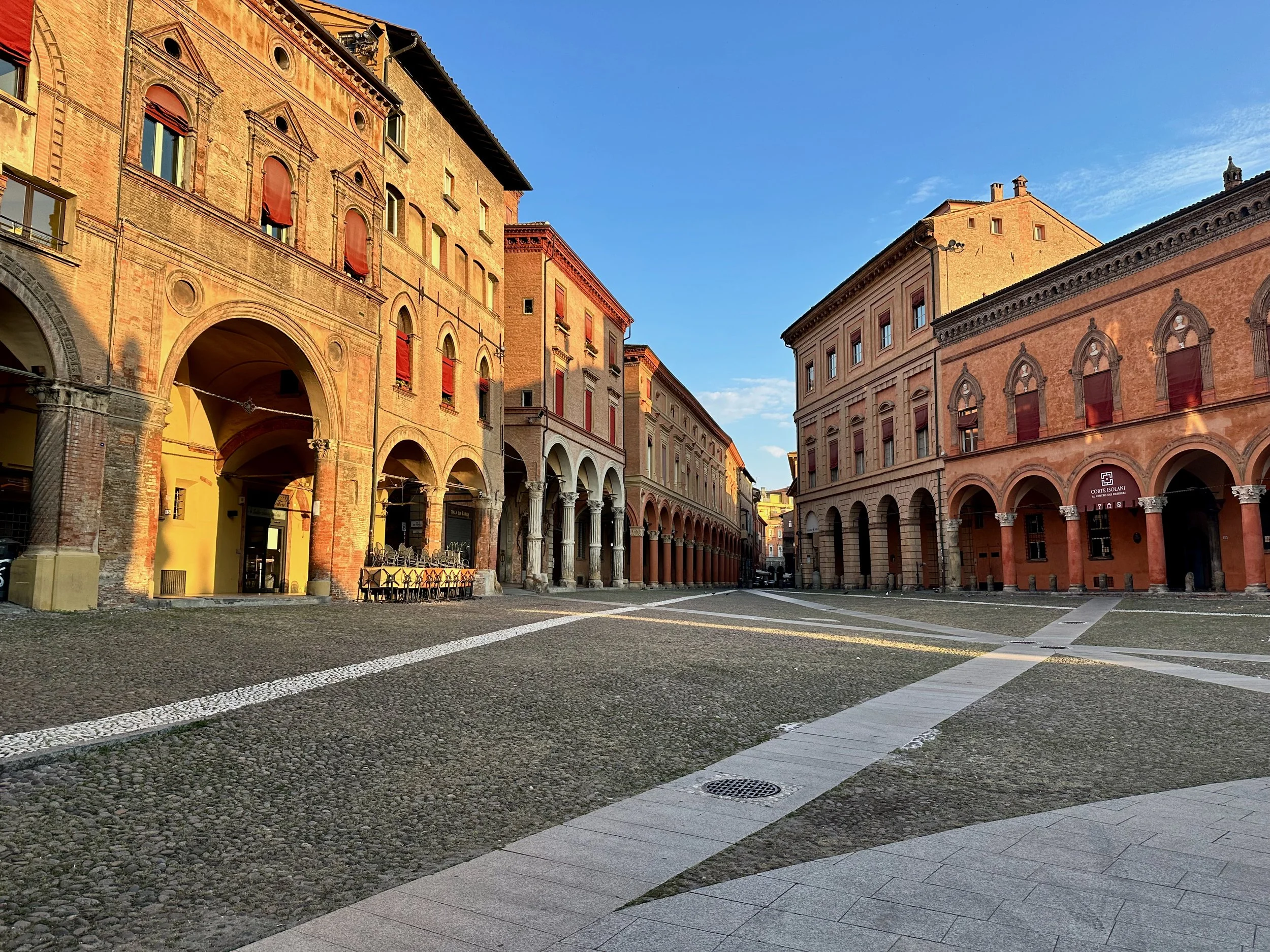
not a soul in san stefano, bologna
With this quieted emplacement, I am not being pulled in every direction. The city is not demanding anything of me. The air is still enough to notice my own thoughts. And that, to me, is one of the rarest gifts this quiet can give: not stimulation, not ambition, not efficiency, but space.
And in a world that worships output, the Italian summer pause feels almost radical. In the United States, and in many places like it, rest is often treated as something to be earned, or apologized for, or compressed into whatever remains after work is done. We speak constantly about productivity, optimization, improvement, momentum. Initiative! But Ferragosto asks different questions entirely: what if the point was not to keep going and instead do very little at all? What if a society could be measured not only by what it produces, but by how well it rests?
I think that is why Ferragosto feels so beautiful to me. It is not only because it is old, or because it is Italian, or because it comes with delicious meals and long afternoons. It is because it honors a truth we keep trying to outrun in that our bodies need recovery, that seasons need pause, and that life is not made better by constant striving.
Sometimes the most nourishing thing we can do is eat something simple, lie still, and let the day pass over us. Ferragosto understands that. And perhaps, if we listened closely enough, so could we.
A few more photos here.
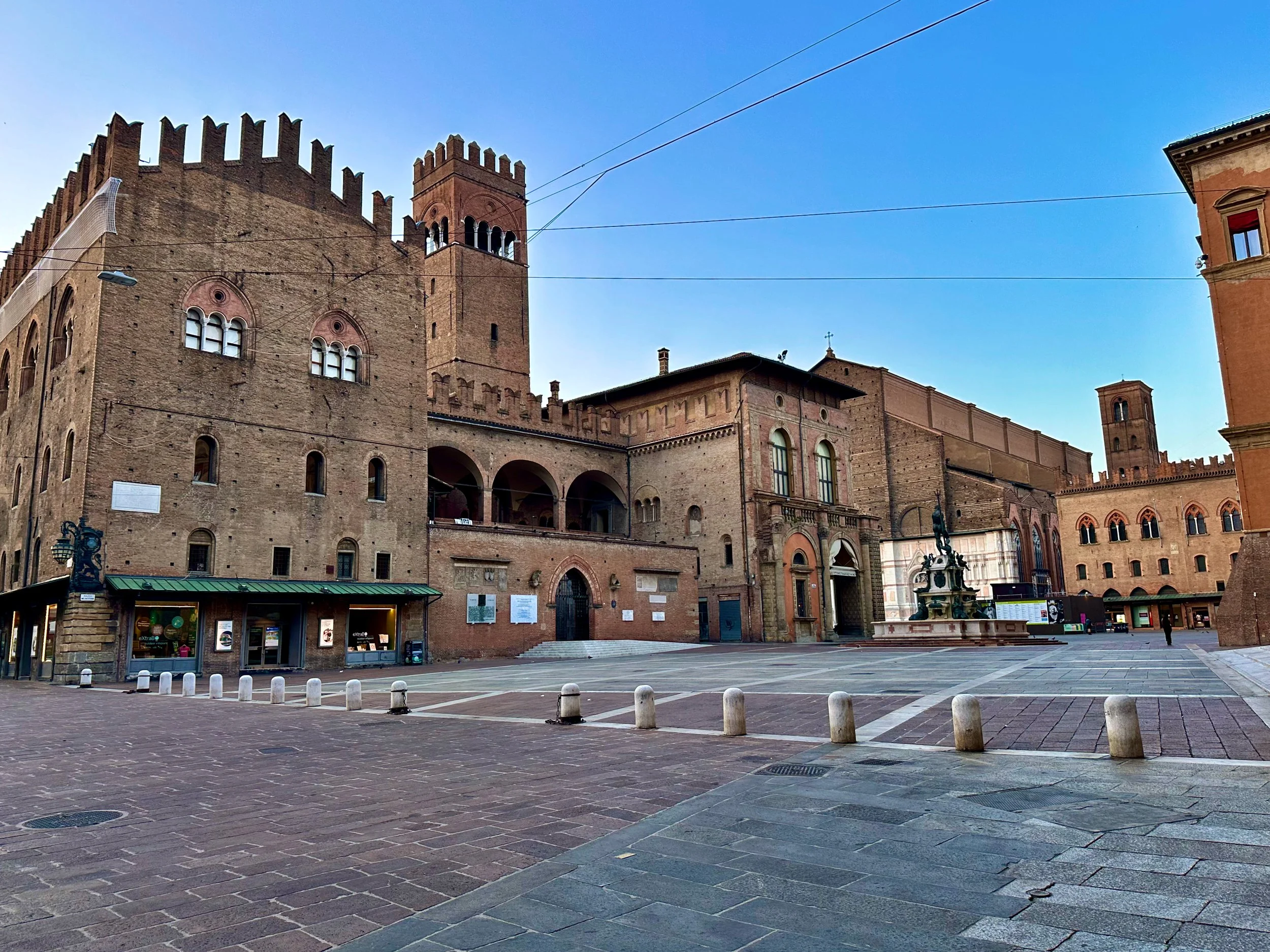
Piazza Maggiore è vuota.
