Who’s getting food systems right? Nobody, completely. But some countries are surprisingly close on some things
Earlier this year, the Food Systems Countdown Initiative published a set of targets and benchmarks for how the world’s food systems should be performing by 2030 and 2050, across everything from hunger and diet quality to emissions, livelihoods and governance. Those reports mostly described global and regional averages, which tell us how far the world as a whole has to go. But averages hide the most useful question of all: which countries are actually doing well, and at what? If we want to learn from success, we need to know where it is. So we went back to the underlying data and looked at all 193 UN member states, one indicator at a time.
The first thing we found is that there is no food-systems “model country.” We measured how often each country reaches the level of the world’s top performers on 42 indicators. The best score anywhere, Switzerland’s, hits that bar on only about a third of its indicators. The typical country manages less than one in ten, and 13 countries don’t reach it on any. Even the leaders, in other words, fall short on most of what makes a food system healthy, fair and sustainable. Leadership is always specific: a country can champion social protection and lag on diets.
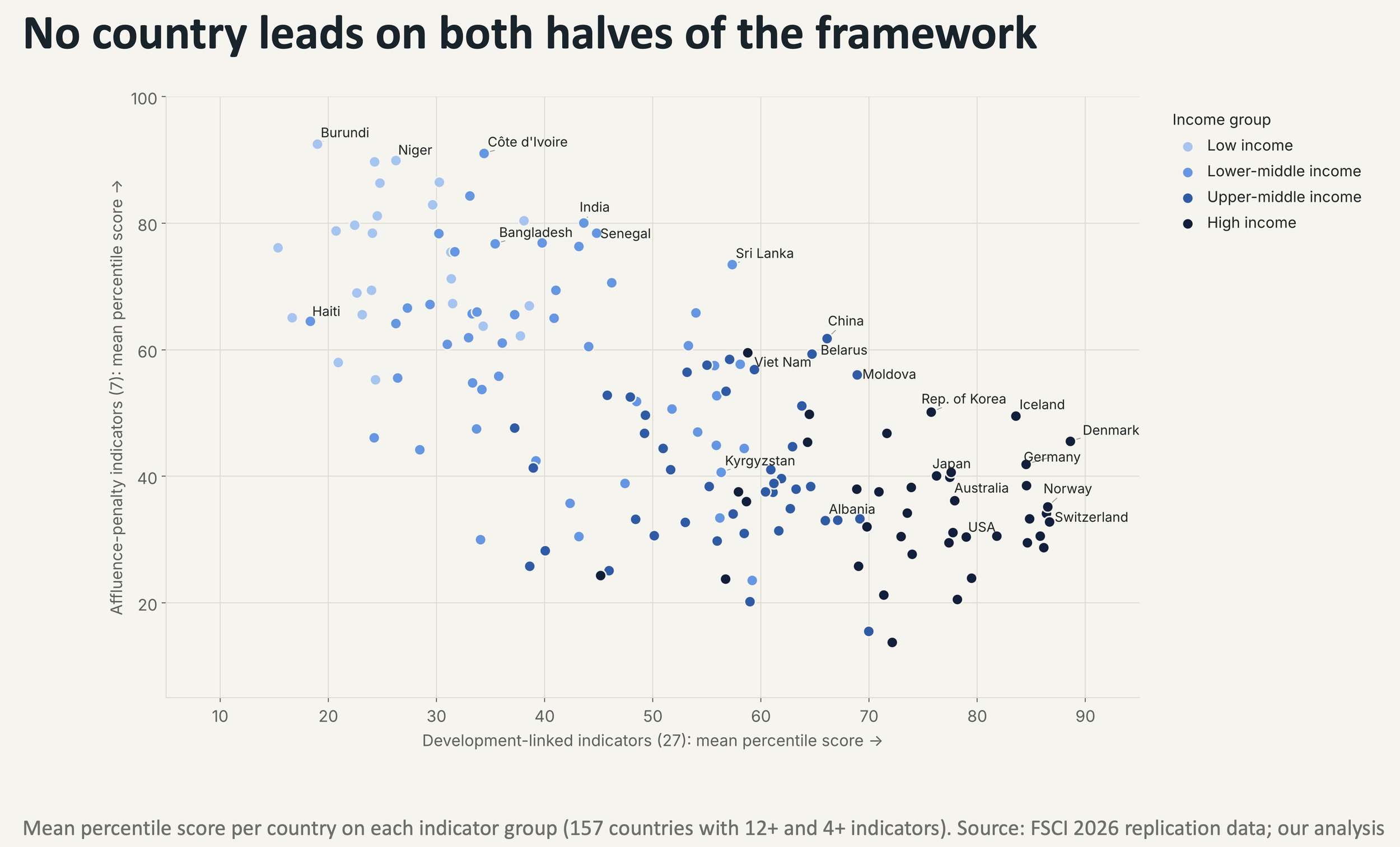
The second finding surprised us more. When we lined the indicators up against national income, they split into two groups that pull in opposite directions. Most of them, 27 in all, including clean water, affordable healthy diets and lower food insecurity, get better as countries get richer. But seven get worse. Sales of ultra-processed foods, sugary drink consumption and pesticide use all climb with income.
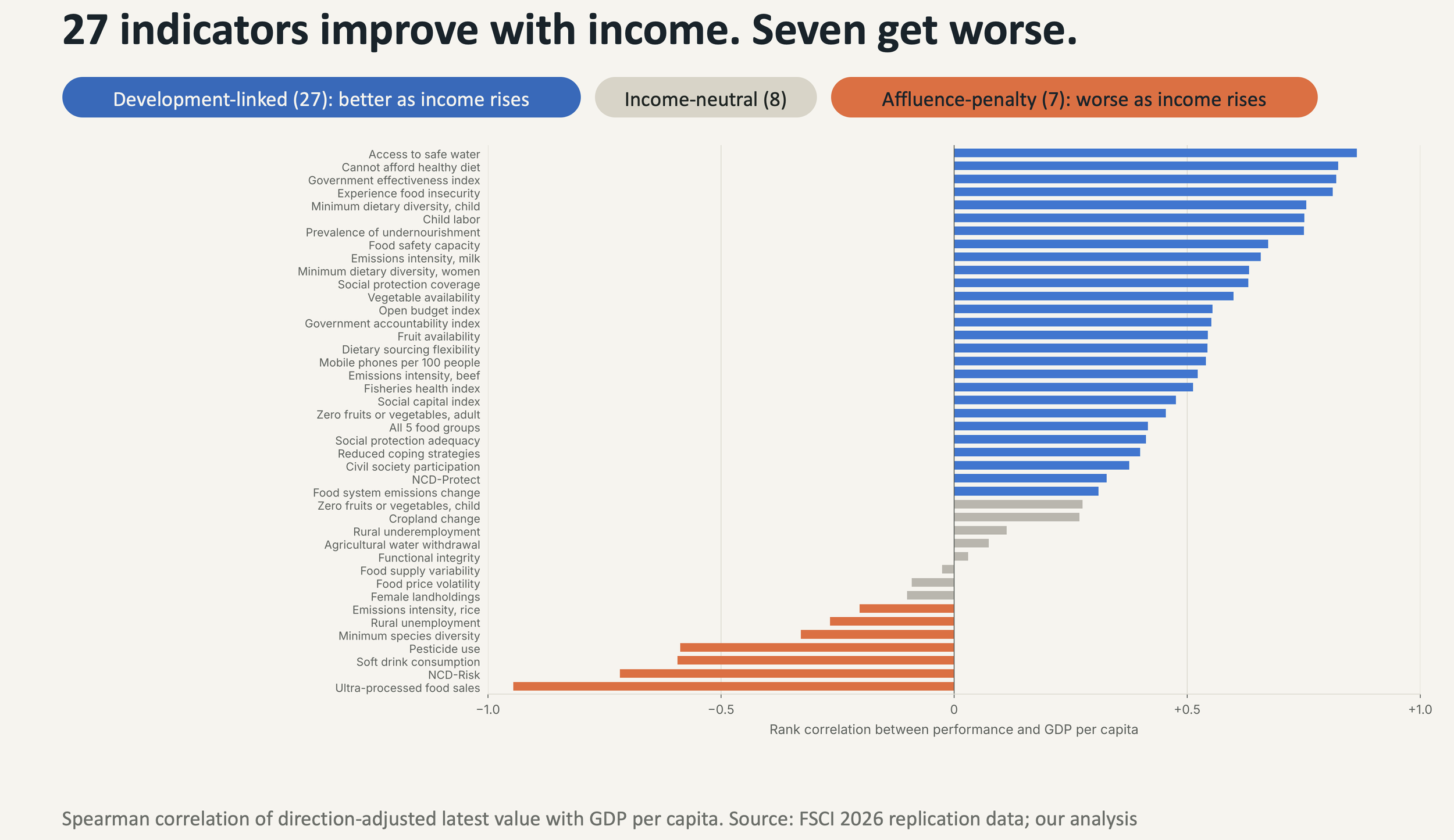
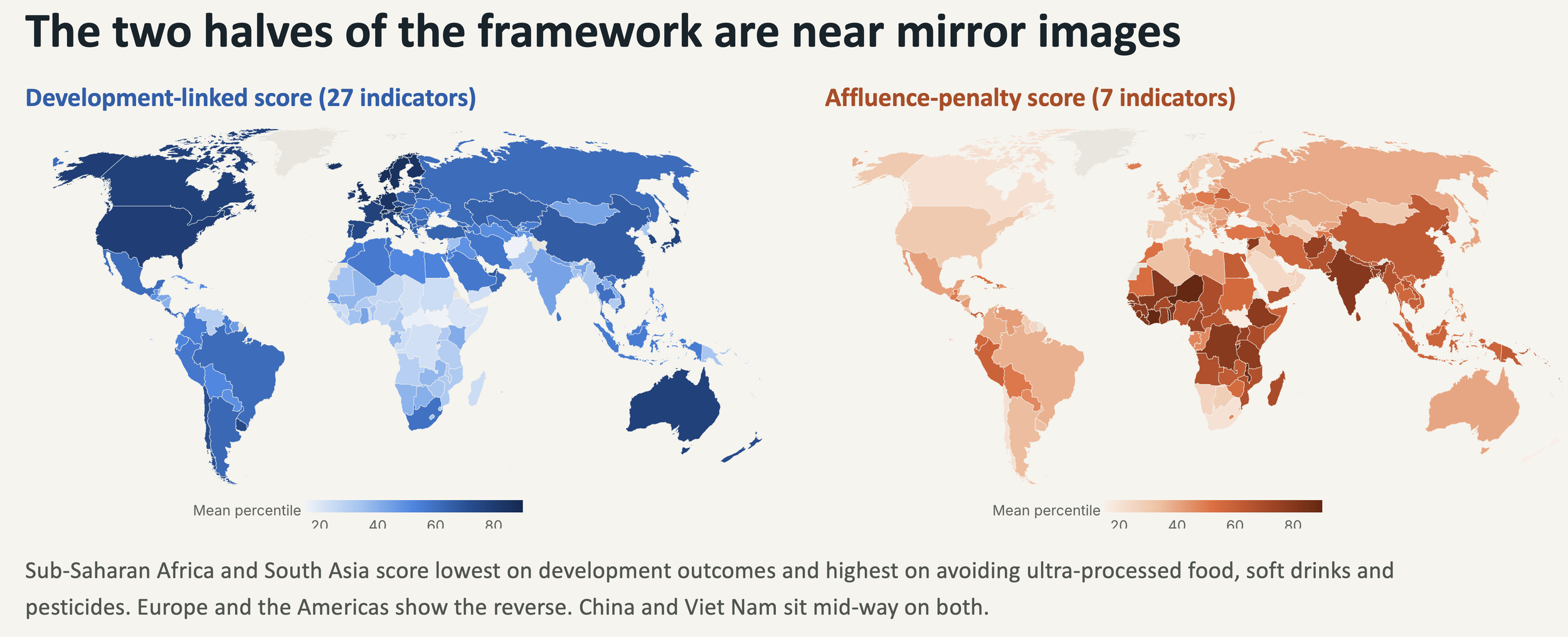
No upper-middle- or high-income country reaches the top-performer level on ultra-processed food sales or soft drinks. Many of the poorest countries do, not because their food systems are working well, but because they haven’t yet taken on the eating patterns that come with wealth. Mapped side by side, the two halves look almost like mirror images of each other, and no country does well on both at once.
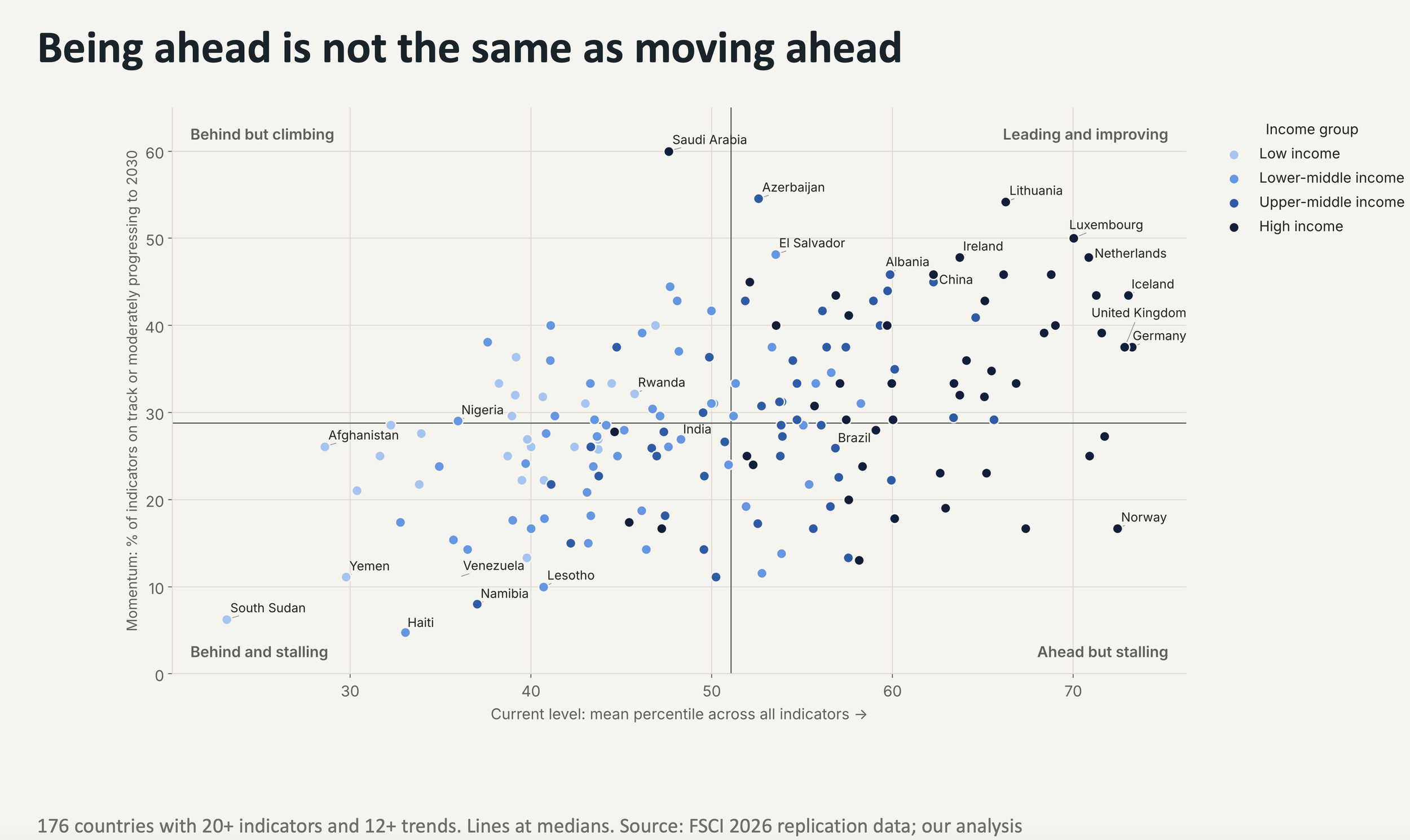
Where a country stands today is only half the story. The other half is which way it’s heading. When we compared each country’s current performance with its direction of travel over the past decade, the two didn’t always match. About a third of countries are both doing relatively well and improving, and another third are behind and stalling. The remaining third are the interesting ones. Some countries that look strong today, including Norway, Switzerland, Sweden, Portugal and Brazil, are making little progress on most indicators. Part of the reason is that some goals are set at absolutes like zero food insecurity, where the last few steps are the hardest. Meanwhile, countries such as Uzbekistan, Bhutan, Lao PDR, Zambia and Ghana are still behind but climbing quickly. For us, this is a reminder that today’s leaders aren’t the only countries worth learning from. Sometimes the more useful lessons come from the countries moving fastest.
The most hopeful part of the story comes from countries that do better than their income would predict. Sri Lanka, for instance, has strong child diets and the lowest soft drink consumption in the dataset, alongside a network of public health midwives who make home visits to mothers and young children, and labeling and a tax on sugary drinks. Tunisia’s diets are far better than its income peers’, helped by long-standing subsidies that keep bread, couscous and oil cheap. Bolivia’s social protection reaches almost everyone. Albania and Vanuatu also stand out in their regions. But these advantages look fragile: all five of these countries are slipping on hunger or food insecurity on current trends, and four of the five are seeing ultra-processed food sales rise.
So what do we take from all this? First, we should learn from countries indicator by indicator, rather than hunting for a single success story to copy. Second, the big question for the coming decades is whether countries can get richer, with the cleaner water, better incomes and food security that brings, without also taking on the diet-related problems that have come with wealth everywhere else. So far, no country has managed it. With only about one in five country-indicator combinations on track for 2030, there’s a lot of work ahead. But the positive deviants show that policy choices can make a real difference.
See the full deck here for a country-by-country comparison.