Custodians of our memories

If you want to read a food book this year, read Eating to Extinction: The World's Rarest Foods and Why We Need to Save Them by BBC food journalist Dan Saladino. The book is about the rich biodiversity found around the planet and how humans have used that biodiversity to feed the world's population. Saladino illustrates how important this diversity is for our nourishment and sustaining the vast cultures and traditions that humans have passed on from one generation to the next. Not only is Saladino a wonderful storyteller, but the story he is telling is one of the most important in food systems today. He writes:

"We cannot afford to carry on growing crops and producing food in ways that are so violently in conflict with nature; we can't continue to beat the planet into submission, to control, dominate and all too often destroy ecosystems. It isn't working. How can anyone claim it is when so many humans are left either hungry or obese and when the Earth is suffering?"

Saladino structures the book across the main food groups — fruits, vegetables, grains, cheese, meat, seafood, alcohol, stimulants (coffee and tea), sweets, and wild foods. He discusses the importance of these food groups and their role in food security. He provides us with lush, visceral vignettes of particular places, exceptional people, and distinctive cultures uniquely trying to grow, raise, and nurture certain traditional varieties of these foods. You get a glimpse of how the hunter-gatherer Hadza hunts for honey in Tanzania. You learn how sheep meat, known as Skerpikjot, is preserved in the fragile ecosystem of the Faroe Islands. You feel the pressure of how Sicilians grow the vanilla orange amid the weight of the Cosa Nostra. You sympathize with the Syrians amid a protracted conflict who attempt to preserve their traditional sweet, Halawet el Jibn, made of war-threatened ingredients like pistachio. You realize that winemaking began in Georgia using traditional pots, known as Qvevri, a practice not done anywhere else in the world.

These stories are wonderful, but they are punctuated with startling and tragic statistics:

  • 50% of all our seeds are in the hands of 4 companies.

  • Of the roughly 6,000 different plants once consumed by humans, only nine remain major staples today.

  • Three crops—rice, wheat, and corn—provide 50% of all our calories.

  • 70 billion chickens (of roughly the same breed and ironically named "chicken of tomorrow") are slaughtered annually.

  • 30 million bison roamed the great plains of the United States, all to be decimated at the hands of the white settlers.

  • 95% of milk consumed in the United States comes from a single breed of cow.

  • 90% of soybean grown in North and South America is genetically modified.

  • 50% of all the world's cheese is made with bacteria or enzymes made by one company

  • The giant Pacific bluefin tuna is down 97%. Yes, 97%.

  • Only 2% of farmers are African American.

  • We only consume 2% of barley that is grown. The rest is used to make beer or fed to animals.

  • Speaking of beer, 25% of beer is produced by one brewer.

You learn about the heroes, like Vavilov, who spent and gave their lives conserving and preserving precious seeds, specific varieties, preservations, and processing of foods as a way to say, "remember us." We were here. They were and are the custodians of the biodiversity across the planet. They are also the custodians of our memories and humanity.

As Saladino escorts you around the world, I imagined these vignettes being turned into a beautiful documentary demonstrating the vast diversity that exists on the planet—as humans, as foods, and as cultures. As Saladino expressed, we must embrace diversity in all its forms: biological, cultural, dietary, and economical. Having more diversity across the range of agriculture systems and landscapes is vital. Capturing all this diversity on film, as the book does, could be a way to preserve these moments, memories, and the history of it all. So, we never forget what we once had.

While the book is inspiring, every chapter ends with a common tragic theme – and I am not giving anything away because it is in the book's title: Extinction. You realize how fast these ways of life, these foods, these cultures, and traditions are disappearing. Our world and food systems are transforming at a speed that is hard to comprehend and capture, and the loss along the way is disturbing. There are many reasons for this extinction, but the major ones are agricultural change, loss of habitats, disease, economic forces, hangovers and continuations of colonization, and conflict.

As Saladino expressed, these endangered foods will not become the mainstay of diets, nor should they. But they have essential and assorted roles to play; if we don't use them, we will lose them. In reference to a chapter on O-Higu, a soybean grown on the island of Okinawa made into unique tofu, "O-Higu might be an insignificant bean. But to many Okinawans, after colonialism and occupation, its return feels like an act of resistance and a celebration of who we are." Many traditions in holding onto these foods are worthy; they involve intimate knowledge, special skills, and lots of care and labor. It is not a simple path forward.

Our world and food systems are transforming into a homogenized vat of staleness. For many, saving these foods and the biodiversity that makes up these foods and our diets is not worth the effort as we move through the world at warped speed. Some argue that this savior complex is romantic and precious, and we should instead focus on the potential for technology and innovation. Growth, growth, growth. Call me sentimental, but I worry about solely following this path and what is lost along the way.

Last night, I watched Chris Marker's visceral Sans Soleil film. In it, the narrator said something that sticks with me:

When filming this ceremony, I knew I was present at the end of something.

Magical cultures that disappear leave traces to those who succeed them.

This one will leave none; the break in history has been too violent.

I want to witness the traces. I want to remember. What is the point of living in this world without cultures and all the food that punctuates those cultures? We must, as global citizens, decide what kind of world we want to live in and figure out what is worth saving. To me, it is the whole lot. I want to save it all—every food, every human, every animal, and every piece of culture. This is what makes our world interesting. As Saladino said, "the Hadza remind us that there are many ways to live and be in the world." I am hanging onto my hopes that the incredible array of people curating these endangered foods will remain the custodians of not only our memories but of our food traditions for the future.
We may not have a choice but to consume alternative proteins

Climate change is having profound impacts on the ability to grow both foods for humans and feed for livestock. Growing food and feeding livestock, in turn, exacerbates climate change. Livestock raised for beef is responsible for 6 percent of total greenhouse gas emissions largely in the form of methane. Livestock is also the number one driver of deforestation around the world, reducing the chances for large forest biomes to serve as carbon sinks.

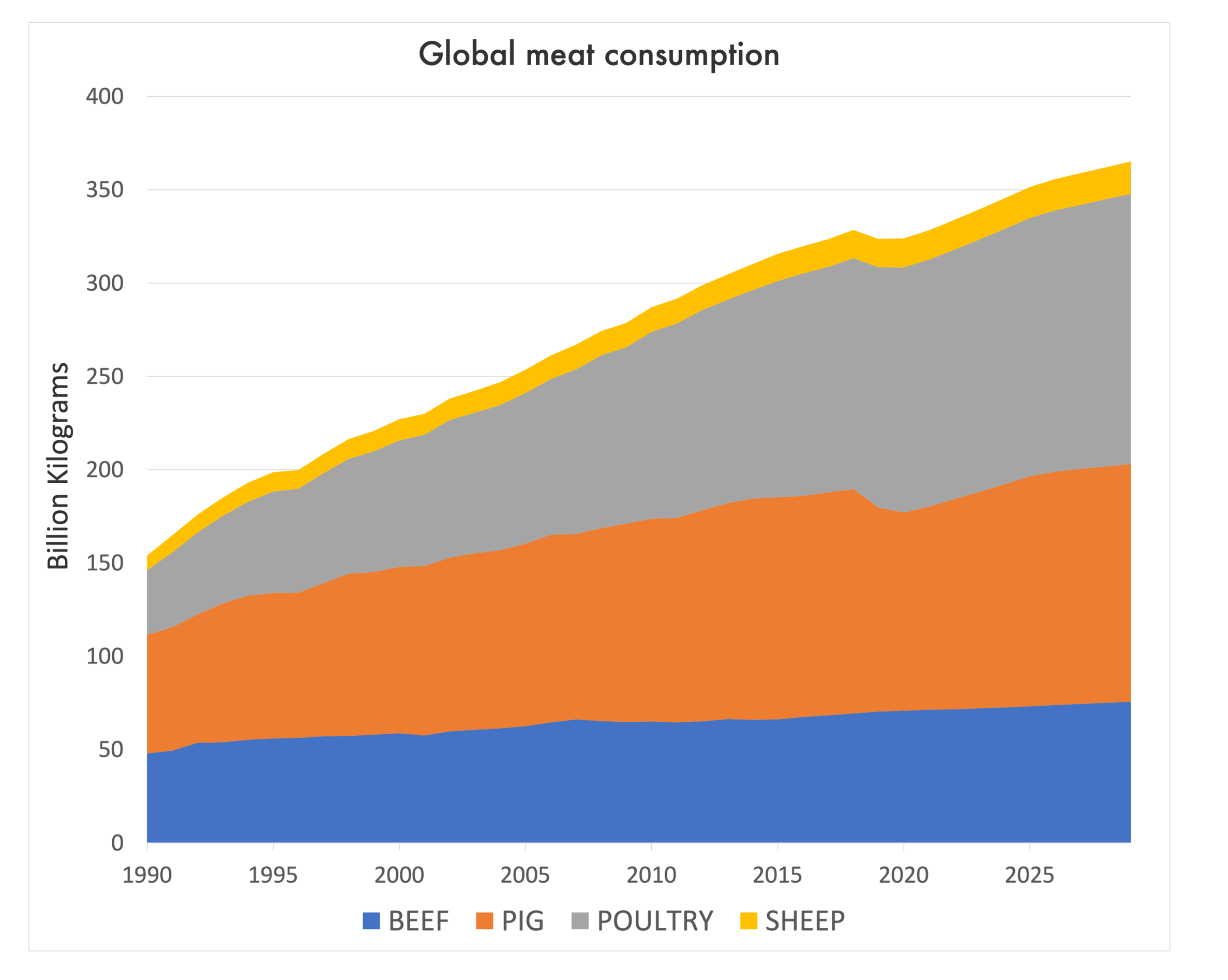
While these stresses continue to rise if no significant action is taken to mitigate climate change, demand for meat is rising all over the world. According to the UN Food and Agriculture Organization, beef consumption has been steadily rising over the last few decades, and as people become wealthier, the more meat they consume. And people, well, like meat!

Some tech companies have come up with a solution—alternative proteins—which include lab-grown meat, plant-based meat, single-cell proteins from yeast or algae, and edible insects. The lab- and plant-based alternative innovations mimic the taste, smell, and texture of meat and could be significant disruptors, eliminating the need for people to raise or consume animals.

As of now, the products available for consumers are mainly plant-based proteins like Impossible Burger and Beyond Beef. Data suggests that these foods are tasty to most consumers and have lower environmental footprints and greenhouse gas emissions than beef. They also have benefits for those who care about animal welfare.

They are however under scrutiny about their health properties and cost. Some argue these foods are overly processed, with a lot of artificial ingredients to get them to a state of palatability. Beyond Burger has approximately 25 ingredients whereas beef has just one ingredient – muscle tissue. They are also costly. One Impossible burger in Washington DC’s Founding Farmer restaurant costs $17.50 as compared to the all-beef cheeseburger at $14.50.

The products in the R&D pipeline – such as lab-grown meats – will have to undergo significant regulation by governments and there is the issue of scale. In the film, Meat the Future, the company Upside Foods (formerly known as Memphis Meats), which is using cells taken from an animal to grow meat, is challenged in making enough products at scale to feed the world’s growing population. While these are hurdles, there are some glimpses of promise. Those that have tried these products are pleasantly surprised at how similar they taste to the real thing and issues of scale are just temporary roadblocks.

Yet, will consumers accept and embrace these foods? The backlash against genetically modified foods shows early signs of what may come as companies begin to get lab-grown meats to market. Many consumers may argue these foods are fake and may be hesitant about their food being “grown” in Petri dishes. 

The big issue is, that we may not have a choice but to eat lab-grown meats. It will be very difficult to raise livestock in a hotter world. Not only will feed and water be scarce, but hotter climates wreak havoc on the health of the animals. These projected adverse effects will put premiums on the price of meat in the grocery store.

So while the world can be picky for the time being, these new foods may become our mainstay survival foods because they may be the only option. To ensure these foods are affordable, accessible, and acceptable to consumers all over the world, and not just curious rich people, several things need to happen.

First, companies producing these foods need to ensure transparency in how these foods are produced, and their impacts across a broad range of outcomes, particularly health and nutrition. There is a need for transparency regarding their nutritional content that is easy for consumers to understand and find. Companies should take lessons from how genetically modified foods were communicated and the fears and doubts they have raised among consumers.

Second, for those products that have unhealthy ingredients with losing palatability, the companies should work hard to reformulate the products to decrease the content of sodium and unhealthy fats. They should also work to fortify these foods with adequate micronutrients.

Third, these foods should be low cost, or real meat should be more expensive, keeping with the true costs to produce beef. As the demand for these alternatives increases and more companies come on board with new products, as with any economies of scale, the price will come down.

Last, while the innovation for these new foods is tempting, there are many traditional foods such as legumes, insects, and algae that have important nutritional value, particularly protein, have low environmental footprints, and do not require raising animals. These traditional foods, while traditional, may offer low-cost, low-resources alternatives to shiny and new future foods.

Can Fixing Dinner Fix the Planet?

Two years ago, I embarked on the writing of my very first book. Coming from a field of expertise that values peer-reviewed scientific publications more than books, I did not think it was in the cards to consider authoring a book about my discipline and my experience working in that discipline. But here we are, and tomorrow, my JHU Press Wavelength series trade book, Can Fixing Dinner Fix the Planet? will be released. The pandemic helped, unfortunately. It nudged me to sit still and put pen to paper.

The book investigates the interactions among food systems, diets, human health, and the climate crisis. It draws on my experiences (along with my team and many colleagues) working and living in Africa, Asia, Europe, and the Americas. It describes how food systems must change to slow and reverse the stark trends we see with increased hunger and obesity, catastrophic climate change, and inequities. The book draws attention to the idea that the very nature of food and food systems can play a significant role in fixing these vexing challenges and bring communities together.

Food books abound—cookbooks by celebrity chefs (thanks Anthony Bourdain!), history of food and cuisines, and self-help diet books. My book does not delve into these areas much. Instead, it delves deep into politics and shows that if we take a “business as usual” path of how food systems have, are, and will operate, there will be significant negative consequences on human and planetary health. It provides examples of what can be done by the various actors like government and food and agriculture industries to promote healthy, sustainable, and equitable diets, sustain the earth’s biodiversity, and protect the environment and all species living on the planet. And last, it raises readers’ food and environmental literacy and empowers readers to take immediate and long-term changes by helping them make informed decisions when they walk into restaurants, grocery stores, farmers' markets, and their kitchens.

The book changed the way I communicate my work. It is not easy to write about a complex topic like food systems and ensure that it inspires eaters, global experts in governments, and those working in and shaping food systems to make better decisions. I tried my best to bring to life some of my experiences working in different countries—from very poor to prosperous—and the experiences of those I have worked with and shared time with in deeply rural and urban pockets of the planet. It provides a nuanced story that takes you away from computer and desk research to farmer’s fields, families’ kitchens, and United Nations’ working forums.

I hope the book shows readers how our everyday diets are the products of massive, interconnected, and highly complex food systems that extend from the seedlings in a farmer’s field to the global distribution and marketing networks that deliver food to our plates. These systems have direct and substantial impacts on poverty, the planet’s natural resources, the nutrition of individuals and populations, the composition of the atmosphere, and social equity. They also are incredibly vulnerable to the climatic changes that we have already seen and that will accelerate in the future.

Brood X - Collecting and Cooking Cicadas 101

This post is from guestblogger, 5cense. Original posting here.

66_good_eating.jpeg

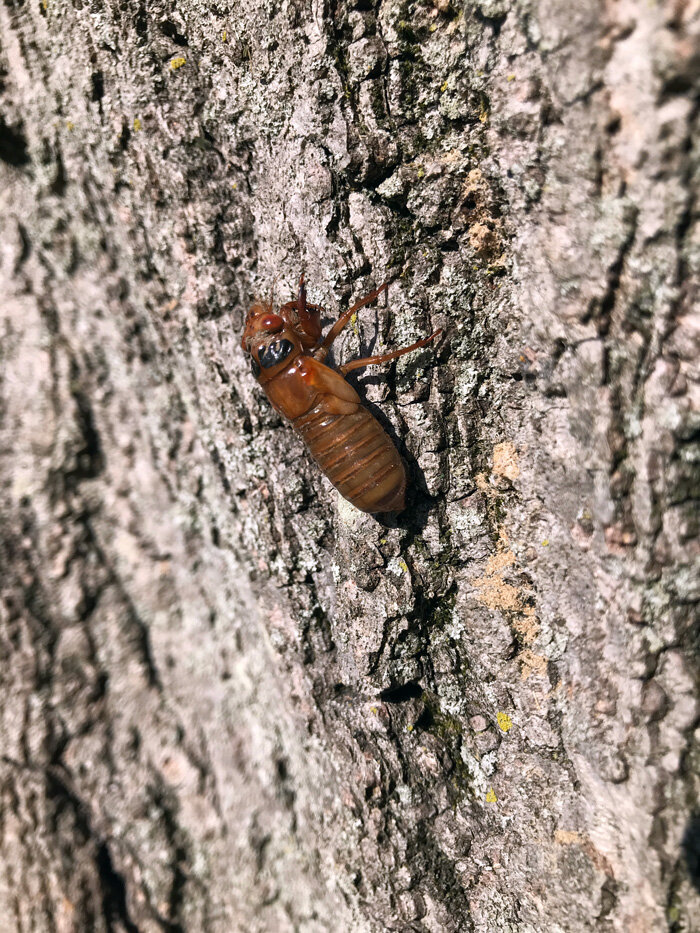
Since Jess has been too busy giving all these interviews about eating cicadas to actually collect and cook them, I figured I'd walk the talk for her and give the practical low-down (though this advice won't be useful to anyone for another 17 years (for brood X anyway), which is crazy to think about... seriously a 4/5-times-in-a-lifetime opportunity). For the past week I've been waking up before dawn to collect cicadas, until yesterday when it got cool and rainy and seems they stopped coming out of the ground. All in all I don't think it was the biblical plague the media hyped it up to be, at least not in D.C. proper... maybe it's a different story in the suburbs? Seems the cicadas don't like "nature" and the majority I found were in grassy open areas in Rock Creek and Kalorama Park, which certainly made them easier to find. I saw some in Malcolm X park but there were tons of squirrels, birds and rats to compete with, not to mention the possibility of pesticides or rat poison. Ideally we looked for ones crawling on the ground or starting to go up trees. If I collected stationary nymphs on trees I often found that they'd molt by the time I got back and while some say the soft white adults were the best, they looked gross after being trampled to death by the active nymphs. Like lobsters and crabs (also bugs), seems it's best to collect and keep them alive as long as possible.

And here's what the ones we collected the other morning looked and sounded like:

Some also say the black adults taste good, but we never tried them... seems if an adult made it to the tree and molted then it deserves to live, especially the pregnant females which some say are a delicacy. I "saved" quite a few adult cicadas that were on sidewalks or seemingly lost nowhere near a tree by putting them high up in trees, and a few (including a stowaway that hitched a ride home on my backpack) we brought into our house and put on our plants to keep them safe until they were ready to mate, but then they flew around our house and wouldn't settle down so we put them in our backyard, where likely they were eaten by the numerous birds or squirrels that eat anything that moves in our yard. Once I'd get home I'd sort thru them to remove the grass and debris and dead ones, and also any fungus-infected "sex-crazed zombies".

Once I sorted thru them I bagged them into meal-size batches and stuck them in the freezer, which seems sort of cruel, but better then having them suffocate or slowly die. I collected about a dozen bags worth (maybe a ½ pound each). The first 2 times we tried them (including the ones Jess cooked for CNN, see the previous post), we sautéed/fried them in sesame oil w/ garlic, chili and spices. This past weekend we had a friend over for dinner and made cicada fajitas/tacos, which were tasty.

52_fajita.jpeg
53_taco.jpeg

A few nights ago we wanted to try them roasted and without too much spice to really taste the bug (after all, most anything fried with garlic and chilis will taste good). As when we fried them, we boiled them first for a few minutes, which serves to clean them (and also seems to plumpen them up) and then rinsed them in a strainer to get off any remaining debris. We mixed them in with potatoes on a cookie sheet and added olive oil and a little garlic, salt, pepper and rosemary and stuck them in the oven for about 20 minutes (the potatoes for longer).

They might look gross, but must say they were quite delicious—nutty, buttery and earthy. In fact we gobbled the bugs up before the potatoes. They taste like something that's meant to be eaten, like shrimp, sea urchin or clams (which we tend to eat a lot of... the lower on the food chain the better). They supposedly have a lot of fat because once they emerge from the ground they live off their fat stores during their 2-week party of molting, courting and mating, but seems nobody has done a proper nutritional analysis, so "my better ½" Jess wants to sacrifice one of our baggies for analysis (if we don't devour them all first).

19 days of COVID cuisine: Cooking to combat cabin fever

My better-half, who does all the cooking in this casa and serves as the main hunter-gatherer-forager for all things food, wrote a post on his 5cense blog, but gave me the permits to post it here too. He goes into our food life in the times of COVID and how he gets by with a recent diagnosis of Ménières disease. He tries hard to practice what I preach in my professional life, ensuring we eat as sustainably as possible, and have zero food waste. Right now, these principles are harder for everyone, with the strained global food supply trying to keep up as the economy slows. For those already suffering from food insecurity and uncertain employment, the struggles are immense and we can’t even begin to comprehend the sacrifices and hardship. We feel so incredibly lucky to be able to put food on the table every night and are trying to support our local food system and community as best we can.

Please go and support your local farmers and CSAs (see who we support below), restaurants and food banks. They need us more than ever.

Virtual Sourcing
Don't know how y'all get your food, but this is problema #1 these days, 'specially for car-less folks like us that are used to the Italian way of doing things—buying fresh stuff every day for what you're gonna eat that night. By the time we went to the market a few weeks ago, most everything had been hoarded (btw, the TP shortage phenomena has an EZ answer—a Tushy bidet attachment... toilet paper is a filthy habit anyway). We have a Trader Joe's a block away, but seems to be a cesspool for Corona right now (+ no, not the beer). And when u go on Fresh Direct the time slots are always taken... so what u gotta do is wake up (or stay up til) 12:01am when they release time slots for the next day + then be patient thru 15 minutes of tumbling hourglasses or spinning wheels as everyone in the country is also refreshing their browsers over + over like you are. On the 2nd or 3rd night we got lucky + scored a rez for a week later.

Fresh Direct lets u modify your cart up until the night before your delivery so just put whatever in there to book a slot and then keep adding as u wait a week for your time to come up... of course lately they are out of most everything + even if u do manage to get some stuff in your cart, by the time they deliver ⅓ of your items are missing + the recommended replacements are ridiculous like in loo of raisins they suggest maraschino cherries, or low-sodium Goya black beans instead of the regular (which we've probably eaten more of then any other food item in el mundo (we brought cases of 'em to Rome, along w/ 5 or so kilos of Maseca)... spose u can just add your own salt + here's a tip: squeeze a lime into the can so u don't waste all them juices + gook stuck to the side of the can. And sure, u can boil your own, but we're lazy + DiY beans give us gas (tho pressure cookers help) + they were out of the dried ones too.

Whole Foods on the other hand has the opposite approach—u can reserve only 2 days in advance for delivery, but they release slots throughout the day, so if u keep ⌘-R'ing the screen u might score a delivery w/in a few hours. They don't let u update your cart tho + their bait + switch tactics are more extreme... yesterday we went to buy butter, Jasmine rice + paper towels but ended up w/ a few bottles of cava, organic blueberries + Engine-2 Rip's (only cereal we can find w/o added sugar or oils), but none of what we originally ordered (they don't tell u until after checkout that they are out of these things), tho guess we did score a few bags of Peet's Major Dickason's (no other coffee will do for us).

Daily Bread for a Fortnight
If ever we was gonna write a cookbook, it wouldn't be about singular recipes but the flow from 1 day to the next... about efficiency, variety, conservation of resources, adaptability + yes, 1-pot meals cuz we're fundamentally lazy. Rule #1 would be don't follow recipes. Just get creative w/ what u got, analyze the contents of your fridge in the order of when it will go bad + then figure out what u can concoct so nothing gets wasted... can't remember when the last time something in our fridge went bad. Most every meal ends up being a unique dish, tho there are a few general patterns that repeat. Rarely does a week go by that we don't have tacos, so we start w/ a batch of salsa. Choice of peppers might vary (+ sometimes we opt for green tomatillos) but usually, it's habaneros, cilantro, white onion, lime + roasted Roma tomatoes (5 makes enough to exactly fill our container)... the only problem is that there was no cilantro (a problem we are well used to, living in Italy where they regard cilantro as worse than old man b.o.) so we did the unspeakable + used basil + parsley. When we ordered habaneros from Fresh Direct last week we thought we were getting 6, but ends up we got 6 bags... so really like 40-50 habaneros. No problema, we roasted all of 'em w/ our stovetop roaster (w/ fan on high!) + then added a bit of olive oil + lime (to make it pasty) + put it in the freezer so whenever we need roasted habanero (which is always) we can just nuke it for 10 seconds then take a spoonful. While we were mucking up our food processor (Breville... highly recommended) figured we may as well whip up the jerk + pesto sauces (read on). Ideally, this prep day should coincide w/ the day u get your goods, which this time around conveniently fell on April 1.

April 1: Vongole—this is another dish in high rotation, if not weekly then every fortnight, being that clams are our bedder-½'s favorite food (she's got a tattoo as proof) + low on the food chain, low carbon footprint (unless u get them from New Zealand... which we must admit, them cockles are tasty). Our custom is to make this for whenever she comes back from a trip, which used to be often, but seeing as no one is traveling these days we make 'em just because. Ain't much to do w/ vongole (or linguine 'Congolese' as our iPhone calls it)... soak the clams 1st thing in cold salted water (our seafood monger in Rome used to tell us how much salt per liter but we forget) in the sink + apologize to them 1 x 1 for the trauma they endured being scooped from the sand + shipped thru whatever supply chain to your home (hopefully your seafood monger knows better not to seal the bag so they can breathe). Rub each 1 down + if they are slightly ajar they should clench close when u massage them otherwise they ain't no good. If u squeeze 'em a bit u can sorta tell.

If we had a baguette we would of made garlic bread to "fare la scarpetta con le vongole" (mop up the clam juices w/ the bottom of your shoe) but apparently everyone's hoarding baguettes (which at least makes more sense then guns + TP) so instead we just took regular sliced (whole grain sourdough) bread + smeared crushed garlic + olive oil (butter is also out of stock, so we're rationing the little that we have) + put it in the oven. Then put the water on to boil.

In another pot (a janky non-teflon 1 cuz it might get scratched up by the clams) put some chopped garlic, olive oil + white wine... we like to put sum sorta cherry tomatoes (ideally those nippled piennoli from the slopes of Mt Vesuvius) but alas, out of stock, so instead we chopped up some red peppers (sweet minis). At the same time u put the pasta in (linguini or spaghetti for vongole... nothing else will do) put the poor little clams in the pot w/ the lid on. Make sure to under-cook pasta, we just drain against the side of the sink to not have to wash a strainer then add lots of fresh chopped parsley, red pepper flakes, ground pepper, salt + a squeeze of lemon, then dump the clams (cook long enough for them to all open) + juices on top + hold onto the pot u used to steam the clams cuz u can use that for the discarded shells. We didn't take a photo of the vongole cuz we didn't know then we'd write this post + we're more into eating our food then taking pictures of it. We also had a salad (use them greens while their fresh) w/ avocado + red onion. We've been trying not to drink during the week, but hard to have vongole senza vino bianco.

April 2: Gnocchi Pesto—fresh basil should also be made into pesto as soon as possible... it doesn't mean u have to eat it that day, but at least make it. As we mentioned, we also made the salsa + jerk sauce at the same time to save on cleaning. Often humus gets worked into this routine, but not this time. Pesto is e-z p-z.. throw basil, pine nuts, garlic, olive oil + pecorino romano in the food processor + voilà. Most recipes probly call for parmigiano but our time in Rome has biased our buds. Sometimes we squeeze a squirt of lemon into the mix. ½ of the pesto we'll put in a jar (top off w/ a layer of olive oil so it stays green + unoxidized).

We chose gnocchi cuz we had pasta the night before + also cuz the last time we went to Trader Giotto's they were out of all the pastas except gnocchi. While the gnocchi were boiling (if u have gnocchi w/ tomato sauce u can cook them right in the sauce + save a pot) we sautéed a bit of shrimp + mustard greens (often we'll throw chick peas in for protein, but the shrimp suffice this time) then add the gnocchi + mix in the pesto last, after the heat is off. Again, w/ a salad + unfortunately sliced bread instead of a baguette to mop up the oily remnants. Pesto is hard to eat w/o vino rosso, but we can't drink red wine this time of year w/ our allergies + we ain't sposed to be drinking anyway during the week. We usually also have sparkling water but SodaStream is taking forever refilling our cannisters... so it's tap water straight up, w/ a squeeze of lemon (April is the month they chlorinate the water in DC (gotta keep them pipes clean living in the swamp) which smells gross but u can't really taste it). Again, we didn't take photos of the final product, tho here's the pesto sauce we haven't used yet, along w/ the salsa we haven't tapped into either.

April 3: Jerk Chicken—we haven't been talking much about what we eat the rest of the day.... if we have leftovers from the night before we skip breakfast + eat those for lunch. Or we eat a late breakfast + skip lunch, or just snack on whatever throughout the day. Lately we've been into smoothies + while we haven't resorted yet to frozen berries, we got some for the day when we can't get 'em fresh.

'Jerk' is 1 of those vague words that to us means whatever u find laying around, but usually entails roasted habaneros (which we already mentioned we have a frozen stash of) + green onions... those are the only 2 real requirements, + oh, spose allspice is must-have to be jerk. If we have pickles on hand (which we do) we'll pour some of the briney water into the mix, or capers w/ some of the juices they're soaking in,... soy sauce, ponzu, whatever salad dressing u might have, lime, vinegar, salt, pepper, spices, etc. Baste the chicken in this concoction overnight (we did all this the day before). Then all u got to do is fire up the grill + throw 'em on.

Actually, shuck the corn + put those on 1st cuz they take longer. Then put the meatier breasts + legs before the wings + smaller pieces... tho we couldn't get a whole chicken, all we could get was 2 legs + a package of wings (if we wanted organic, free range). We don't do chicken that often btw, maybe once a month. It's the only animal we eat that doesn't live in the ocean. We justify it cuz it's low on the food chain + comparatively resource-efficient, but fact is it's delicious. Roasted corn doesn't need anything, perhaps just a squeeze of lime. And again, a salad, while the greens last. Washed down w/ Pilsner Urquel. We got tired of waiting for SodaStream so canceled our order + put on a bandanna + braved the hardware store to exchange our cannisters. After dinner mixed sum gin into our limey soda water (it was Friday night after all)... nursing our Japanese gin to stretch it for as long as we can.

April 4: Tacos—we've eaten tacos probably more than any other dish in our lifetime, at least once if not twice a week. We had a bit of leftover chicken so grilled it up w/ sum mushrooms, green onions + a few types of peppers (dare we use the word fajitas?). We actually scored some tortillas (albeit small "street" style ones) otherwise we would of made our own. And whipped up a batch of guacamole... + the salsa, sour cream, jack cheese (sadly they were out jalapeño jack) + a bottle of pilsner.

April 5: Risotto—take the bones you've been collecting from the chicken, along w/ whatever else (we keep a pot in our fridge for scraps), the tips of onions, celery, etc. + add water to boil. The longer they simmer the better. This week we made risotto w/ the broth, but the last time we made vegetable bean soup + the time before that pozole.

While the broth simmers start chopping up stuff for the risotto... this time we put garlic, eggplant, shitake mushrooms, a few frozen shrimps, mustard greens (add last) + green chilies. Fortunately we have 10 kg of frozen roasted Hatch chilies we got last September... we still have about 5 kg left. Roast the garlic + briefly toast the risotto then start adding stuff. We just put the strainer right on top + pour the broth straight in. Set the risotto simmering, stirring often. Once the stuff in the strainer has cooled (spraying a bit of cold water thru helps) we like to get in there + wring all those juices out, squeezing the remnants to a pulp. Broth-making should correspond w/ the day before garbage day so these remnants don't stink up your kitchen or attract vermin. When it's near to done grate some pecorino in. We served it on a bed of arugula since we had some to use up.

April 6: black bean tostadas/tacos—we had a few leftover broken tortillas that we put in the oven to make tostadas + since we don't have any more tortillas we made our own from Maseca... again, plenty used to doing this since they don't have tortillas in Rome or Nairobi (not corn ones anyway). We still have salsa from a few days ago + grated some cheese + diced up some peppers, green onions, arugula, cilantro, sour cream, etc...

April 7: Penne Pesto w/ shrimp, mushrooms, peppers on a bed of arugula (using rest of pesto sauce made a few days ago).

April 8: Veggie-burgers /w fries + babaga-humus—scraping the bottom of the fridge so dipped into the freezer to dig out some Engine-2 Pinto-Habanero Burgers that we've been meaning to try since we like their cereals so much (all simple plant-based ingredients w/ no added oils or sugars). Grilled up some onions, mushrooms + peppers to put on the patties + also a slice of NY sharp cheddar cheese. Roasted some potatoes in the oven (w/paprika, rosemary, garlic, salt + o'bay). While we had the oven on, roasted an eggplant + mixed it w/ some humus (why not... humus + babaganoush have basically the same ingredients): chick peas, tahini, olive oil, lemon, fresh parsley, habanero paste, sesame seeds + the roasted eggplant). Celery + pickles. Washed down w/ a bottle of Cava since our bedder-½ got promoted to full professor (she was already tenured + endowed, but technically "assistant" prof before) so we were celebrating. The verdict on Engine-2 Pinto-Habanero "burgers"? Consistency was weird, soft + mushy + falling apart, but w/ all the fixings + mayo + mustard it's all tasty.

Oh yah, the cookies... those are the professor's doing. We don't bake... at least not baking that necessitates following a recipe.

Eating + drinking w/ Ménières
Didn't sleep so well + woke up w/ our head pounding/spinning, maybe on account of the cava + cookies. Last year we were diagnosed w/ Ménières disease + our doctor said no salt, alcohol, caffeine + basically every food item listed here that we love. But life's too short! Would rather be dizzy + lose hearing in 1 ear than eat unsalted beans. Especially since there's been no conclusive studies demonstrating that this even helps, it's all just anecdotal speculation. A few months ago we started to keep a food journal to see if we could identify any triggers, but barometric pressure, allergies + lack of sleep seem to have more of an influence than diet... tho salt, sugar + alcohol certainly doesn't help + eating a lot in 1 meal after fasting all day doesn't bode well for us either. In particular we've noticed we don't do so well w/ wine (especially red, but even whites now). We're okay w/ beer (as long as it's low alcohol %... not these crazy high-octane IPAs they make nowadays), in fact we sleep + feel even better if we have 1 or 2 beers. Really it's about moderation in everything, keeping fluid levels at an even keel, don't eat a bunch of salt 1 day + then no salt the next + don't binge on anything all at once, but eat consistently throughout the day. Our Ménières is probably acting up cuz it's allergy season (this time last year we were really hating life). Yesterday we went for a run (only cuz it rained all night) + when we got back our legs felt + looked like we got bit by 100s of mosquitoes all at once, in addition to sneezing attacks + itchy bloodshot eyes. So avoiding the outside world is something we should be doing anyway for the next month, regardless of COVID.

April 9: Shrimp Tacos w/ Guacamole—Re-up day... got our Fresh Direct delivery this morning... this as we learn that the Trader José's near our house closed cuz an employee got COVID, so now we'll be even harder pressed to get food in our hood. We made shrimp tacos cuz 2 of the avocados we're really soft so figured we may as well make guacamole + the shrimp weren't frozen so best to 'em sooner rather than later. Made another batch of fresh salsa for the week.

April 10: Mushroom Gorgonzola Stroganoff—we have no clue how a proper stroganoff is made, this is based more on the Hungarian Mushroom soup recipe we remember from Moosewood (back when we was a hippie child in the '80s we admit to using that cookbook). Sauté some mushrooms (a mix of cremini + the regular ones) + onions + garlic in white wine, olive oil + butter. We couldn't get sour cream so used Greek yogurt. Spice w/ salt + pepper + most importantly paprika + fresh parsley. Oh yah, and this time we sprinkled some crumbled gorgonzola in which gave it a nice zest.

April 11: Linguini Vongole—1 of the professor's students was going to Whole Foods w/ a car today + asked us if we wanted anything (spose this is the 2020 version of giving the teacher an apple) so we gave her a list of things including vongole, so repeated day 1's clam-fest only this time w/ linguini + we had little kumatos to throw in. Not only was this student kind enough to do our shopping but she souprized us w/ other goodies we didn't ask for such as burrata, so included that in our meal.

We were going to do a whole fortnight of food getting us thru lock-down, but seems the cycle is starting to repeat + we have friends in Naples asking to swap recipes, so we'll go ahead + post now... u get the idea, it's not about knocking your socks off w/ 1 meal, but sustaining yourself thru the week, month + also eating to sustain the planet. W/ the nearby Trader Joe's closed cuz of COVID it's getting harder to shop (supposedly the queue at the nearby Whole Food's is 2 blocks long). We're losing sleep staying or waking up at midnight to get a delivery rez on Fresh Direct only to find out they are all booked in advance + seems all food delivery services are overwhelmed. On the other hand, there is tons of food going to waste cuz the chain is severed from farmers that normally supply restaurants + business besides supermarkets, or the mom + pop specialty farms that supply farm-to-fork restaurants. We signed up for a local CSA (Earth N Eats) so we are getting a bunch of fresh stuff on Friday. There's also lots of otherwise thumb-twiddling restaurants getting involved in distributing (uncooked) food (at least in DC). So we're set for at least a few weeks, here's what our fridge looks like at the moment:

Next Week's Menu
As mentioned, we don't follow recipes or plan meals in advance (+ or even grocery lists) but we have a vague notion in the back of our head that gets inspired day off based on the status of food in our fridge in the order it will go bad (not a drop or leaf of any food item above will go to waste). But here's some other e-z to make meals that usually find their way into the mix:

  • Pozole—while the authentic version is complicated (+ involves pig feet) we have our own version that can be made in minutes. Ideally u do this w/ broth u made, but in a pinch u can use 1 of them boxes (+ veggie broth if you don't do chicken). Grill up onions + garlic, add roasted Hatch green chilies (we have them frozen, but u can get them canned, tho they're not nearly as good/spicy), oregano, a can of hominy, black beans + voilà. Mexicans garnish w/ cabbage, onions (white), pork, radish, lime + chili sauce... we modify this sometimes w/ whatever leafy green, green onions, grated cheese + chicken, if we have it.

  • Quiche—quiche is another great way to use things up, just grill up whatever u have on hand, add 4 eggs (2 per pie) + grated cheese... basically an omelet in a pie crust. We only make pie crusts if we have to (like in Italy where u can't buy them frozen) but what a pain in the ass when u can just buy 'em frozen. If u don't have a pie crust, u can always make breakfast for dinner... we often do a Mexican version of this w/ huevos rancheros + black beans + home fries.

  • Pizza—same thing we said about pie crusts applies to pizza dough... much easier to get frozen + thaw + roll it out out day of. U also need to an oven that can crank up to 450° if not 500°+ ... ours never seems to get hot enough to get a crispy crust (+ we never forked over the dough for a proper pizza stone but use a metal 1), but maybe also cuz we load it up w/ veggies (usually lots of mushrooms) + cheese, to try to make a meal of it. We also often pile arugula on to turn it in to a sort of pizza salad. Otherwise, if we want a proper pizza we leave that to the professionals (same could be said about sushi).

  • Cevicherashi—while we don't usually make sushi ourselves, we often do a Mexican/Peruvian hybrid that we already documented here. Or a Polynesian take on this is poisson cru (basically the same thing but w/ coconut milk).

  • TJ's Thai Lime + Chili Amondless Larb—it's easy to fall prey to the Asian stir-fry, face it, we all have + it's never the same as when u go to a good Thai or Chinese restaurant. Maybe 1 reason is that it usually requires liberal doses of fish sauce which stinks your house up to high hell. But the classic stir-fry is always a good way to use up those fresh veggies + Jasmine rice is a nice change from pasta. One secret we have (being that we consume mass quantities of those Trader Joe's Thai + Lime Almonds) is we re-use all those leftover spices (lemongrass, kaffir, etc.) once we've eaten the almonds + yes, u sorta have to plug your nose + use fish sauce, that's the dirty secret to Thai cooking. When we 1st got turned on to Thai food in the '80s in San Jose, we got the cook from our favorite restaurant drunk so she'd reveal her secrets + evidently cooking w/ vodka is also key. If we don't use shrimp, our stir-fry dishes often end up a bit larby, w/ lime, scallions, cilantro + ground chicken or turkey or crumbled tofu, tempeh or we've even tried this w/ beyond burger.

  • Casarecce Carciofi—we got some artichokes coming friday in our CSA so we'll likely make a variation of this, hopefully they'll have the stems on them cuz them's good eating. Basically we follow the recipe for carciofi ala Romana (steam w/ garlic, mint + lemon) + rather than waste those juices the artichokes were simmering in, we take the artichokes out, mash up the stems (hopefully they're soft enough) + garlic + then maybe add mushrooms or whatever else + put the pasta in there + add pecorino Romano to stretch your artichokes into a meal.

  • Anything Goes Mulligatawny—googling now this doesn't resemble the mulligatawny recipes we see on Inurnet, but it's usually what we call our goulashy vegetable soups. The inspiration goes back to 2 decades ago when we used to stand in line at the Soup Nazi in Hell's kitchen (before he sold out + franchised + had to drop the "Nazi") + it was pretty much just like in Seinfeld (except u stood in line outside, rain or shine), u had to know the drill or get scolded. And it was well-worth it. My favorite was his mulligatawny, which seemed more Persian than Indian. And we'll use a dollop of sour cream or yogurt instead of coconut milk (as we think did the Soup Nazi). Regular players in our mulligatawny include: lentils or chick peas and/or whatever beans, celery, carrots, squash or pumpkin, onions, potatoes or faro, etc. but really this all hinges on your broth. We might spice it w/ a bit of curry powder or rosemary + tarragon + usually there's habaneros involved or some other chilies.

Bon appétit! And wash those hands.


It is easy to see the beginnings of things, and harder to see the ends.

At least, that is what Joan Didion wrote in “Goodbye to All That.” She was referring to herself when she moved to New York City and unexpectedly stayed for a good long while. Maybe too long.

I have been thinking a lot about what she wrote, feeling the palpability of those words as we mark our 30th day in self-isolation amidst a global COVID-19 pandemic, without a clue to where we are within it. The end is indeed abstruse. Are we at the beginning of it? Are we in the middle? Or nearing the end? It is harder to see, know, or predict when this will all resolve, and no Jim Morrison, the end is not always near.

We saw COVID coming for a while now. We had early lessons of historical pandemics in which many of us mortal souls perished. The Plague (killing 200+ million), the Spanish Flu (killing 50+ million), and HIV/AIDS (killing 25+ million and still going on). The visual below shows the impact of these pandemics killing 25 to 35% of the total global population. We have also been warned over the last two decades that more and more zoonotic diseases — i.e. animal to human transmitted diseases — are coming and creeping into our food supply. Think avian and swine flu, SARS, and MERS.

Then there are other infectious diseases that are downright scary, but seem to be contained to certain regional epidemics. Think Ebola and Zika. These have never quite made the jump to be classified as a “pandemic” which is classified as a disease impacting every country in the world, yet.. Then there are the insidious, neglected and tropical diseases like river blindness, Leishmaniasis, and Guinea worm that impact people living in the poorest areas of the world. And Dengue and malaria continue to wreak their widespread havoc. The warnings were and are persistently there.

The beginning of COVID-19 was surreal, yet predictable to witness, much like watching the beginnings of Steven Soderberg’s movie Contagion (a virus that spread from China to the rest of the world via air travel, killing 25% of the global population, which stemmed from a bat to pig to human food system zoonotic transmission). Noticing events unfold mid-to-late December in China, as it quickly made its way through some Asian countries, and then slammed into Italy, were obvious signs that this virus moves fast and stealthy, and does not discriminate. And it was coming for everyone, leaving no one behind. Observing the way governments responded to tampering down the virus has been mixed, with the U.S. being way too slow to move and react, and with a “president” who not only doesn’t understand the science but doesn’t care to learn and listen to the experts (like the great Tony Fauci) who surround him reluctantly. Now, the country is reeling from the highest number of cases and deaths in the world.

We also had knowledge and evidence of how such a pandemic would unfold and how the food system is particularly vulnerable to being the source and breeder of these zoonotic type diseases. Now one might wonder if COVID-19 is truly a zoonotic disease. Its origins are being debated in the scientific literature. While there are some thoughts that the virus originated from a wet market in Wuhan, scientists are still unclear about its origin. Did it come from animal and if so, which one(s)? Did it really come from a seafood market or from food at all? There are many early assumptions that it came from snakes or pangolins. The science is leaning towards snakes not being the source. Viruses have a hell of a time jumping from warm-blooded to cold-blooded back to warm-blooded. And it is thought overall that COVID-19, like SARS, is a mammalian virus. There was one article in late January 2020 in the Journal of Medical Virology that though some of the genetic code of the COVID can be found in two snake varieties, but that has been discredited.

There is an interesting article in Nature that is trying to determine its origins. The starting point is the genome: 80% of the COVID-19 genome is shared with SARS and 96% with bat coronaviruses. They hypothesize that the origin of COVID-19 is either natural selection in an animal host before zoonotic transfer (bat to pig or bat to pangolin) OR (ii) natural selection in humans following zoonotic transfer (so human to human, i.e. SARS to COVID).

I am going to write more about zoonotic (also known as zoonoses) diseases for a new blog series myself and some stellar colleagues are curating on COVID-19 and nutrition. Still, for now, it is of the utmost importance for the global community to prevent these food-borne zoonotic diseases in the future. Scaling up a “One Health” approach is one way to prevent future pandemics.

Humans co-exist with animals - as companions for our overall wellbeing, as producers of food, and as a source of livelihoods. This interface between animals and humans and their shared environments can be a source of disease too. Those who work on One Health work at this interface to prevent zoonotic diseases from spreading by considering animal, human, and environmental connections.

But here we are, with each day running into another, wondering if tomorrow will be different or more of the same. For now, we are stuck in this endless cycle of a beginning. But maybe this is a new beginning - one of a new reality, a new way to see the world and our place in it, and a new appreciation of what we have and a profound sadness and empathy for those who have less or have suffered loss, in every shape and form. The question is, when the end is near, or even better yet, comes and COVID-19 is in the rearview mirror, what will we be as a human society then? Hopefully, one that is better informed, ready, and resilient for the next one.

The COVID-19 Crisis and Food Systems: Addressing threats, creating opportunities

Lawrence Haddad, Jess Fanzo, Steve Godfrey, Corinna Hawkes, Saul Morris, and Lynnette Neufeld

With the spread of COVID-19, we find ourselves plunged into a global health crisis. By most accounts, we are only at the early stages of the pandemic so it is going to reshape economy, society, and politics, probably permanently.

Pre-COVID-19 crisis, many families the world over already spent a lot of time and energy thinking about getting access to food. During the crisis, the most vulnerable face the rapid loss of their income - spent mainly on food - and this is an immediate threat that should be prioritized. For many others, simple access to shops has also become very worrying and needs swift attention. Even the wealthy are increasingly thinking about food access at this time.

But are governments, businesses and civil society thinking enough about food access and the wider food system?

How will the crisis shape the food system if we do nothing? And what can we do in the context of the crisis to get the food system in better shape to improve the consumption of nutritious foods for all, especially the most vulnerable?

We desperately need to focus on the operation of food systems at the moment because we know that the quality and quantity of the food we eat is the number one risk factor in the prevention of general mortality and morbidity. If we forget the food system right now, the COVID-19 health crisis will unwittingly use the food system as a catapult to have an even bigger impact on the global burden of disease. If we think and act to change the food system right now, we can reposition it to be more effective at delivering affordable nutritious food during the crisis, and perhaps even after the crisis.

What are the probable effects of COVID-19 (and the efforts to control it) on the food system which shapes our access to nutritious food?

It is difficult to say for sure, but in this table we share some thoughts on the potential impacts throughout the food system of COVID-19 (and the response to it), and some ways of mitigating the impacts. We do this for high- and low-income contexts, which may well exist within the same countries. Many of our suggested actions are responses to immediate needs, but many would have positive impacts well after the crisis is under control.

What are the main threats? We are of course worried about food prices, especially for more nutritious foods, which are already more expensive than staples and unaffordable for many people, especially those on low incomes who already spend much of their money on food. More food staples will be consumed as a result of price hikes, but likely also more, unhealthy, highly processed foods that are cheaper, have longer shelf lives and may provide comfort in tough times. In addition, increased food price volatility (due in part to hoarding and cross border impediments) generates uncertainty and makes it more difficult for food system actors to take all manner of decisions.

We are also deeply worried about negative income shocks on the most vulnerable, through the loss of livelihoods as the demand for certain services collapses and certain production systems are disrupted due to affected workers. Farming, in particular, seems very vulnerable given the older age profile of farmers and the mortality pattern of COVID-19 as well as the sector’s common reliance on mobile workforces. This vulnerability, if realized, will mean less food produced and weaker non-farm rural livelihoods and higher food prices for all, wherever we live. Physical distancing will have an impact on the costs of moving food around, within countries and across borders leading to more food loss and emptier markets. Lapses in food safety, which potentially started all this in a wet food market in Wuhan, will likely exacerbate if no action is taken. 

What are the probable effects of COVID-19 (and the efforts to control it) on the food system which shapes our access to nutritious food?

But there are opportunities. Healthier foods build immune systems throughout life but especially among vulnerable ages, including early life and the elderly, and so there is a window of opportunity to make the case for safe nutritious food. Diabetes and other non-communicable diseases are risk factors for COVID19 mortality and additional attention should be given to preventing the former because of the latter. 

We expect to see food safety move strongly up the policy priority list because of the origins of COVID-19. Social protection programs should be more linked to promoting the consumption and production of nutritious food, not just preventing food insecurity. We expect the prevention of food loss, especially fresh food, during storage and transport to gain a greater profile. The aging of farming capacity will be treated more seriously, with efforts increasing to make farming more profitable and appealing to younger generations.

We can see opportunities for reshaping public sector messaging, not only about hygiene but about nutritious food consumption and preparation. Will there be new opportunities to disrupt food transport by using shared economy models capitalizing on any underutilized haulage capacity to lower costs? Will we see more financing facilities for investing in nutritious food production, processing, storage, distribution and retailing? Will civil society become more organized and active about the provenance of food and about the behavior of businesses and governments in ensuring the provision of affordable food? 

Social protection programs should be more linked to promoting the consumption and production of nutritious food, not just preventing food insecurity. © Unsplash

Social protection programs should be more linked to promoting the consumption and production of nutritious food, not just preventing food insecurity. © Unsplash

Finally, will we see greater collaboration between government and the private sector during the crisis spill over into a reshaped narrative post-crisis about how the two sectors - public and private - can work better together to improve access for all to safe nutritious foods?

This is the first of a series of blogs that we will put out in the coming months. We have asked Nutrition Connect to set up a COVID-19 and food systems site and we would like to encourage our partners, colleagues, friends, and fellow travelers to post blogs, opinion pieces and research reports and papers that are relevant to this topic on the site, with full organizational recognition and lots of cross-posting. 

The COVID-19 health crisis is here. Let’s work together to stop it turning into a food crisis and further exacerbating disease burdens.

Governments, communities, and businesses around the world are showing astonishing energy and innovation to cope with COVID-19. The short-term priority is to stabilize food systems and keep trade open – all people working in food systems from the farmer to the check-out supermarket agent are critical to keep the food system moving. But it is in times of great crisis that fundamental reforms are born. The United Nations, the World Bank, the International Monetary Fund and the advance of the welfare state were developed in the darkest days of the Second World War.

So let’s stand by our neighbors, critical workers, and communities today. Let’s also work to reshape our food systems for tomorrow - to deal with the new COVID-19 crisis as well as the much bigger diet-related health crisis; one that has been with us for decades. 

Download the mitigation and adaptation table here.

Food bytes: March 21st edition

Food Bytes is a weekly blog post of “nibbles” of information on all things food and nutrition science, policy and culture.

As much as we want to pretend all is normal, it is clearly not. We are in the middle of a global pandemic, with a massive amount of uncertainty, fear, and in some places, complacency. We will be posting another blog entry on the COVID crisis but for now, we will highlight, just a few emerging articles on the growing concern of food insecurity and the food supply, along with our regular updates on all things happening in the food space.

On COVID, we have never been in a situation like this before with talk of it reshaping the global order or social collapse or cohesion. So to predict how markets will continue to react to the future and the health of the global food supply is uncertain. Anyone who postulates how it will go is misleading us. Yes, of course, we can look in real-time on how households and communities are handling the crisis, and we can look to the past, on how other pandemics like the Spanish Flu, impacted food security and supplies. However, times are different. Food supplies are globalized. The population in 1918 was 1.6 billion. We are now at 7.5 billion.

Locusts in east africa (copyright: BBC News)

Rob Vos at IFPRI argues there is no major concern for food insecurity, yet. They came to this conclusion by looking at food prices of staple crops. Huh. As the Brookings Institution rightly pointed out, low-income seniors are already feeling the impacts. In the U.S., with roughly 15% of households being food insecure, some are concerned about their ability to feed themselves in the coming months. A WaPo article quoted: “If coronavirus doesn’t get us, starvation will.” Then there is Africa. Food insecurity and stark hunger could worsen in an already fragile context. East Africa is also reeling from an invasion of locusts which don’t help the already burgeoning food insecurity in the region. This video is pretty insane if you want to see the locust infestation.

The EAT-Lancet Commission report follow ons just keep coming. Did you know that the report has already been cited 790 times since its publication in January 2019? Insane! A few interesting articles are emerging that again test the validity of the Commission’s findings.

The water footprint (blue and green water) of different nut types (shelled) as well as some other food products for comparison, in litre/kg and litre per g of protein. (Vanham et al 2020)

  • One article published by the LIvestock Innovation Lab at the University of Florida shows the importance of animal source foods and explains that raising livestock and eating animal source foods can be compatible with sustainable development.

  • Another article questioned the recommendation in the report to increase nut consumption. The article dissects the water intensity issues in producing trees and ground nuts especially in India, China, Pakistan, the Middle East, Mediterranean, and the U.S. Check out cashews in the figure!!

  • A publication in the Journal of Nutrition argued that the mortality reduction effect of the EAT-Lancet proposed diet in the USA is no greater than the impact of energy consumption changes that would prevent under-weight, over-weight, and obesity alone, calling into question its findings. Authors are funded by the National Cattlemen's Beef Association…

  • Pedro Sanchez, one of the world’s experts on tropical soils and a World Food Prize winner wrote a piece about the land needed to grow the Lancet-EAT diet was oversimplified. He provided some alternative calculations. He argues that current total world food production is estimated at 9.30 billion metric tons of crops and animal-sourced foods, with crops grown in 1.27 billion hectares of land. Implementation of the EAT-Lancet diet for 10 billion people by 2050 would require a lot less, 5.39 billion metric tons of food in 1.10 billion hectares of cropland, assuming no increase in crop yields.

Pedro’s paper was part of a special issue in Food Policy in the Food Policy journal initiated by Editor in Chief Chris Barrett. The issue is about the evolution of the Consultative Group on International Agricultural Research (CGIAR), and the international agricultural research centers (IARCs) that comprise the CGIAR System. Over the past two decades, the CGIAR has undergone a series of reforms with the latest reform being termed “One CGIAR”.  Maybe they should take a lesson from the UN and find out how the One UN worked out…The special issue is out and is meant to “help inform a research strategy for the new One CGIAR.”

Robotics, AI, nano. Will these technologies transform the food system, and eliminate the “human” element from agriculture work? Yet to be seen. This article in the Economist discusses agricultural robots. And they have names: Tom, Dick, and Harry.

In the world of nutrition, meat will remain a controversial topic that is heating up. Nutrition is always accused of having serious conflicts of interest - who pays for the research? Who is biased? Who is paid off? JAMA and Scientific American highlights the controversy with meat-funded research and plant-funded research - and the “bullying” by both sides. Katz responds here. The livestock industry responds here. This debate has left consumers confused, and lacking any trust in science. A few other tidbits on meat. This NYT opinion piece by Alicia Wittmeyer argues that to stop eating meat, can alienate us from our traditions. Meanwhile, the EU is considering a tax on meat.

Speaking of diets, with 2.1 billion overweight and obese adults, and half of the U.S. facing obesity, we need some new strategies. Intermittent fasting seems to be all the rage these days as the best way to lose weight and keep it off. A review in JAMA highlights the evidence, and NYT provided some guidance. We tried it. It is not so hard. Just eat between the hours of noon and 8 pm. Thereafter, no calories should be consumed in solid or liquid forms.

Changes in purchases of high-in beverages, by education level of household head (Tallie Smith et al 2020)

Diet quality matters too. Bee Wilson, an amazing writer of food and its history, wrote a long piece in the Guardian on the contributions of ultra-processed foods on the global obesity crisis. These foods are cheap, attractive and convenient, and we eat them every day. But they are also riddled with sugar, salt, and unhealthy fats. This article is worth the read. Some countries are worried. Take Chile. They instituted a Food Labelling and Advertising which put warning labels on the front of food packages if the food was high in sugar, high in salt or high in fat. Sugary drinks, unhealthy snacks, and packaged foods must carry the front-of-pack labels. These foods are also regulated. These foods cannot be marketed or sold in schools or on TV. Has it worked? Yup. Sales of these foods are down 23%. In college-educated consumers, as you can see in the figure, purchases were done 29%!

Food Bytes: February 10th Edition

Food Bytes is a weekly blog post of “nibbles” of information on all things food and nutrition science, policy and culture.

2020 is off and running and the world finds ways to fill in the gaps it makes.

There is lots of interesting stuff being published or planned for publishing in the food systems space.

There are new journals out there. Nature Food released its inaugural issue called “silos and systems” (with a corn silo on the cover) and it is really great so far. Highly recommend reading it - all open access articles to boot! While it has been around about two years, Nature Sustainability is high-quality and publishes a lot on food systems. Colleagues at Cornell are working with the Journal to come up with evidence-based innovations across food supply chains ready for scale-up. More on this project can be found here. The prestigious Cell Journal now has a sister journal called “One Earth.” While it focuses on climate and earth sciences, there are lots of food gems in each issue thus far.

I am also serving as the Editor in Chief of the Global Food Security Journal. We publish:

  1. Strategic views of experts from a wide range of disciplinary perspectives on prospects for ensuring food security, food systems, and nutrition, based on the best available science, in a clear and readable form for a wide audience, bridging the gap between biological, social and environmental sciences.

  2. Reviews, opinions, and debates that synthesize, extend and critique research approaches and findings from the rapidly growing body of original publications on global food security and food systems.

I am also serving as an Associate Editor of Food Systems and the Environment for the American Journal of Clinical Nutrition. We published our 10-year vision. In that, we highlight that the Journal will be soliciting cutting-edge papers that disentangle research that spans food system activities and actors, environmental change, and health and nutrition outcomes, taking into account the rapid socioeconomic, political, and societal transitions in the 21st century. The research space is complex and requires a convergence of new disciplines to understand the benefits and trade-offs of evidence so vital to improving diets and nutrition. We are looking for agriculture, food value chains, climate, environment, and diet themes to come together to answer the many evidence gaps that impact nutrition and human health.

DBM Lancet.png

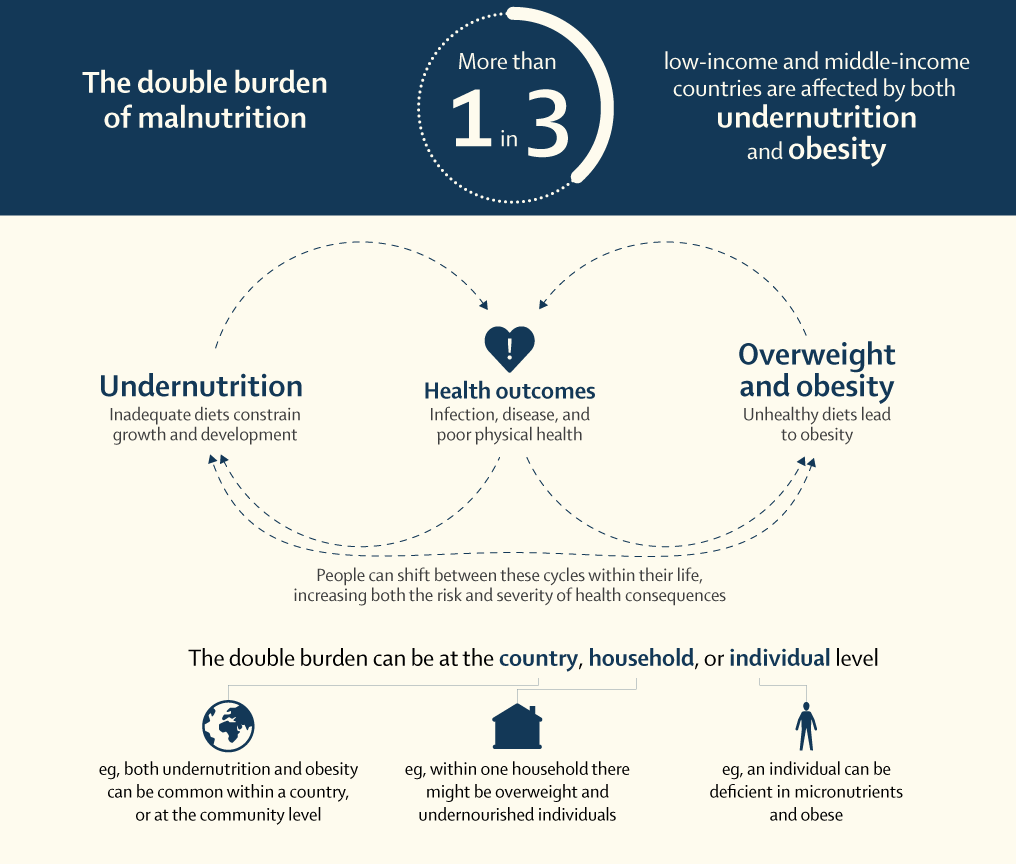
The Lancet series on the double burden came out in late 2019 basically showing that there is a significant increase in low- and middle-income countries struggling with both undernutrition and overweight and obesity. The second and third papers on the etiology and actions to address the double burden stand out.

There is some controversy brewing in the nutrition world. But what else is new? JAMA published a pretty scathing article about conflicts of interest stemming from the series of articles that meat is actually not detrimental, or at least, neutral for health. JAMA argues that another group of scientists basically bullied the journal into retracting the articles, which did not happen. The JAMA called it “information terrorism.” What a mess.

A few of us from GAIN and Johns Hopkins University presented the Global Food Systems Dashboard at IFPRI last week. Check out the video and highlights here. The Dashboard brings together extant data from public and private sources to help decision-makers diagnose their food systems and identify all their levers of change and the ones that need to be pulled first.  Follow updates and announcements of the official launch on Twitter.

2019: The year of food and nutrition reports!

2019 was an interesting year in the food and nutrition space.

The Lancet had food on its mind this year with THREE Commissions/Series:

The EAT-Lancet Commission made the biggest “footprint” and spurred much debate and controversy, and pissed some people off. Good. That is exactly what it was meant to do. This along with the Syndemic made the Altmetrics top 100 papers of 2019. Cool.

The Global Burden of Disease finally published a solo paper on diets as a risk factor. That too made the Altmetrics top 100 list.

A slew of other reports on food, planet, and people came out this year. See the image below which doesn’t capture everything. They all pretty much say the same thing: We need to transform our food system if we want to save ourselves and the planet that we live on. We cannot disentangle the two. We depend on each other. It won’t be easy. The stakes are high and so are the challenges (like urban and population pressure). It will take significant, synergistic political will and investment. We are running out of time. That is the gist.

Screen Shot 2019-12-22 at 8.03.16 AM.png

The Global Nutrition Report and Scaling Up Nutrition (SUN) movement churned on to keep the momentum, largely in the undernutrition space, moving.

We saw some neglected areas get more attention this year. Fish, plant-based burgers, older children and adolescents. The Nobel Prize went to two stellar development economists whose research has informed our thinking on poverty, and how we can reduce it. But of course, with a dose of caution.

The Committee on Food Security is in the process of crafting the Voluntary Guidelines on Food Systems and Nutrition. Regional consultations took place all year, and a draft is now out for review. If you are interested in providing written feedback on Draft One, you can do so by sending comments to cfs@fao.org by February 5, 2020. You can find all the info here.

This was the year of reports. Let’s make 2020 the year of action. We have a lot of evidence of what to do and how to do it. Many of us have written about it in ways in an attempt to get the attention of politicians. Now, we need to take what is written on paper and translate that into changes that matter for people. We need to vote for policymakers that care about these issues at the local level. Let’s push to make food, climate, and health a part of their campaigns, and give them the opportunity to take ownership of the issues.

We also need to think about politics outside our hometowns. We have seen some major shifts in the global political machinery of how we relate to each other and our willingness to participate as global citizens. Some of the heavy hitters, such as the U.S., will continue on its downward spiral into irrelevance, with the UK following close behind. But until they completely make themselves obsolete, their decisions, unfortunately, matter for the world, as we witnessed with the shoulder-shrugging at the COP 25 negotiations in Spain. Another year, lost.

But I am a cautious optimist. Well…let’s not push our luck here. Maybe more of a realist. We have the Tokyo 2020 moment to increase investments for nutrition (which are currently dismal). We will be half-way through the UN Decade of Action on Nutrition and 1/3 through the Sustainable Development Goals (not sure what this means, but hey). Derek Byerlee and I wrote about how far we have come and what achieving SDG2 means for the world. We have the Committee on Food Security hopefully approving the Voluntary Guidelines mentioned above. And we always have COP 26, to stir up a miracle to save the planet. These global moments are important, but not enough.

This is what I plan to do in 2020:

  1. I am going to take a look in my own backyard to make changes (and maybe stop flying around the world, thinking I am saving it).

  2. I will vote with my fork and the dire importance of the 2020 election in the U.S. cannot be understated.

  3. I will work more with people and less with paper – i.e. stop being involved in all these goddamn reports (that few read…).