
Food Bytes: June 2026 Edition

Here we are. Smack dab in the middle of Europe’s second heat wave here in Bologna. My years of living in Tucson with a swamp cooler and in NY without any AC have trained my body well, but as the years go on, tolerating the heat gets a wee bit harder. According to Rothko, we are Orange, Red, Orange, 1961. I’ll take that and fester in it for a while. But in all seriousness, the world keeps signaling to us that something is off. This “Omega heat dome,” where Europe remains ill-prepared, is the latest example. The Po is drying up, which is bad for agriculture. A high-pressure system has trapped hot air over South Asia, creating a prolonged heatwave. Wildfires are poppin in America’s west and Europe’s east. Already, the heat is putting pressure on food supplies (good article on Bloomberg) along with Trump’s unnecessary war with Iran.

And now, we see the World Meteorological Organization has confirmed the rapid development of a new El Niño cycle in the Pacific Ocean. Meteorologists note it is already beginning to shift global moisture and temperature baselines, setting the stage for a highly volatile summer. The Grist has a timely article on the potential impacts the world is likely to see. Data suggest that in South Asia, and India in particular, El Niño weakens the seasonal monsoons, and because India is the world's largest rice exporter, a failed or weak monsoon could severely diminish rice yields and trigger global export restrictions or bans. In Southern Africa, the pattern typically brings hotter, much drier conditions, threatening staple crops like maize and risking a spike in regional malnutrition. While parts of South America (like Peru) face heavy rain and flooding that can wipe out infrastructure, the southern United States is projected to face a much wetter-than-normal year, risking crop-destroying floods from California to the East Coast.

As I always ask my students when discussing extreme events, is the world ready?

With all this heat, it does get hard to sit in front of one’s computer, plunk down on the couch, and read, but on the other hand, it is hard to do much else. So herein lies what I have been reading for the last month. Got through about 4 books so far (see picture on the left). My goal is to read 10 books over the summer months. I have provided reviews of these here, here, and here. All are good reads, with only one related to food. I haven’t had a chance to review Rebecca Solnit’s A Field Guide to Getting Lost, but she certainly captures me not only in her writing but also in how she positions herself in the world. Some say she is the modern Joan Didion. I say she is solely Rebecca Solnit.

Bored? Try this FoodGuesser which gives you a dish or food and you have to guess where it is from. Today’s was surf ‘n turf. Uhhhh…..who else would be so decadent to both steak and lobster on one plate…

Beyond books, I found some of these reports and papers worth some time digging into:

First up, the Global Nutrition Report. It was nice to see a full report again after several years of getting lost in goal tracking that didn’t seem to track all that much…The findings of the 2026 Global Nutrition Report land at a critical juncture, providing a necessary, evidence-based framework for navigating the intersection of climate change and malnutrition. It tells us plainly that our celebrated 'win-win' development narratives are often illusions on the ground. As we shift towards integrated, climate-resilient approaches, the report rightly emphasizes that our policy choices can no longer be treated as separate, single-sector decisions. The 2026 Global Nutrition Report lands not as a comfortable endorsement of ongoing efforts, but as an intellectual disruption to our collective “siloed complacency” and the seductive trap of "win-win" developmental narratives. For too long, the multilateral system has acknowledged the intersections of climate, health, and nutrition only implicitly—treating them as adjacent portfolios rather than as a single, co-dependent polycrisis.

The Global Justice Report (lots of “globals” here)…is a really important report led by the World Inequality Lab. The report outlines a roadmap spanning from 2026 to 2100 that aims to reconcile global economic prosperity with planetary boundaries. The report argues that climate survival and deep decarbonization are impossible without a drastic reduction in wealth inequality. It proposes radical systemic changes—such as a massive "Global Justice Fund" financed by heavy taxes on billionaires, a transition to a two-and-a-half-day work week (YES!!!!), and reduced material and red meat consumption—with the goal of capping global warming at 1.8°C while doubling the incomes of 89% of the world's population. Thomas Piketty, the world-renowned French economist and author of Capital in the Twenty-First Century, brings his trademark expertise in wealth and income inequality to the project. It is dreamy and bold, and worth a read of a utopian world that seems very far off at the moment…

On reports, and this one doesn’t have “global” in the title, is the At the Crossroads: Food in an Age of Uncertainty by Systemiq. This is an interesting report that conducts a foresight analysis (see figure below) of how escalating geopolitical fractures, climate volatility, and artificial intelligence are converging to disrupt the global food system. The report is highly effective at diagnosing system vulnerabilities—notably exposing concentrated supply risks, such as the fact that just four crops occupy 50% of global cropland and that a staggering 30% of global fertilizer trade passes through a single chokepoint, the Strait of Hormuz (a very timely notion indeed). Critically, however, the report functions more as an academic exercise in "futures thinking" than a concrete action plan. While it sharply rejects simple "system efficiency" in favor of holistic structural resilience and issues urgent warnings about ultra-processed food addiction, its conclusions call for "honest dialogue" and "step-changes in global coordination" rather than outlining enforceable regulatory mechanisms or specific corporate mandates. Ultimately, it serves as an excellent diagnostic tool for identifying systemic risk, but it soft-pedals the aggressive, legally binding political battles of food policy and systems.

Stylized scenarios and trends, Systemiq

Some other good peer review articles that I came across:

  • The long and winding road of stunting reduction since the 19th century (P.S. that is not the name of the article…). Some good lessons for LMICs still dealing with stubbornly high stunting prevalence, particularly from Japan.

  • Was the Lancet series on ultra-processed foods not sufficient? Well, AJPH has you covered with a whopper of a special issue on UPFs and public health. If you don’t have time to read the 18 articles, you can read Lindsay Smith Tallie and Ashley Gearheardt’s summary on their new Substack, Unjunked, to get the highlights, or this NYT article. If you want to see what to do about it, get involved with Fedup! movement.

  • The WHO has published its estimates on the hazards of foodborne illnesses. The results are scary, and I don’t think the global food system community talks enough about food safety. They show that as of 2021, foodborne transmission of the 42 hazards they studied caused 866 million illnesses and 1.52 million deaths. Of those hazards, inorganic arsenic, lead, and non-typhoidal Salmonella enterica caused the most damage, particularly among young children and in Africa and South-East Asia.

  • A review of countries worldwide shows that 64 have implemented sugar-sweetened beverage taxes, covering 3·. billion people, with Asia leading the way.

  • Love this paper, which links the lack of clean drinking water to food insecurity (and vice versa) and to food safety issues. Good read!

  • A timely paper understanding the impacts of trade on the water-energy-food (WEF) nexus. In the paper, they construct WEF networks to quantify trade-driven changes. High-income countries achieve stronger WEF synergies that promote gains across all three aspects, whereas low-income countries face many trade-offs, with food-centered competition over water and energy driving them. This is why I always argue for the “energy bros” out there to consider food…

  • While not food-related, an important read on how “commitments to stronger international cooperation are being strained by rising authoritarianism, weakening multilateralism, aid cuts, and growing misinformation” when it comes to infectious disease spread (with the recent cases of Hantavirus and Ebola). These same issues will hinder efforts to address food insecurity and malnutrition. 

  • The Johns Hopkins Center for Humanitarian Health–Lancet Commission on health, conflict, and forced displacement: health in a world of crises and impunity outlines a comprehensive strategy to reform the global humanitarian system amid escalating modern crises (see Figure below) by demanding an end to legal impunity, a total inversion of power toward localized decision-making, and a complete restructuring of how emergency health funding is distributed to affected populations. Boom.

Timeline of humanitarian health crises, reforms and milestones, 1863–2025 (Spiegel et al 2026)

Some other tidbits and interesting reads across media:

  • Who knew ranch dressing would be popular?

  • I was just visiting London and Brighton, and yes, I had fish and chips goddammit. But is England ready to move away from cod? Bloody hell!

  • A wonderfully philosophical long read in the Guardian about whether ecosystems can malfunction, in which the author argues that ecosystems only "malfunction" when humans co-opt them for specific goals.

  • Innovation on how to run a restaurant (don’t charge for food) in Minneapolis (we got your back, friends!).

  • The Economist argues that feeding the world will require new technology. Um, Duh! But is AI the game-changer? I remain skeptical.

  • What have we learned about GLP meds? It’s the wild, wild west, ya’ll! But clearly, this may prove to be a game-changer in tackling obesity.

Well, my hands are starting to sweat, making it hard to type. I will leave you an album that came to mind recently and that I had not listened to in a good long time: the self-titled Violent Femmes album that came out in ‘83 in my junior high days. The Violent Femmes are an American folk-punk band from Wisconsin. Such an original sound at the time. We were kind of obsessed with this album for a hot minute, and somehow, it fits with summer, the heat, frustration, etc. A funny side story: the group was busking in Milwaukee on a street corner, and the guitar player for the Pretenders happened to be walking by, heard them, and invited them to open for their show that night. Hot damn!
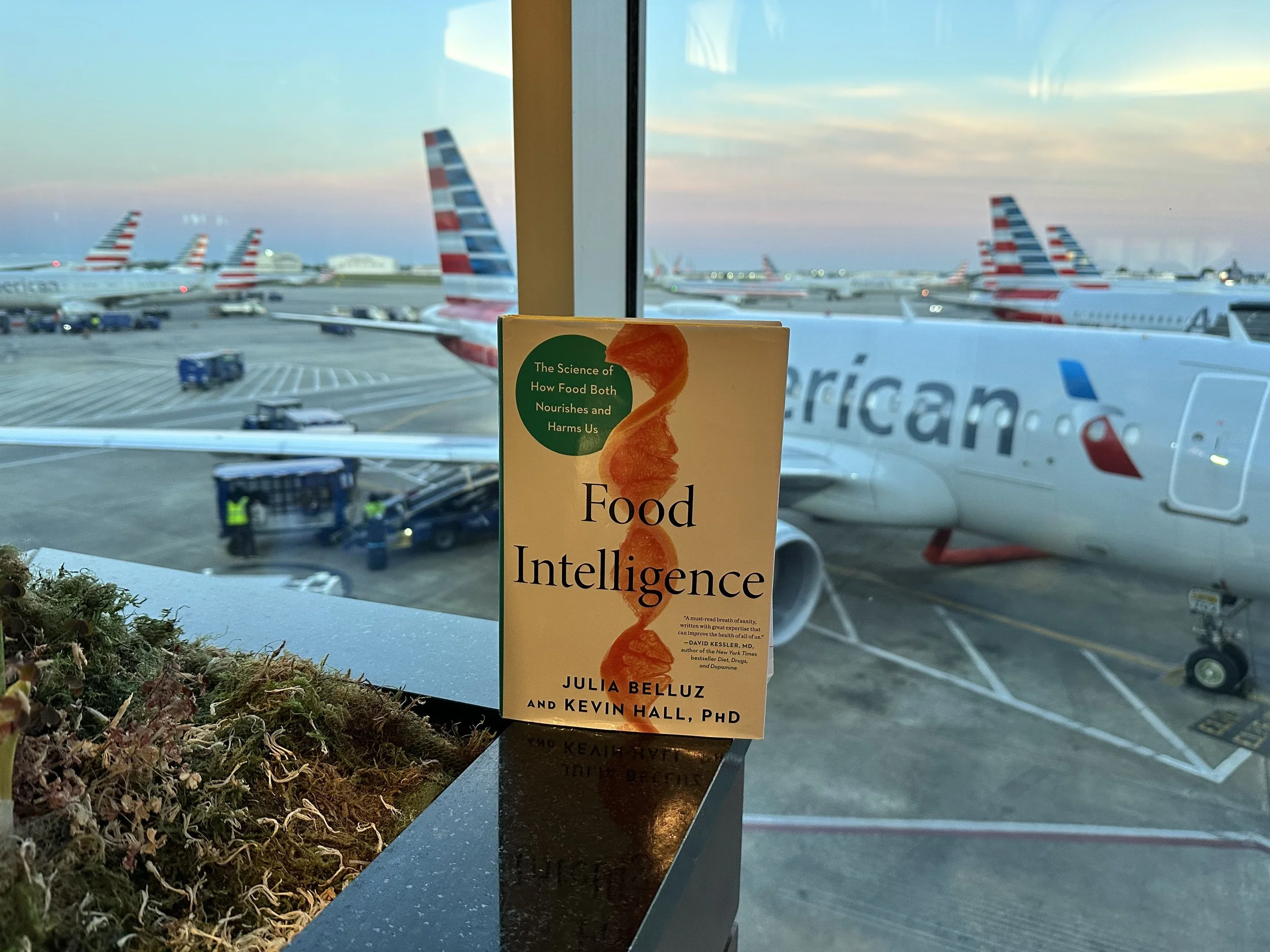
Book Review: Food Intelligence

While traveling to North Carolina and away from the daily grind of work, I was finally able to read a book—a miracle in itself! I chose Food Intelligence, co-authored by Kevin Hall and Julia Belluz. The fact that the book is written equally by both takes a bit of getting used to, especially since they use the third person when referring to themselves. I am not sure it totally works, but I am also not sure how else one would co-author such a book.

The book is incredibly informative, particularly regarding Dr. Kevin Hall’s research. Hall is a biophysicist and was a senior investigator at the NIH until 2025. He is renowned for his highly rigorous "metabolic ward" studies, which often house participants in clinical settings where every calorie, movement, and biological secretion is precisely measured.

Kevin spent years at the NIH conducting clinical trials to study metabolism, weight loss, and the impact of specific foods (particularly ultra-processed foods) on body weight. In one of his most famous studies, he found that when people ate ultra-processed foods, they spontaneously consumed about 500 extra calories per day and gained weight. Conversely, when on an unprocessed diet, they lost weight. He argues that the energy density and hyper-palatability of these foods—driven by the processing itself—trigger weight gain, rather than just "too many carbs" or "too many fats."

In fact, he has conducted trials comparing low-carb and low-fat diets, finding that a low-fat diet actually resulted in slightly more body fat loss than an equal-calorie ketogenic diet. In essence, "a calorie is a calorie" is a fairly accurate rule. However, he notes that the old "3,500-calorie deficit equals one pound of weight loss" rule is not linear. He also studied contestants from The Biggest Loser and showed that, even years after the show, their metabolisms had slowed significantly more than expected for their new body size. This "metabolic adaptation" (or "starvation response") persisted even when they regained the weight.

His departure from the NIH (which clearly happened after the book was published) was highly publicized and controversial, as he cited a breakdown in scientific integrity and political interference as his primary reasons for leaving. It sounded like he was in the middle of several trials at the time, which is a real shame for the field.

While the book is an excellent primer on metabolism, I wish it had tackled GLP-1 drugs head-on. These medications are the "missing link" for much of Hall’s research. By mimicking natural hormones, drugs like Ozempic and Mounjaro do three things:

  • Mute "Food Noise": They signal the hypothalamus to dampen the brain's reward centers.

  • Slow Digestion: They delay gastric emptying, so you feel full longer.

  • Stabilize Blood Sugar: They manage insulin and glucagon to prevent the spikes that drive hunger.

This leads to a natural calorie deficit and—most importantly—a shift away from the ultra-processed foods Hall spent his career studying.

The authors lean heavily into the "toxic food environment" theory—the idea that our system, not our willpower, is the problem. I agree 100%. But it leaves me wondering: if we "solve" the hunger signal with a pill, will we still have the political will to fix the food system? Or will fixing the environment become a non-issue once the price of these drugs drops? We are in the middle of a massive "live experiment."

In the final chapters, they pivot to the wider food system. I was interested to see how a biophysicist and a journalist would frame the food system’s contribution to nutrition and metabolism. While they got the big picture right, the analysis felt a bit shallow. It didn't feel like it added much to the book's core value, and they seemed to throw softballs at potential solutions to the issues Kevin witnessed and analyzed during his trials.

Overall, Food Intelligence is a truly interesting read about the state of weight-loss research.

Food Bytes: March 2023 Edition

FOOD BYTES IS A (Almost) MONTHLY BLOG POST OF “NIBBLES” ON ALL THINGS CLIMATE, FOOD, NUTRITION SCIENCE, POLICY, AND CULTURE.

So much going on in food and nutrition these days that it is hard to keep up. In looking at what has been published in the last month, three areas dominate ultra-processed foods, climate change, and blue foods. Let’s take each and highlight the latest and the greatest.

Ultra-processed foods: What are ultra-processed foods (UPFs), may you ask? Basically, junk food. But we scientists have to come up with fancy terms and categorize everything. UPFs are a very broad category of foods that generally are made from highly processed, industrialized ingredients not found in the home or in restaurant kitchens. These foods are designed to be hyper-palatable, often conveniently ready-to-eat, shelf-stable, transportable, strongly marketed, and, ultimately, highly profitable. More and more research shows that these foods are detrimental to various health outcomes (obesity, diabetes, cancer, morbidity, mental health, etc.) and could be potentially addictive and environmentally destructive. California, which always leads in food governance (blame it on the hippies), is growing worried about what exactly these foods contain. They are considering banning a number of staple ingredients found in these foods. I cannot even begin to source the sheer amount of literature coming out demonstrating the impact of these devilish foods, but here, here, and here are a few good systematic or meta-reviews. This Wired layperson article is a good summary. If you want to read two people who lead in the science of UPFs, read Carlo Montiero or Kevin Hall. Regardless of all the science coming out, their sales are increasing across almost every region of the world. Why? Well, they are cheap, have a long shelf life, are easily stored and transported for long periods of time, and are damn tasty.

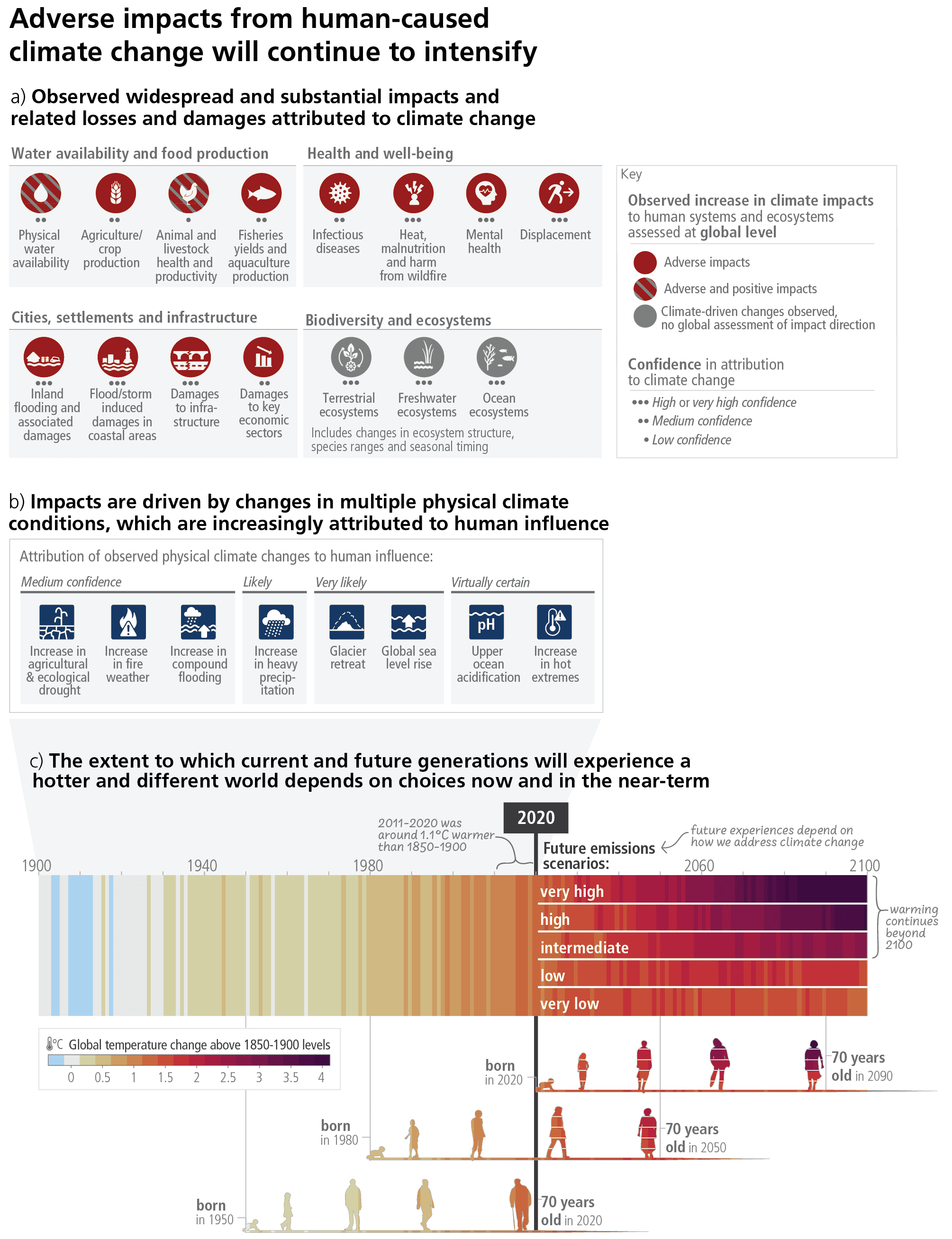
IPCC AR6 Synthesis Report, 2023: Key Summary Figure

Climate and food: Hard too to keep up with everything going on. The most significant update is that the Intergovernmental Panel on Climate Change, also known as the IPCC, has come out with a synthesis report on how much time we have left before the world falls apart. They are surprisingly and cautiously optimistic, arguing that there is still time to address climate change before things start “gettin’ hot in here.” Food is heavily featured in this synthesis report, thanks to our AgMIP friends at Columbia University. They argue that food security and nutrition are and will continue to be significantly impacted, particularly in resource-constrained settings and among smallholder farmers. They also offer a range of mitigation and adaptation strategies, including agriculture, forestry, and other land use (AFOLU) options with reduced deforestation in tropical regions, shifting to sustainable healthy diets, reducing food loss/waste and intensifying sustainable agriculture (they even mention urban ag!).

When I asked Google’s new AI system, Bard, what was the latest science published in “food systems” in the last week, this is what they spit out:

Here are some recent research on food systems:

  • A new study found that the global food system is responsible for about one-third of all greenhouse gas emissions. The study, published in the journal Nature, found that the food system's emissions are mainly caused by the production of meat and dairy products, as well as the transportation of food.

  • A new study found that the global food system is also responsible for about one-third of all water use. The study, published in the journal Nature Water, found that the food system's water use is mainly caused by the irrigation of crops, as well as the production of meat and dairy products.

  • A new study found that the global food system is also responsible for about one-third of all land use. The study, published in the journal Nature Land, found that the food system's land use is mainly caused by the production of crops, as well as the grazing of livestock.

These are just a few of the recent research on the global food system's impacts on the environment. The food system is a major contributor to climate change, water pollution, and land degradation. These impacts are likely to become more severe in the coming years, as the global population continues to grow.

Not too shabby, but a bit outdated (and they don’t provide any citations). Interesting how AI is set to become such a game-changer, and yet, as an expert, asking Bard to do a bit of research, it is pretty generic and lacks scientific nuance, which can be dangerous…Here are some even more recent papers out this week on food systems and climate from a flawed human perspective:

  • Ivanovich and colleagues at Columbia University (see a pattern?) published a paper in Nature showing that if we continue on our current food consumption patterns, this will add 1 °C to an already warm planet by 2100. Most of this warming is driven by what is called high methane foods (methane is another toxic greenhouse gas) like livestock, dairy, and rice (yes, we cannot blame it all on those cute cow creatures). If we made some of the changes mentioned in the IPCC report above, we could cut 55% of that warming.

  • Another paper, again published by Columbia University peeps (they are on a roll), called for more studies to better show how the food security of households and communities is impacted by climate-related shocks. They argue that most studies only examine food production and availability, not access or utilization.

  • And last, and this is self-promotional, a few of us put together an analysis trying to understand if the EAT-Lancet planetary health diet was adequate in nutrients (we didn’t look at environmental impacts or other health impacts, and we are not suggesting to do so). This particular analysis shows that the diet is inadequate in vitamin B12, calcium, iron, and zinc. The EAT-Lancet may not be happy with these results but this is what science is all about — debating on a level playing field, DISproving one’s hypotheses, and not being wed to ideologies. I am not sure right now that everyone at the so-called proverbial table looks at science similarly and instead holds fast to their worldviews, which worries me. But a lot is at “steak.” The EAT-Lancet Commission part has been downloaded over 6,000 times in 4 years. That is pretty insane. So to go against that, dissect it, calls to do it better next time around, or at least look carefully at the data, in which multiple people analyzing the dataset, is, well, what science and the pursuit of truth is all about. But putting one’s arm out to be potentially severed. Bottom line: This paper is about the trade-offs that are par for the course with a grand food systems transformation.

Showing tradeo-offs of policy bundles: Crona et al Nature 2023.

Blue foods: More and more, and this is long overdue, blue foods, aka seafood, aka aquatic foods, are getting more attention. The Blue Foods Assessment highlighted their importance from multiple angles - important contributors to a nutritious diet, some species’ environmental sustainability, their risk of climate threats, and contributors to livelihoods. Some fantastic articles have emerged recently, including a fantastic paper by Christina Hicks and colleagues examining the injustices associated with aquatic food systems. Another paper summarized the BFA around 4 policy objectives to help realize the contributions that blue foods can make to national food systems around the world: ensuring supplies of critical nutrients, providing healthy alternatives to terrestrial meat, reducing dietary environmental footprints, and safeguarding blue food contributions to nutrition, just economies and livelihoods under a changing climate. However, trade-offs always exist, just as above. The figure shows these — the question is, what trade-offs are we willing to live with? And last, on blue foods, the great Roz Naylor at Stanford published a policy landscape paper in Food Policy (thanks, Chris Barrett!) on aquaculture. I had the pleasure of working with her on this. Through a series of case studies, she presents a state-of-play on how aquaculture is playing out globally, and again, where those policy priorities elicit trade-offs that can be detrimental to the environment or nutrition. Check it out.


Food Bytes: October 2022 Edition

Food Bytes is a monthly blog post of “nibbles” of information on all things climate, food, and nutrition science, policy, and culture.

It’s been a long while since I posted a Food Bytes edition, and so much has happened in the food space in the past year. First, a UN Food Systems Summit happened, but I remain quite unclear on what was achieved or what will come of the year-long work leading up to the event. Second, a devastating conflict between two breadbasket countries trudges on, putting food security concerns back on the geopolitical agenda. Third, extreme weather events, many related to climate change, unrelentingly warn us that our ability to feed a world of 8 billion (yikes) is precarious and precious. But science is there to nudge us, generating new knowledge on why we and every other species are here, what accelerates us, what destroys us, and where we are heading. Charles Mann wrote in The Wizard and the Prophet (a stellar book about William Vogt and Norman Borlaug’s discordant visions to feed the world):

Another thing this book is not: a blueprint for tomorrow. The Wizard and the Prophet presents no plan, argues for no specific course of action. Part of this aversion reflects the opinion of the author: in our Internet era, there are entirely too many pundits shouting out advice. I believe I stand on firmer ground when I try to describe what I see around me than when I try to tell people what to do.

I resonate with these sentiments. Even though science is plagued by warts, hiccups, and flaws, catalyzing evidence and data to help describe the world matters because it helps us understand nature, people, and the planet. With that background in mind, this month’s Food Bytes is all about highlighting the science community’s observations and uncertainties of a changing world and what it means for food systems and climate change. I purposely do not highlight the work of my team and collaborators, but if you are curious about when we do, you can look here.

Source: McKay et al. SCIENCE 9 Sep 2022 Vol 377, Issue 661 DOI: 10.1126/science.abn7950

Let’s get the dark stuff out of the way. A paper by David Armstrong McKay and colleagues updated data showing that holding at 1.5°C will trigger multiple climate tipping points. What are these tipping points? Things like ice sheet “collapses,” forest “diebacks,” and permafrost “abrupt thaws” (see the figure to the right). These terms are downright scary but very plausible under different modeling scenarios. Okay, onto more uplifting news — KIDDING! Another study has shown that over the last 40 years, the Arctic has warmed four times faster than the rest of the world, also known as Arctic amplification. These are massive global shifts that will further warm the planet, creating all kinds of chaos. What does it mean for us wee creatures living in our humble abodes? Well, the news is not totally uplifting on that front either. We are and will be deeply impacted by climate — and no one is immune. Research by Sylvia Blom and colleagues showed that repeated, extreme heat shocks impact early child nutrition — both chronic and acute malnutrition. They show that in 5 West African countries, a 2 °C rise in temperature will increase the prevalence of stunting by 7%. As the two latest 2022 Inter-Governmental Panel on Climate Change Reports on adaptation and mitigation, also known as the IPCC, argue, we still have time to act, although when you read it, you may want to have a nice glass of scotch in hand. While the window remains open, it is closing, and fast. We need to make massive changes to the way we live, much of that involving our use of resources. A recent Nature Sustainability paper showed that no country meets basic needs—such as nutrition, sanitation, and access to electricity—for its citizens at a globally sustainable level of resource use. To meet needs, we need to use resources somewhere between 2-6 times more to meet everyone’s needs. Gulp. Just take a look at the difference between the United States (a) and Sri Lanka (b) in the figure below. Blue wedges show social performance relative to the social threshold (blue circle), whereas green wedges show resource use relative to the biophysical boundary (green circle). The blue wedges start at the center of the plot (which represents the worst score achieved by any country), whereas the green wedges start at the outer edge of the blue circle (which represents zero resource use). Wedges with a dashed edge extend beyond the chart area. Ideally, a country would have blue wedges that reach the social threshold and green wedges within the biophysical boundary. Look at the inequities comparing the two countries!

Source: O’Neill, D.W., Fanning, A.L., Lamb, W.F. et al. A good life for all within planetary boundaries. Nat Sustain 1, 88–95 (2018). https://doi.org/10.1038/s41893-018-0021-4

The research and science in understanding the impacts of climate change on food systems and vice versa are growing exponentially. It is hard to keep up with the literature and weed out the noise. One area that deserves more attention is the impact of food trade on global greenhouse gas emissions and the environment—particularly land-use change—a significant source of emissions coming from food and agriculture. A study showed that 27% of land-use emissions and 22% of agricultural land are related to international trade (2004-2017)—food products consumed in a different place from where they were produced. The largest land-use emission transfers come from Indonesia and Brazil to China, the U.S., and Europe. A PLoS paper examining the future of trade shows that if we keep managing and governing global trade as is, food systems will be misaligned with dietary health and sustainability outcomes.

Perhaps one solution is through changing agriculture subsidy policies. The UN Food and Agriculture Organization (FAO) published their annual SOFI report and highlighted the need to transform agriculture subsidy programs around the world towards those that generate and produce healthier food products. Marco Springmann at Oxford modeled the impacts of subsidy policies that focused on nutritious foods and found multiple benefits across both environment and health. I am really uncertain about the political appetite to change subsidies. Talk about vested interests… Speaking of priorities, Ben Davies and colleagues argue that making big transformative policy changes across food systems is wonderful, but don’t do it “on the backs of the rural poor.” Although there are 2.7 billion people engaged in small-scale food production and 1.1 billion people concomitantly living in extreme poverty while working in agriculture, they are often ignored in the “transformation” story.

Affordability of a healthy diet grouped by five different food system typologies, showing transition of food systems. Source: Ambikapathi, et al Nat Food 3, 764–779 (2022). https://doi.org/10.1038/s43016-022-00588-7

Positive transformation of food systems is not easy as history suggests. As Ramya Ambikipathi shows in a recent Nature Food paper, food systems have shifted from predominantly rural to industrialized and consolidated systems. Historically, incomes have risen faster than food prices as countries have industrialized, enabling a simultaneous increase in the supply and affordability of many nutritious foods. Evolving rural economies, urbanization, and changes in food value chains have accompanied these transitions, leading to changes in land distribution, a smaller share of agri-food system workers in the economy, and changes in diets. While the affordability of a recommended healthy diet has improved over time, food systems overall are falling short of delivering optimal nutrition and health outcomes, environmental sustainability, and inclusion and equity for all. Another fantastic paper by Jeff Waage and colleagues in Lancet Planetary Health shows the complex and risky relationship between agriculture and infectious disease, particularly in low-income and middle-income countries that are undergoing rapid food system transitions. They remind us that lessons can be drawn from COVID-19 and the rise of zoonotic spillover events within food systems should be prioritized (and minimized) on the political agenda.

Ensuring that everybody gets access to and consumes a healthy diet will remain a global challenge. The metrics, indicators, and data in understanding what people eat and why are improving. Just check out the Global Diet Quality Project, which collects dietary quality data in the adult population across countries worldwide using the Gallup poll and provides tools to monitor diet quality within countries. Wow. I hear rumblings of a global report coming out soon, so stay tuned. There has been a whole range of papers coming out on diet quality. Victoria Miller at Tufts University is on a roll. In one recent Nature Food paper, she examines diets across 185 countries from 1990 to 2018 using the Global Dietary Database (estimates and modeled). Their assessment shows that diet quality is modest at best but varies significantly depending on where you live, how old you are, and how much education you have. No surprises, but good to see more data emerging from this database. Miller and colleagues also published a more specific paper examining the consumption of animal-sourced foods worldwide showing that meat consumption is lower or higher than optimal intakes depending on the population. Another Miller paper published in JAMA examines the association of specific dietary factors with coronary heart disease, stroke, and diabetes using a systematic review. The table below summarizes the relative risks of the associations of nutrients with heart disease and diabetes events. Bottomline? Eat your fiber.

Source: Miller et al JAMA Netw Open. 2022;5(2):e2146705. doi:10.1001/jamanetworkopen.2021.46705

Another emerging area gaining significant traction with scientific consensus is ultra-processed foods (UPFs), a term loathed by the food industry and a handful of nutritionists. The majority of those working in nutrition epidemiology and public health largely agree that UPFs—food-like substances extracted from foods, such as fats, starches, added sugars, and hydrogenated fats that also contain additives like artificial colors and flavors or stabilizers—are detrimental to human health across a bolus of outcomes. Many people argue that these foods should be regulated, avoided, and minimized in the global food system. If you want to hear more about this ongoing debate, check out this BBC podcast and this online debate with some heavy hitters in the space like NIH’s Kevin Hall, Marion Nestle, and Mike Gibney. The next frontier for these foods is their environmental impact. While a handful of papers argue that these foods have a significant environmental and climate footprint, the evidence is scant, and much more needs to be done in this space.

The question is, are alt-meats in this category? The pace of science in this space is hard to keep up with as there is a lot coming out in the grey literature (see the IPES report and the OECD report as examples) along with peer-reviewed publications, but some of what is available often bends towards ideology and less science. Same with plastics. There is deep concern about microplastics showing up all over the place, including food, but the evidence and impact of these plastics on health outcomes need much more exploration. So while Mr. McGuire told Ben in The Graduate, that the future lay with one word, plastics, we may need to re-examine that advice in light of the fragility of our world.