Several of us published a review paper in Science describing how global food systems, along with rising incomes, urbanization, and the growth of ultra-processed foods, have driven dietary shifts that harm human health, the environment, and equity. There is a common dietary pattern across rich and poor countries: inadequate consumption of vegetables, fruits, legumes, whole grains, and nuts, alongside excessive intake of animal-sourced foods, sugars, refined starches, sodium, and unhealthy fats. These shifts contribute to noncommunicable diseases, greenhouse gas emissions, deforestation, and unequal access to nutritious diets. Dietary behavior is shaped by a complex web of direct influences (taste, price, convenience, culture) and powerful, often hidden, midstream forces and actors — manufacturers, retailers, and restaurants — that determine what foods are available, affordable, and appealing.
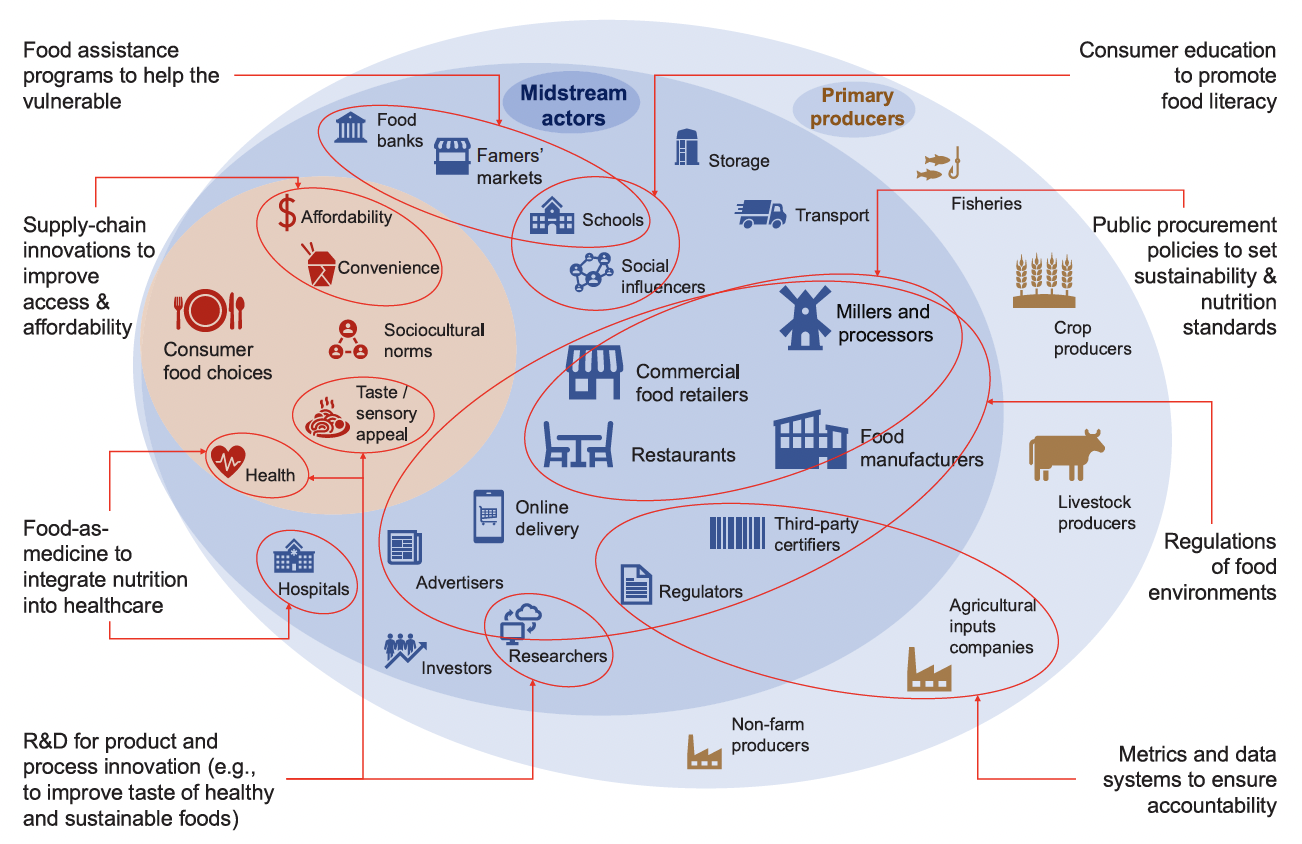
The many midstream actors that shape consumer food choices and producer choices within food systems and key levers to facilitate transitions toward healthier and more sustainable and equitable diets (Yang et al 2026, Science)
Building on that diagnosis, we synthesize evidence across seven intervention domains to steer dietary transitions toward outcomes that are healthier, more sustainable, and more equitable. Key levers are highlighted, including R&D and product innovation to make plant-forward, sustainable foods tastier and cheaper; affordability and access measures, such as redesigned food assistance and supply-chain policies that internalize health and environmental costs; and food-as-medicine programs that embed nutrition into healthcare. There are also regulatory approaches — including reformulation targets, labeling, marketing restrictions, and public procurement standards — that are essential complements to voluntary actions, because nudges aimed only at individuals or producers are often overwhelmed by institutional food-environment influences.
Most importantly, we argue that lasting change requires coordinated, systemic strategies that align incentives across consumers, producers, and especially midstream actors. There is a need for better metrics and data systems to track progress and hold actors accountable, such as the Food Systems Countdown Initiative, as well as efforts to shift social norms and improve food literacy. Overall, combining multiple interventions across R&D, policy, procurement, assistance, regulation, and education to create food environments in which healthy, sustainable, and affordable choices are the easy, appealing default.
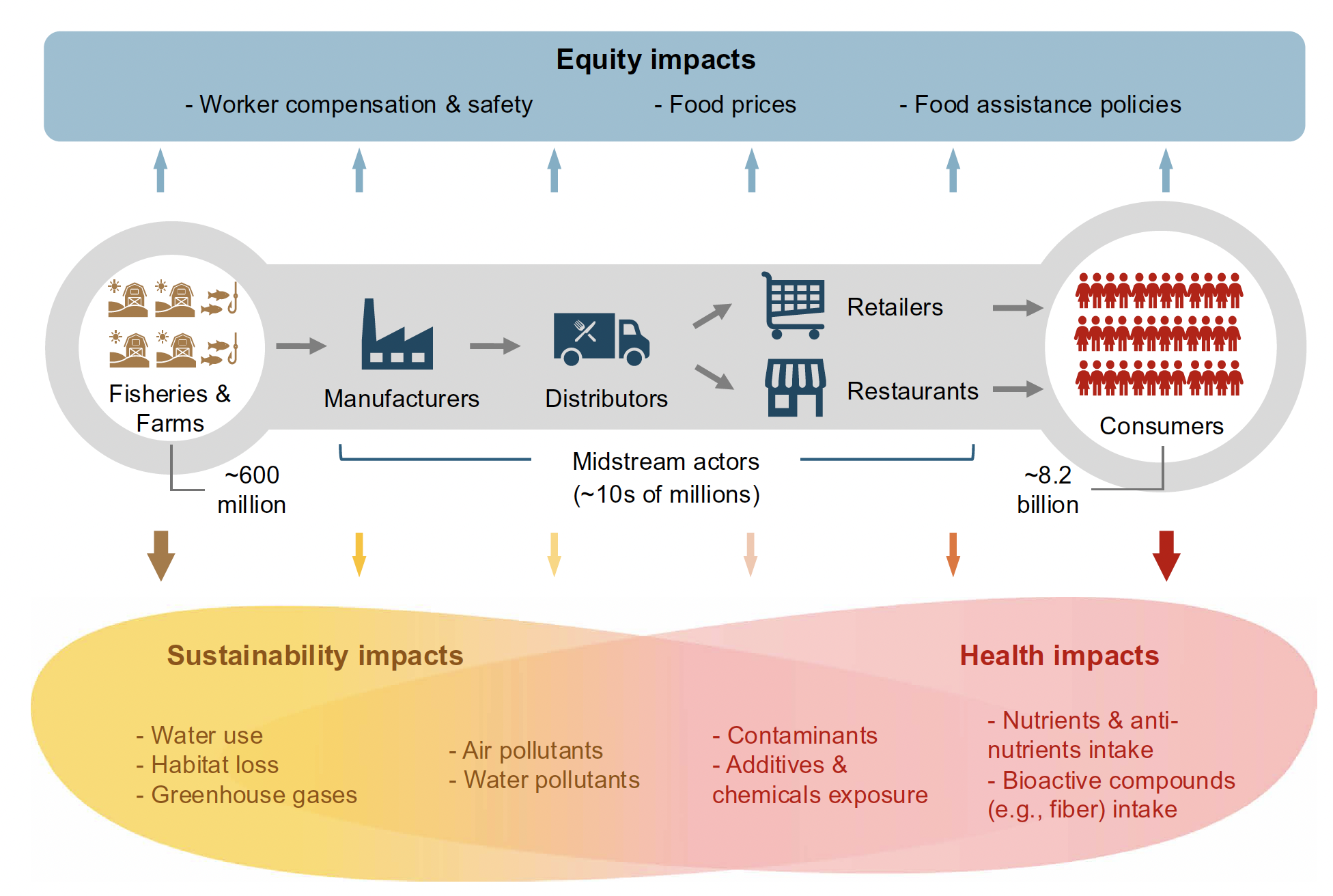
Sustainability impacts arise primarily from agricultural production in, for example, farms and ranches (orange), whereas health impacts result primarily from consumers’ dietary choices (red) but are also affected by agricultural production and food processing methods. Equity impacts (blue) occur throughout the food value chain. The midstream actors in the food value chain, indicated with dark blue icons, exert great influence on the decisions of the world’s primary producers (fisheries and farms) and consumers despite being one to two orders of magnitude smaller in number