Hi, my dear readers — I took a brief sabbatical from the Food Archive, a self-imposed intermission of sorts. I’m back now, fortified and oddly calm.
Recently, I gave a talk at CIMMYT titled “Catalysts of Change,” an attempt to reconcile the two halves of my professional life: career and research. Twenty-five years in, Joan Didion’s line is unnervingly accurate: “It is easier to see the beginnings of things and harder to see the ends.” When I scan the span of my career, three kinds of moments stand out: meaningful, amplifying, and validating.
Let us begin, as all good narratives do, with the meaningful.
Being mentored by extraordinary people (one is lucky if you can count your mentors on two hands).
Feeling dispirited by less-than-extraordinary ones (a useful education in what not to be).
Experiencing Africa for the first time — Uganda in particular — which reconfigured how I thought about place, food, and belonging.
Collaborating with mothers and farmers, whose practical brilliance disciplines every grand theory.
Teaching and learning from students and watching them choose food as a vocation, which is to me the closest thing to witnessing a small miracle.
Now to the amplifying moments.
Early in my career, I had an opportunity to work with Jeff Sachs when he was Director of Columbia’s Earth Institute. Controversial? Yes. Generous with introductions? Also yes. His networks opened doors into international development and nutrition work across continents. I will be forever grateful — it was my entree into sustainable development.
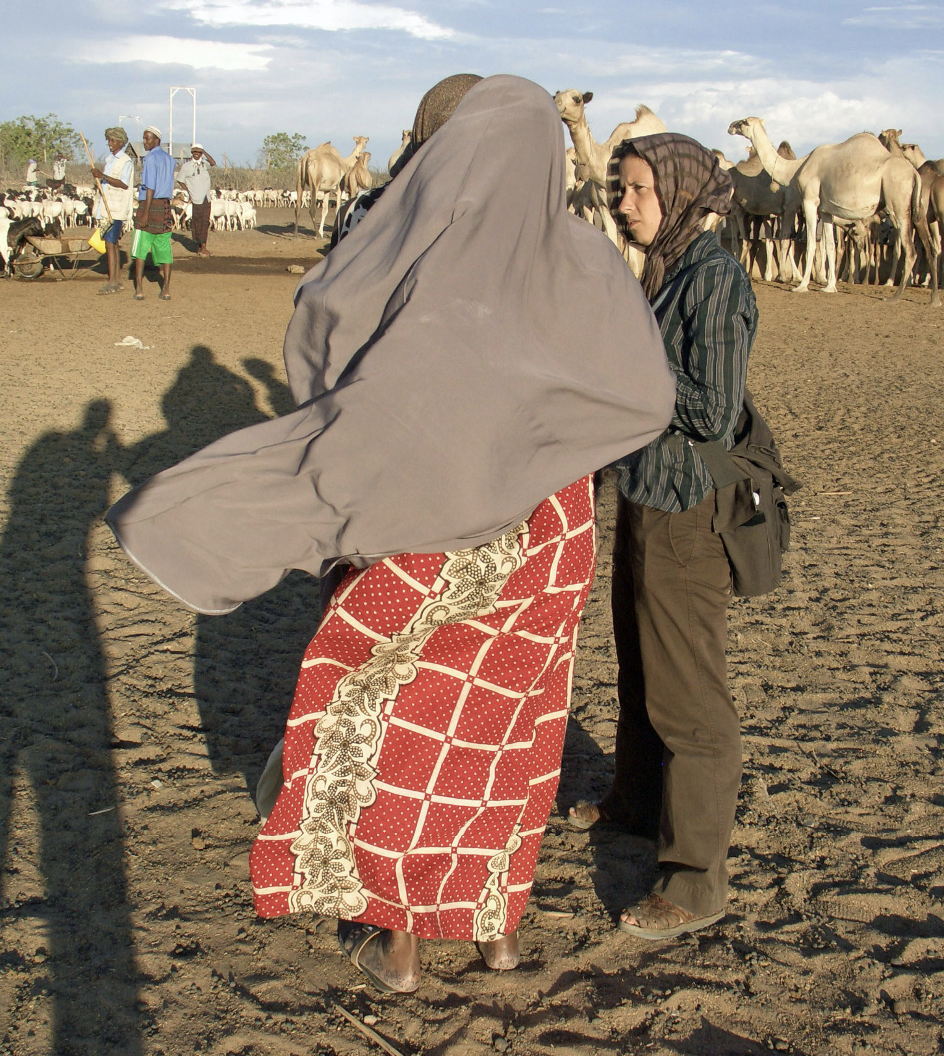
I also spent time “in the field” — in rural corners of sub‑Saharan Africa and in parts of East and Southeast Asia — working alongside farmers, women, and mothers. Those experiences did not merely influence me; they remade me and how I interact with the world.
Leading the High-Level Panel of Experts on Food Systems and Nutrition report bestowed a certain institutional gravitas. It pulled my food systems work into higher political airspace and amplified its reach — like strapping a megaphone to a research agenda.
And finally, the validating moments.
My first Science paper, published in 2008. One can be jaded about journals, particularly those that are impossible to get into, but this felt like a clean victory: no favors, no strings. Small triumph, enormous pat on the back.
The Carasso Prize in 2012 for sustainable diets. Technically, it was my first formal prize (discounting my earlier triumph: winning a raffle to see Madonna at the Paramount in Seattle in 1985, an event at which the Beastie Boys opened and were, inexplicably, booed offstage). The Carasso Prize validated long, patient, unpopular work at the time linking biodiversity to nutrition.
More recently, my election to the National Academy of Sciences in 2024. I was thrilled, gobsmacked, and acutely aware that the word “banger” is not illegible when describing one’s own good news. It felt very good.
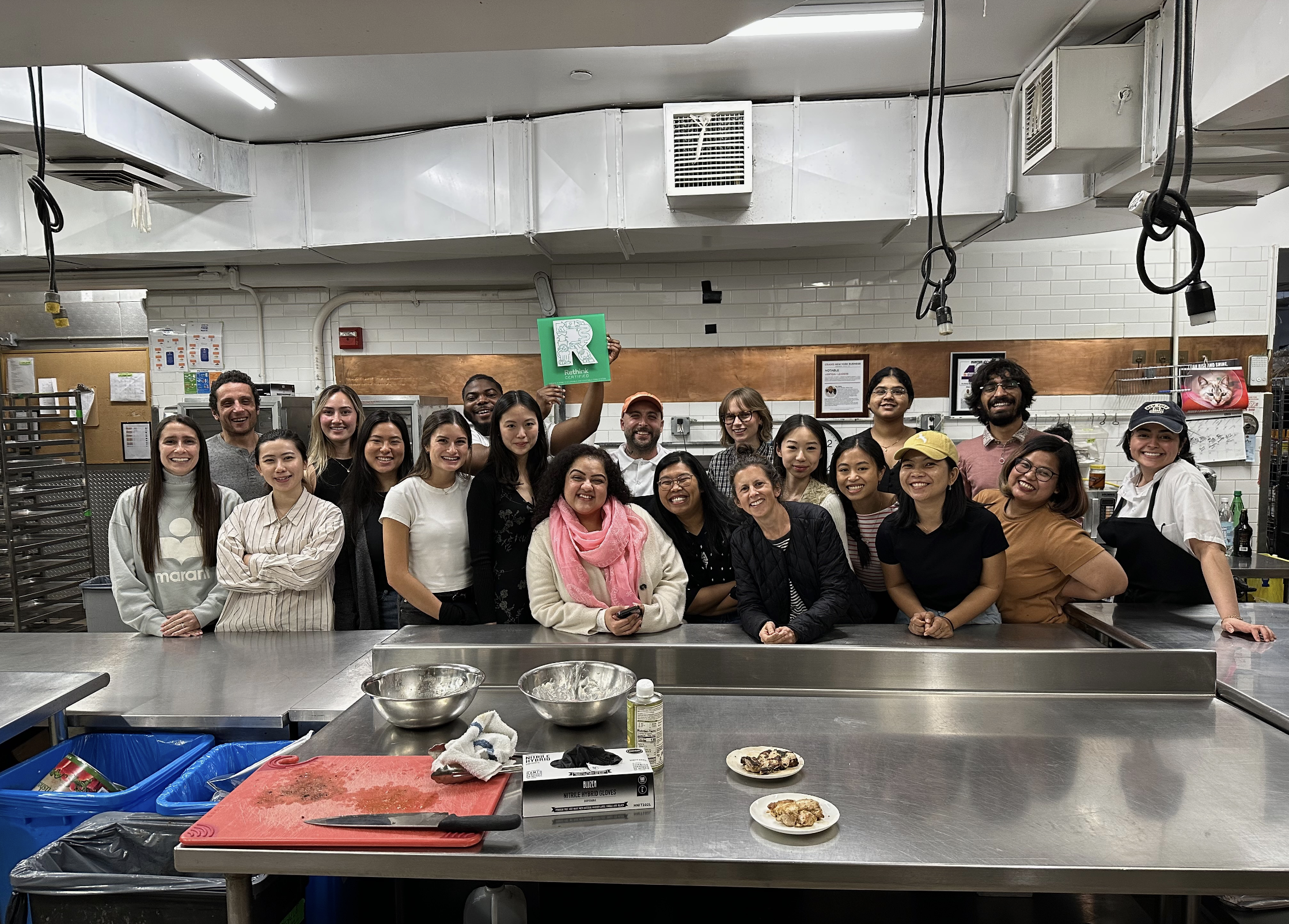
Students have been on my mind a lot lately, as I am teaching two graduate classes here at the School of Advanced International Studies at Johns Hopkins' Bologna campus, and they are graduating. I am fortunate in that my students are whipsmart, inspiring, and unfailingly hopeful in a world reasonably short on hope. I like to share advice that was given to me, particularly in these hard times, with the current job uncertainty and overall world chaos. Here is what I tell them, in no particular order (and this applies across the professional life span, I am still heeding some of this advice myself):
Know when to hold ’em and when to fold ’em. For any Kenny Rogers fans out there, this one is for ya’ll. Know when to walk away and definitely know when to run. This song is an analogy to poker, but it applies to life. Know when to throw in the towel. If in doubt, consult a friend whose life choices you respect.
Be willing to pivot. Change is a risk that often repays itself. Terrifying? Sometimes. Regrettable? Rarely. Regret is a wasted emotion, and when it comes down to it, you’ve got nothing to lose by pivoting. New doors open.
Learn from both good and bad bosses. If you’ve had exceptional mentors, catalog their practices. If you’ve had toxic ones, take notes, and let that guide your future conduct. The worst managers are, inconveniently, instructive.
Say no. Repeatedly, if needed. My earlier inability to do so in my career produced an abundance of labor and a paucity of pleasure. Work saturates; quality evaporates.
Prioritize quality over quantity. Resist the productivity fetish. It is better to produce one exquisitely and beautifully useful thing than a dozen forgettable ones.
Only work with cool people and surround yourself with excellence. Life is too short to work with assholes. For realzzz. If someone doesn’t treat you well, or they are cranky, or just downright unpleasant, don’t shuffle the deck chairs on the Titanic, praying for a miracle. Get on the lifeboat. And when you do have the pleasure of choosing who to work with, choose greatness. That comes in many shapes, varieties, and colors, but you know when someone is good at their discipline or skill. Work with them, especially if they are nice.
Treat people with kindness. We live in a moment when it is easier, even encouraged, to be cruel; be the opposite. It will pay dividends you cannot yet imagine.
Take the desire paths. I borrowed this from Melissa Kirsch’s recent New York Times piece about finding a way out of snowy sidewalks. A desire path is the trodden shortcut that tells you the official route isn’t serving its purpose. It’s not just the road less traveled; it’s the road that should exist but hasn’t yet been designed. When you add the word “desire” before path, it takes on a new urgency. If the established maps are inadequate, draw your own.