Food Flows
Background
The confluence of unsustainable food systems, insufficient rural development, and climate change threatens the food security, diets, and nutrition and health outcomes of millions worldwide. Today, unsustainable food systems account for a third of global greenhouse gas emissions and degrade ecosystems, driving significant deforestation and biodiversity loss. At the same time, climate change threatens crop yields and nutritional quality and disrupts other critical parts of our food system. Furthermore, populations living in poverty—with 80% of the world’s poorest residing in rural areas—are disproportionately affected without sufficient safety nets and access to sufficient, safe, and healthy diets. Taken together, the food security of rural populations that depend on threatened natural resources for their diets is at significant risk. Up to 183 million additional people are estimated to be at risk of hunger linked directly to climate change by 2050: an alarming projection with more than 2.3 million people already experiencing food insecurity.
Food Flows
Food Flows is a research project that builds and contributes to an evidence base that informs action to alleviate food insecurity and create environmentally sustainable food environments for vulnerable populations. Achieving the dual goals of human health and planetary well-being will require a major transformation of agricultural systems and dietary patterns. Beyond producing food for everyone, food systems must function efficiently and equitably to support a sustainable, healthy diet for the world’s population. Food Flows centers rivers and specifically riparian communities and their reliance on these bodies of water as livelihoods, food, and as food environments themselves. The collaborative research incorporates multi-disciplinary methods to understand and characterize individual factors and food environments that shape food choice and diets of these communities.
A River in Transition: Understanding the health and environmental sustainability of food environments and diets of Lower Mekong River communities in Cambodia
This study focuses on communities vulnerable to climate change that rely on localized, sub-national food ecosystems (the Mekong River and Ton Le Sap Lake), as well as broader national yet still local food systems. The study seeks to understand and characterize individual factors and food environments that shape food choice and diets of these communities.
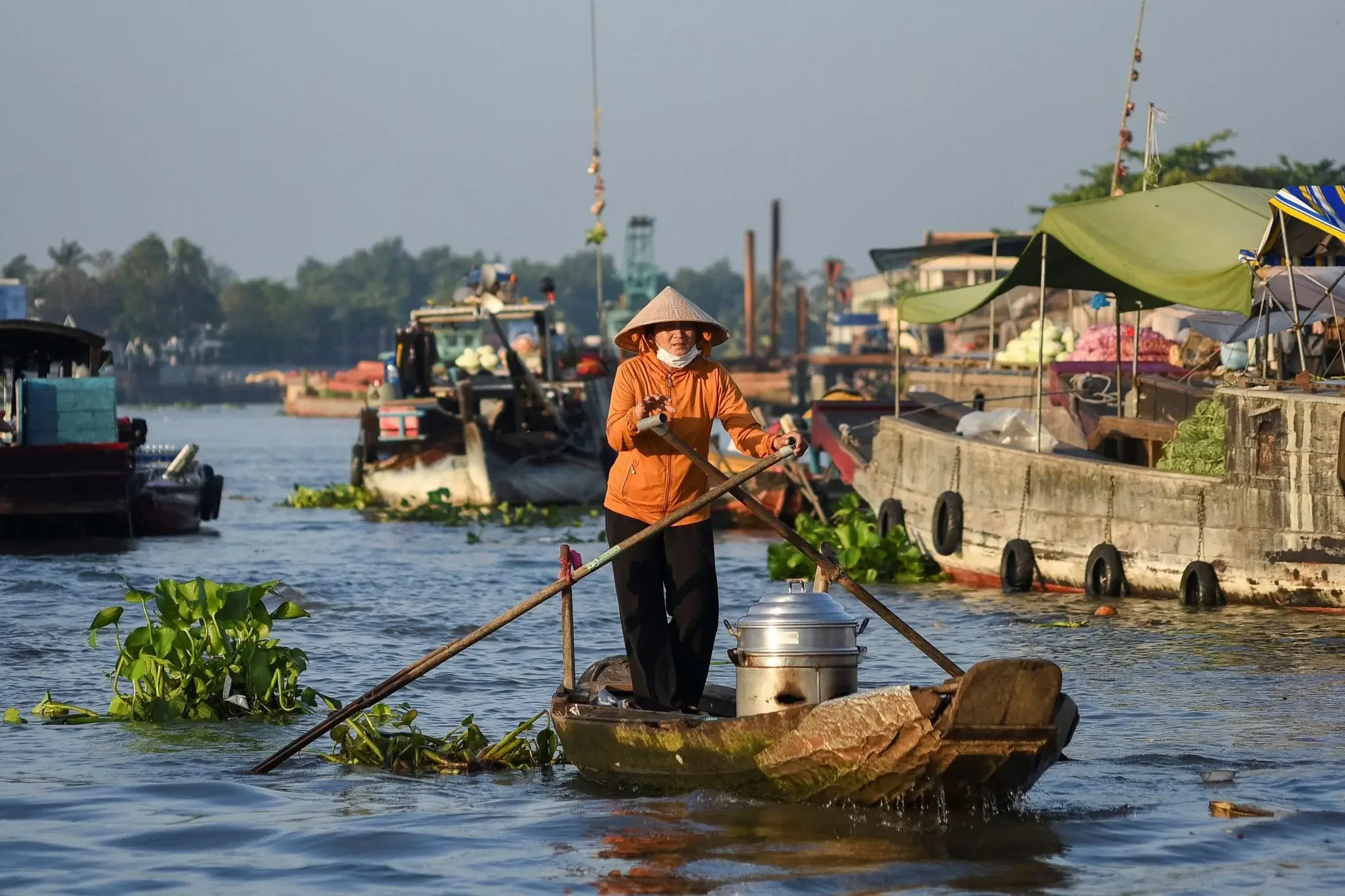
The Mekong River and Tonle Sap Lake serve as the backbone of Cambodia’s food security and rural livelihoods. Functioning as a highly productive food environment, the river system yields immense quantities of fish, rice, and wild foods, driving a fish consumption rate more than three times the global average. Approximately 80% of local communities depend directly on these waters for their sustenance and income. Individual and socioeconomic factors—such as income, education, cultural practices, and women’s time allocation—deeply influence how people interact with this environment. This reliance is especially critical given Cambodia's high rates of malnutrition and vulnerability to food insecurity.
However, this vital ecosystem faces severe threats from both human infrastructure and environmental change. The construction of over a hundred upstream hydropower dams has drastically altered natural water flows, blocking fish migrations and threatening to reduce capture fisheries by up to 57% by 2030, potentially depriving millions of their primary protein source. These political and infrastructure challenges are compounded by climate change, unsustainable shifts toward industrialized agriculture, and rampant deforestation. Together, these pressures are rapidly degrading the basin's habitats and floodplain productivity, putting downstream communities' futures at significant risk.
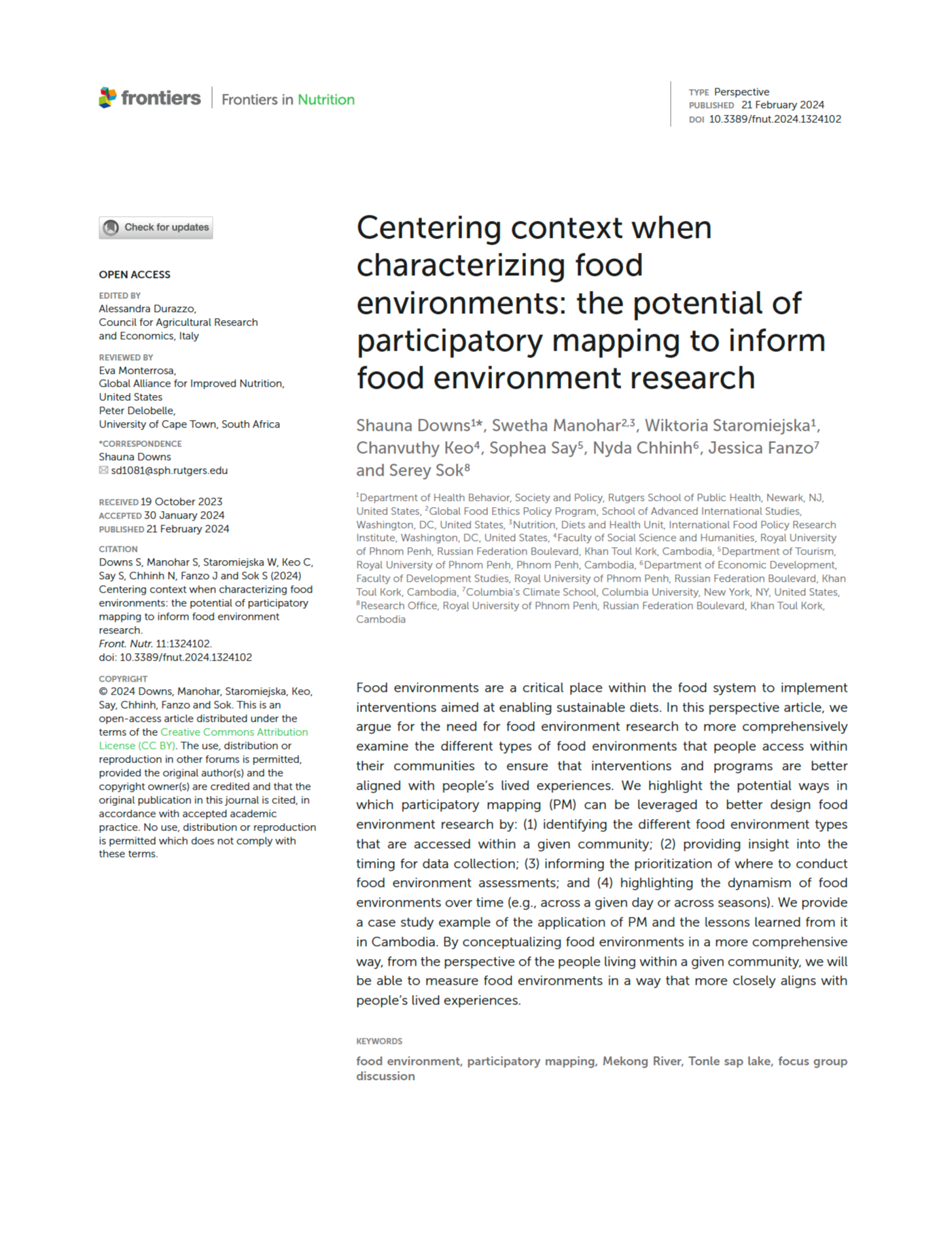
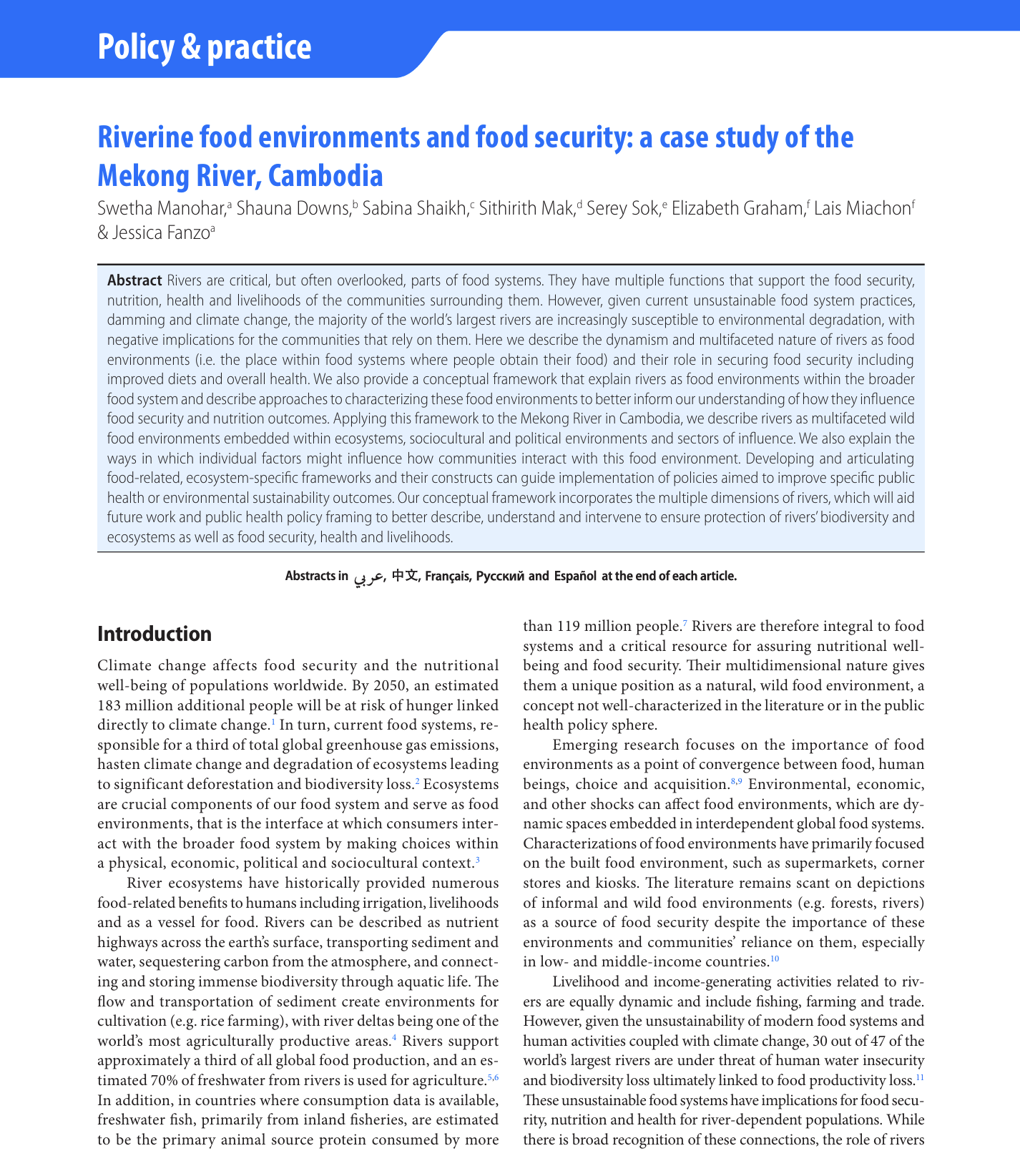
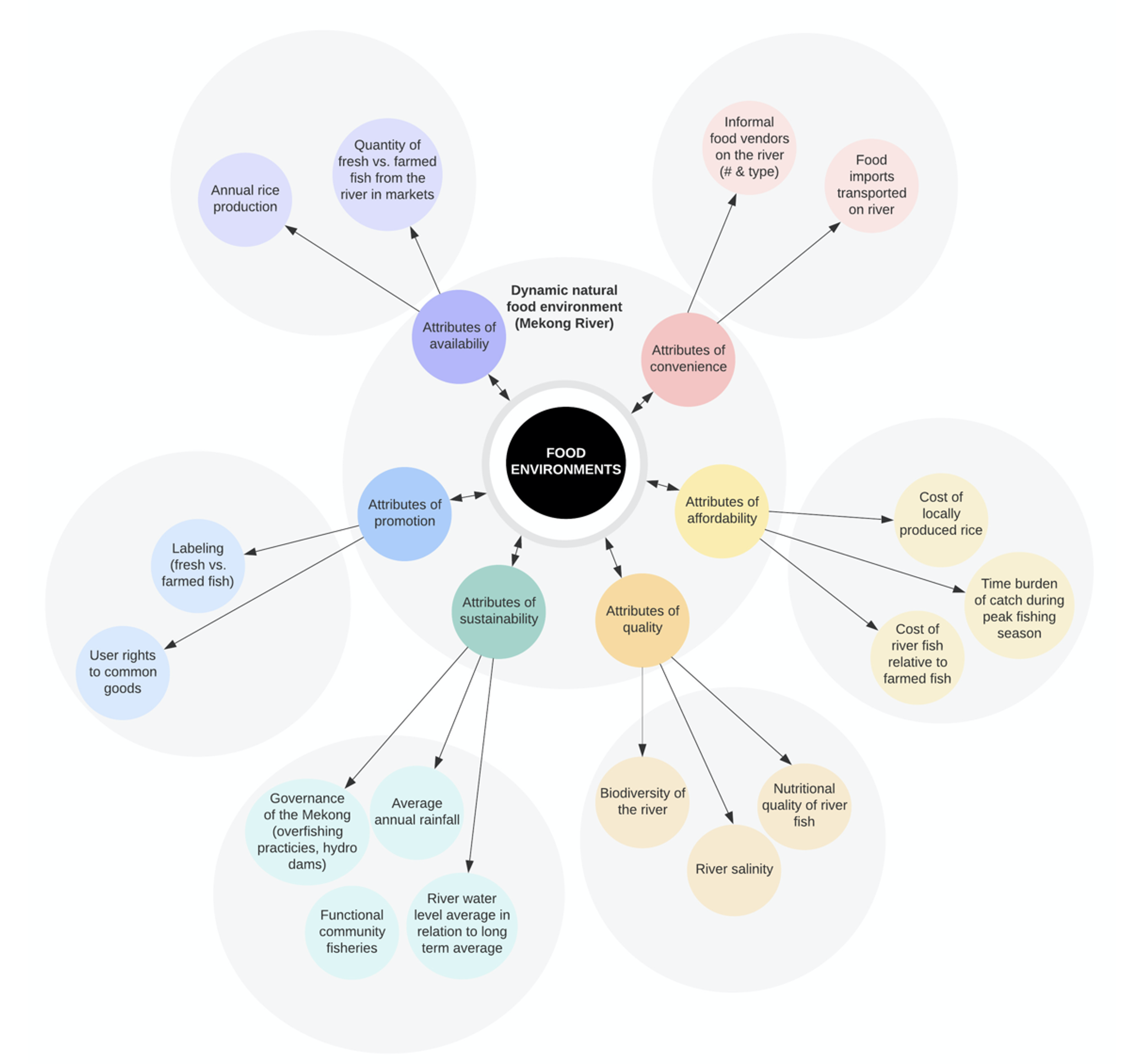
The study will develop novel tools to assess the health and environmental sustainability of food environments and evaluate rivers themselves as multifactorial, dynamic food environments. Additionally, it will evaluate how decision-making processes that govern the Lower Mekong Region can influence the food environments of river communities in Cambodia. An interdisciplinary team of researchers and public health practitioners, led by Dr. Swetha Manohar, Shauna Downs at Rutgers University, and Dr. Serey Sok at the Royal University of Phnom Penh, is undertaking this work.
Publications