Improving Climate Services for Nutrition Practitioners in Resource-Constrained Settings
Background
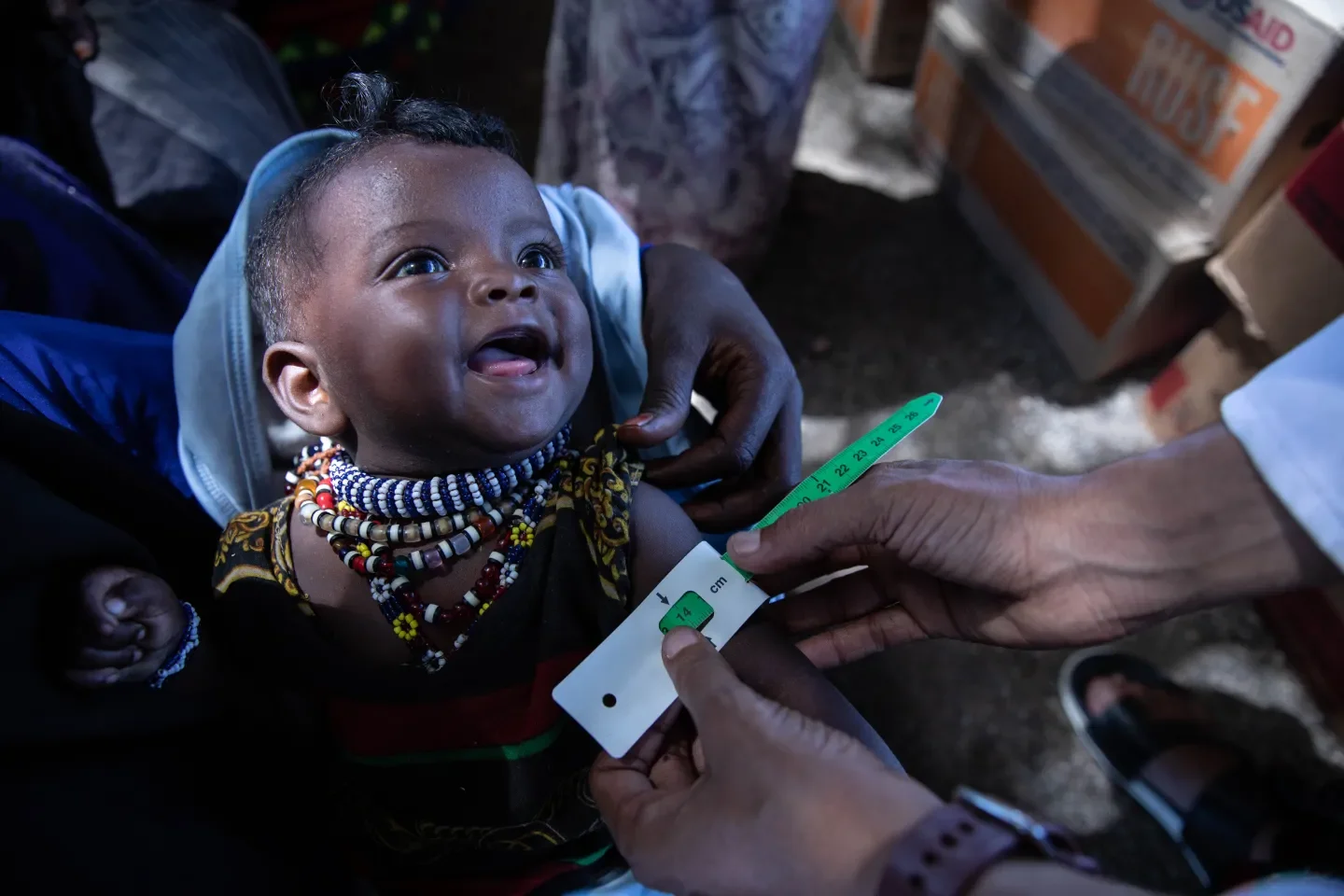
Photo credit: UNICEF Ethiopia
Malnutrition remains a major challenge for countries worldwide. The United Nations Food and Agriculture Organization (FAO) identifies climate variability and extremes as key drivers of hunger for 645 million people worldwide, alongside conflict and economic shocks. Droughts, floods, pest infestations, and disease outbreaks linked to a changing climate destabilize food, water, health, and social protection systems and put communities' security at risk. Strengthening the connection between climate services and nutrition practitioners can reduce the impact of climate shocks on at-risk populations and help protect children from the worst effects of wasting.
Climate change and extreme weather events are linked to malnutrition through several interconnected pathways. Food, water, health, and social protection systems are the main channels through which climate change affects nutrition, and the main levers for reducing risk. Understanding the multicausal nature of malnutrition allows nutritionists and climate services to design solutions that address multiple pathways at once.
Yet despite extensive evidence of these effects, significant barriers remain to connecting local public health and nutrition practitioners with climate services. National nutrition programs aim to address the underlying drivers of malnutrition, but far less is known about how these programs incorporate climate change and climate shocks into their operations. Public health and nutrition practitioners increasingly need better access to climate services, information, tools, and training to respond to the health challenges climate disruption creates for the populations they serve. Climate information is often not translated into terms practitioners can use, is not distributed to the parties who need it, or is limited by research gaps. Climate services, in turn, could better translate research into guidance nutritionists can act on.
Improving Climate Services for Public Health Practitioners in Resource-Constrained Settings is a Burroughs Wellcome Fund Climate and Health Interdisciplinary (CHI) Award project led by Johns Hopkins University. The project aims to enhance coordination across sectors for more proactive, climate-sensitive nutrition programming by strengthening climate-informed planning, preparedness, and response to childhood wasting.
Climate services
The scale of climate change's potential effects on food systems underscores the need for sustainable solutions. Longer-term effects of shifting weather patterns and rising temperatures are difficult to predict precisely, given the range of available models, but most projections point to a significant shift in global food systems, one capable of triggering shocks that cascade through trade networks to affect geographically distant places and people. Climate services offer a way to anticipate and manage that risk.
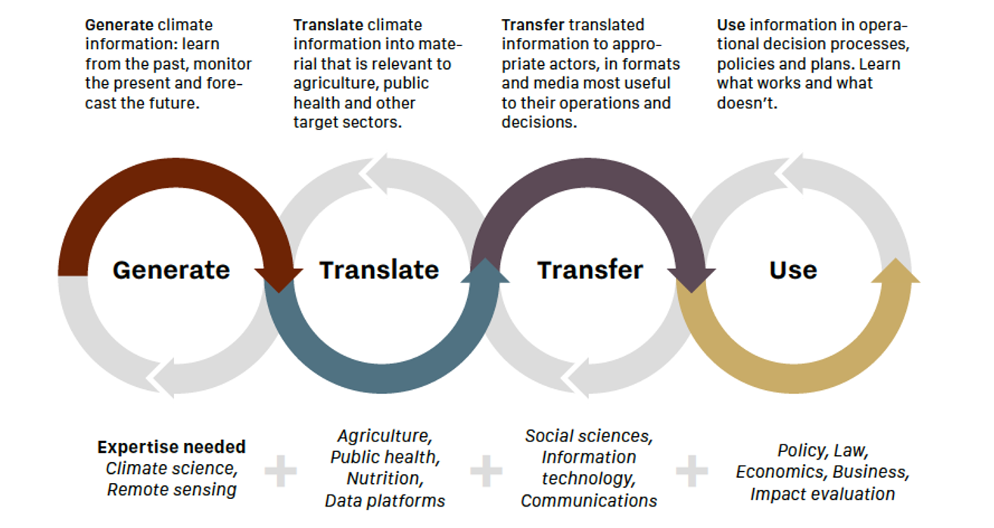
The World Meteorological Organization’s Global Framework for Climate Services defines climate services as "the provision and use of climate data, information and knowledge to assist decision-making". Climate service providers translate climate data into science-based, user-specific tools that guide decisions and help communities prepare for future challenges. The figure on the right illustrates how climate services generate information and translate it into actionable policy, law, or programming.
To be useful, climate services must provide timely, relevant information in a format decision-makers can act on. For nutritionists and public health practitioners responding to the impacts of climate shocks on malnutrition, that means climate services should act before shocks occur to support preparedness, tailor information to the specific region where practitioners work, and avoid academic jargon that would be inaccessible outside climate science. Framing information practically allows climate service providers to engage stakeholders on the ground more effectively and increases the likelihood that the benefits of climate services reach the communities that need them most.
A Johns Hopkins University-led project is working to address this disconnect. The sections that follow outline the project's objectives, explain why Ethiopia and Indonesia were selected, and describe what the project hopes to achieve.
The project
Bringing together an interdisciplinary team, this project works in two climate-impacted, resource-constrained settings. By engaging health practitioner communities in Indonesia and Ethiopia, the project pursues three aims.
Aim 1. Map the nature, range, and use of the climate services currently available to local public health workers in these two climate-vulnerable communities.
Aim 2. Assess and address local public health and nutrition practitioners' capacity-building needs in using existing climate services to strengthen current nutrition and health interventions.
Aim 3. Strengthen the use of current climate services, and co-design and implement additional or complementary services that improve nutrition and health outcomes for local communities.
In partnership with local meteorological services, communities, and public health and nutrition practitioners, this research customizes climate services to local needs so nutrition and health programs can better strengthen the resilience of climate-vulnerable communities. Most climate service producers do not currently meet local actors' informational needs. This project applies the team's existing relationships and experience working with public health practitioners, the potential users of climate services in health and nutrition, as the entry point for establishing a pipeline from users to producers, and for developing co-design principles and implementation practices grounded in the needs of local and national actors.
Climate Storylines
Climate storylines are central to this process. A climate storyline is a narrative-based, physically plausible sequence of events or conditions representing an alternative, non-probabilistic future pathway. Storylines let researchers and practitioners explore “what if” questions about future climate impacts, focusing on extreme or compound events that traditional probabilistic models struggle to capture. Approaching a climate shock such as drought through a storyline allows stakeholders to develop possible outcomes and prepare responses before impacts occur, for example by pre-positioning reservoirs, aid programs, government assistance, or drought-resistant seed stocks. A well-developed network of storylines can help both climate services and public health practitioners prepare for climate change and mitigate future childhood wasting.
Traditional climate projections often lack sector-specific insight or are too probabilistic and abstract to support local decision-making. Storylines, by contrast, offer three advantages:
Translating climate uncertainty into context-relevant decisions.
Integrating physical, social, and institutional drivers of malnutrition into plausible scenarios.
Supporting anticipatory planning for nutrition-related services, food systems, and humanitarian response.
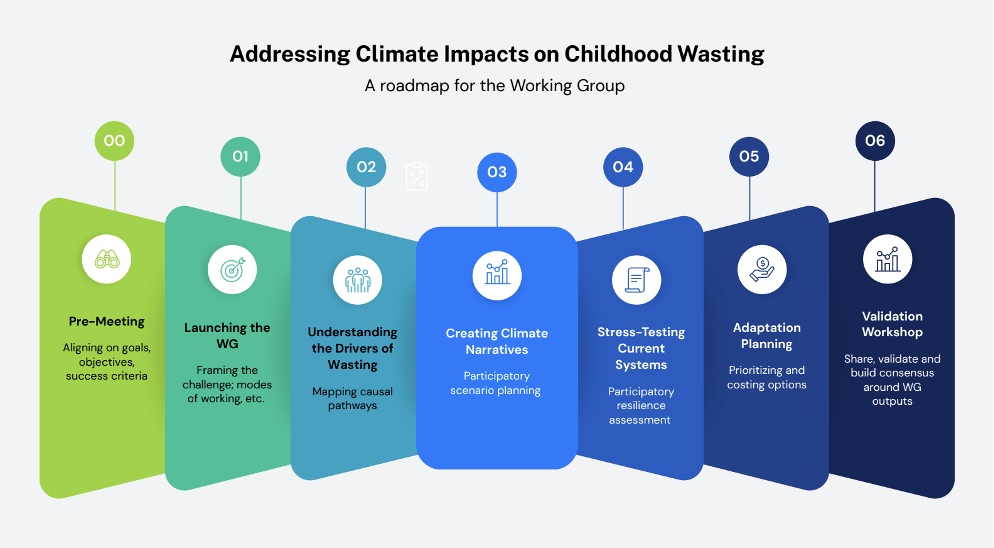
This project establishes Climate & Nutrition Working Groups in Indonesia and Ethiopia to bring together national and subnational actors to co-develop and apply climate storylines that strengthen planning, preparedness, and response to childhood wasting. The figure on the right illustrates the working groups' roadmap. By combining local knowledge with climate science, the project offers a scalable model to anticipate and reduce the risk of childhood wasting in a changing climate.
Using climate storylines, this project seeks to build stronger connections between climate services and the public health practitioners and nutritionists working on the ground. Because climate shocks and malnutrition are so closely intertwined, addressing both requires these groups to work together. Storylines that map plausible sequences of events allow actors to anticipate disaster impacts more accurately and converge on shared next steps, narrowing the gap that currently limits the effectiveness of climate and nutrition responses alike.
Should the working groups in Ethiopia and Indonesia succeed, this project aims to serve as a blueprint for future interventions, with models that translate to other regions facing similar risks. Climate shocks threaten food security across many lower- and middle-income countries. Some successful response models already exist, but connections between nutritionists and climate services still need strengthening.
Publications